Important: Safety Warning
This page describes home-canning methods from before the causes of botulism were understood. Canning low-acid foods without a pressure canner, as described here, can allow the growth of Clostridium botulinum, whose toxin is among the deadliest known. Follow current USDA home-canning guidelines instead.
This information has been left in for historical purposes but should not be acted upon.
Home › Preserving › Methods of Canning
Methods of Canning
For home canning, two distinct methods of procedure are in general use: (1) Cooking in a saucepan and then transferring the article to the sterilized cans, and (2) cooking the product in the jar in which it is to be stored. Cooking in the oven is sometimes given as a third way of home canning, but the food is cooked in the jar and manipulated in the same manner as when cooked in a canner, steam cooker, or wash-boiler, and we see no reason for referring to it as a third method.
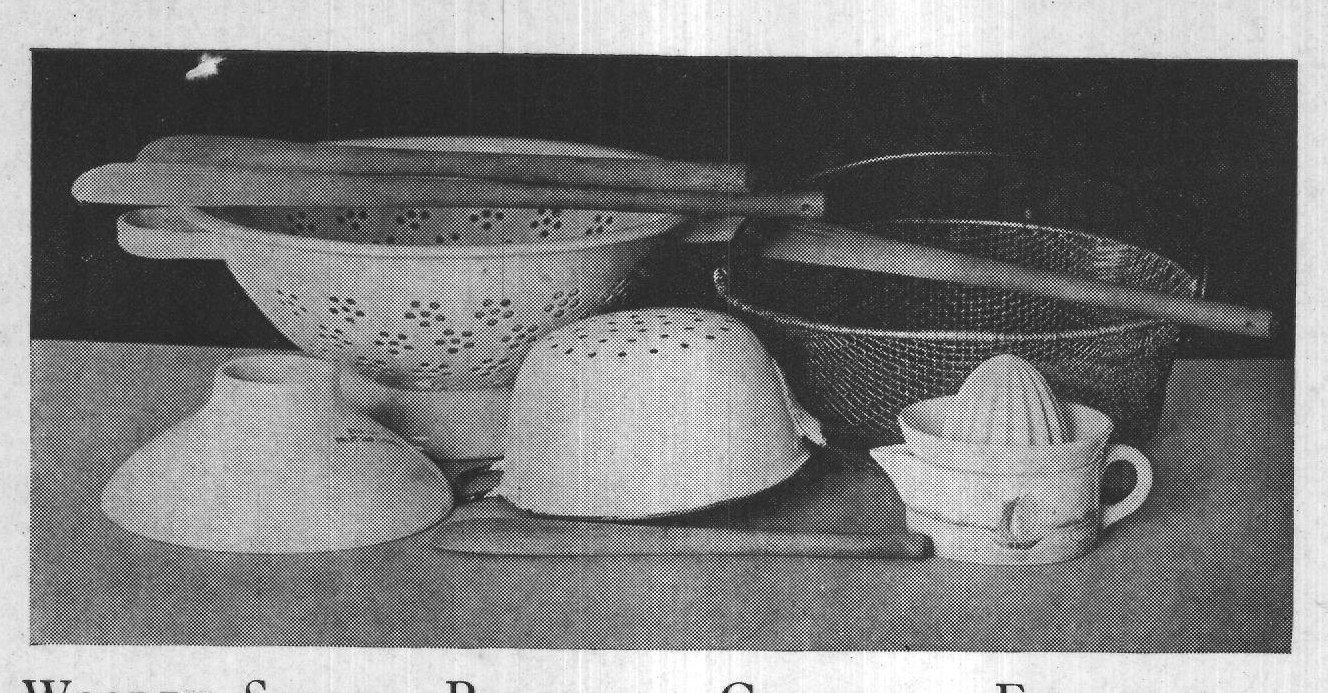
Bulky foods like spinach and beet greens, hard fruits like apples and quinces, and foods in which there is considerable waste, as beets, are canned more easily if the process is begun at least in a saucepan. Berries, peaches, pears, peas, asparagus, carrots, tomatoes, and string WOODEN SPOONS, PORCELAIN COLANDER, FUNNEL, AND