Home › Preserving › Pumpkin Preserves
Pumpkin Preserves
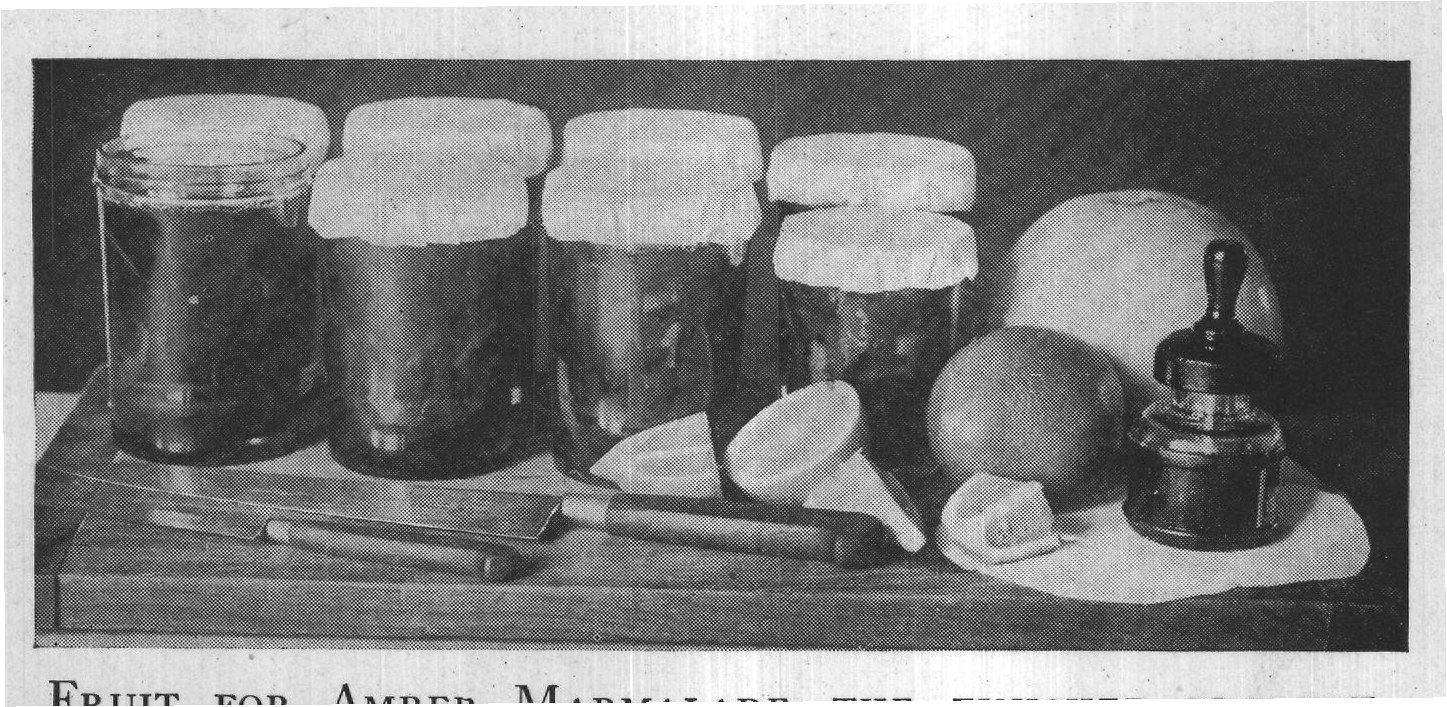
Select a small variety of pumpkin known as "sweet pumpkin." Remove the rind and seeds and cut the flesh in inch cubes. Steam or cook in water until tender but not broken; drain carefully; weigh, and for each pound of pumpkin take a pound of sugar, two lemons, and two ounces of green ginger root. Cut the lemon through flesh and rind into very thin slices, crush the ginger root. Let the lemon and ginger stand in cold water over night, then let them cook until the lemon rind is very tender.
To the water with lemon, etc., add the sugar and more water if needed, and let boil five or six minutes; add the pumpkin and let simmer until the pieces of pumpkin look transparent; skim the pumpkin to jars, return the thin syrup from the jars to the saucepan, reduce the syrup, and pour over the fruit in the jars.
Golden Chips (Pumpkin) Cut a small, sweet pumpkin in halves, and the halves into narrow strips. Remove peel and seeds, then cut the strips into thin slices, not more than half an inch thick. Weigh the prepared pumpkin, and take an equal weight of sugar, also half a cup of lemon juice, to each two pounds of sugar. Put the pumpkin and sugar into a preserving kettle in alternate layers.
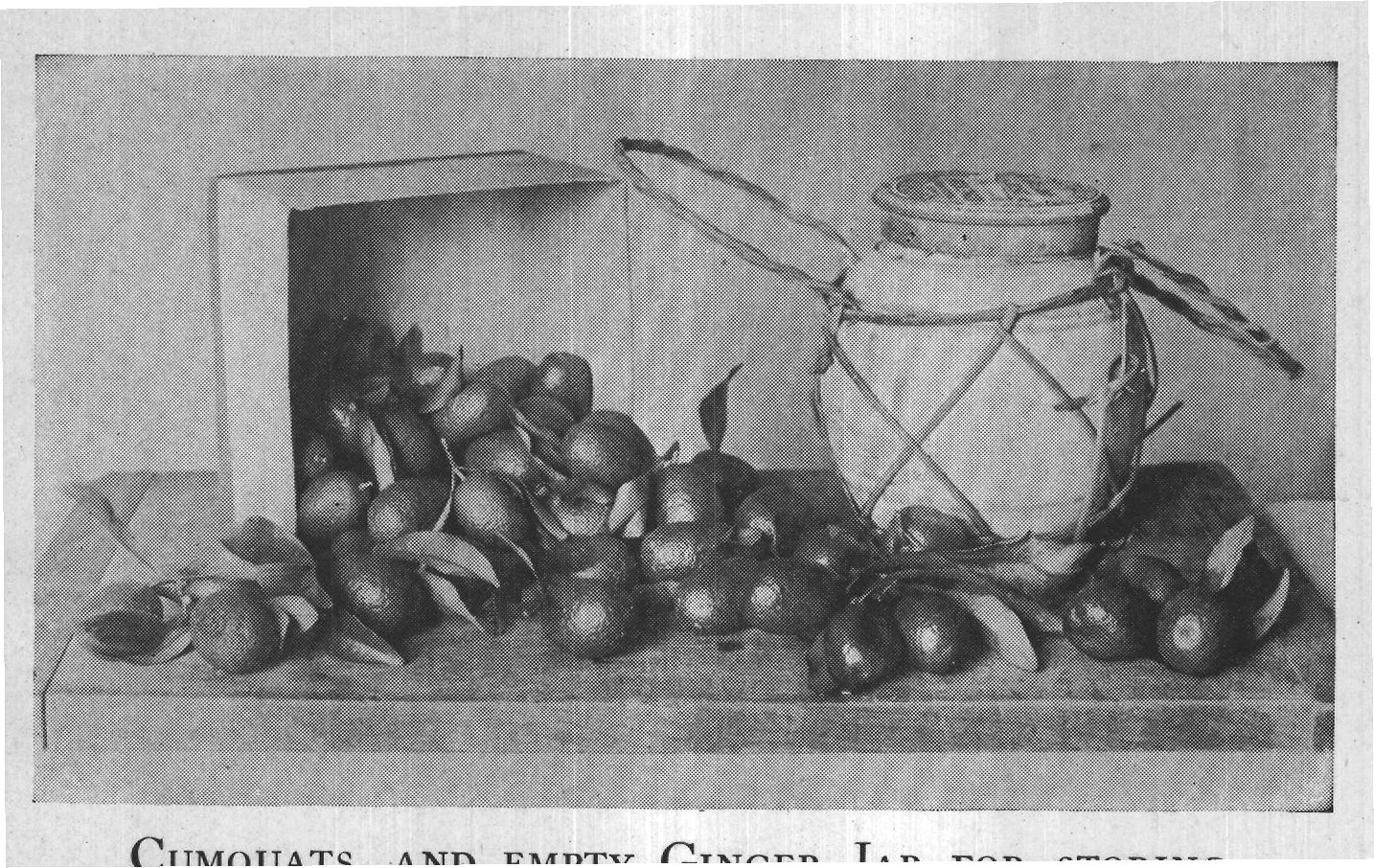
Pour the lemon juice over the whole, cover, CUMQUATS, AND EMPTY GINGER JAR FOR STORING
A candied-pumpkin preserve of the sort that filled shelves before pressure canning was understood. The cookery is straightforward; the storage instruction is the problem.
- Why it fails as a canning recipePumpkin is a low-acid vegetable, and the two lemons here are nowhere near enough to acidify several pounds of it. The fruit is skimmed into jars and covered with hot syrup with no processing time, no temperature and no seal check, which is precisely the sealed, low-acid, oxygen-free condition in which Clostridium botulinum produces toxin. Current tested guidance does not permit home canning of pumpkin in any mashed, pureed or butter form, and cubed pumpkin is only canned under pressure. Use a current tested recipe if you want jars for the shelf.
- Sugar is not doing what the original assumesA pound of sugar per pound of pumpkin sounds heavy, but the pumpkin arrives already cooked and full of water, and the syrup is topped up with more water before the fruit goes in. The recipe does reduce that syrup again at the end, but the finished sugar concentration is unlikely to reach the level that makes a jam self-preserving.
- "Sweet pumpkin"What a modern grower sells as a sugar or pie pumpkin: small, dense, dry-fleshed, three to five pounds. A field or jack-o'-lantern pumpkin is watery and stringy and collapses at the steaming stage.
- Green ginger rootSimply fresh ginger, as opposed to the dried or preserved kinds. Two ounces is a piece about the length of a thumb; the recipe directs that it be crushed rather than sliced.
- The overnight soakLemon slices and ginger stand in cold water not for flavour but to soften the rind. Lemon peel that has not been simmered to genuine tenderness before sugar enters the pan will stay leathery, because sugar sets the pith.
- "Until the pieces look transparent"The one real doneness cue in the recipe. The cubes turn from opaque orange to glassy amber as syrup replaces the water in them, usually after a long, slow simmer; a hard boil breaks them into puree instead.
- Golden ChipsThe second recipe on the page is incomplete, breaking off after the pumpkin, sugar and lemon juice are layered and covered. It is a maceration method, standing the layers until the sugar draws out a syrup, and it cannot be followed to a finish from what survives here.
- If you want to cook it anywayTreat it as a small-batch dessert conserve, not a preserve: make a fraction of the quantity, cool it, keep it in the refrigerator and eat it within a week or two.
Candied pumpkin belongs to a long European and colonial tradition of turning cheap, bulky garden produce into something that could pass for imported sweetmeats. Pumpkin has almost no flavour of its own once it is sugared, which is the point: it takes on the lemon and ginger and comes out looking and eating much like the crystallised citron and stem ginger that had to be bought at expense from a grocer. Household preserving books of the early twentieth century, of which this is one, sat at the moment when domestic science teaching was pushing home cooks toward weights, thermometers and standardised procedure, while still printing older open-kettle methods inherited more or less unchanged from nineteenth-century manuals.