Canning, Preserving and Jelly Making

How your great-grandmother filled the cellar every autumn: the 1915 standard guide to canning, preserving, pickling and jelly making.

HomePreserving › Fruit for Amber Marmalade

Fruit for Amber Marmalade

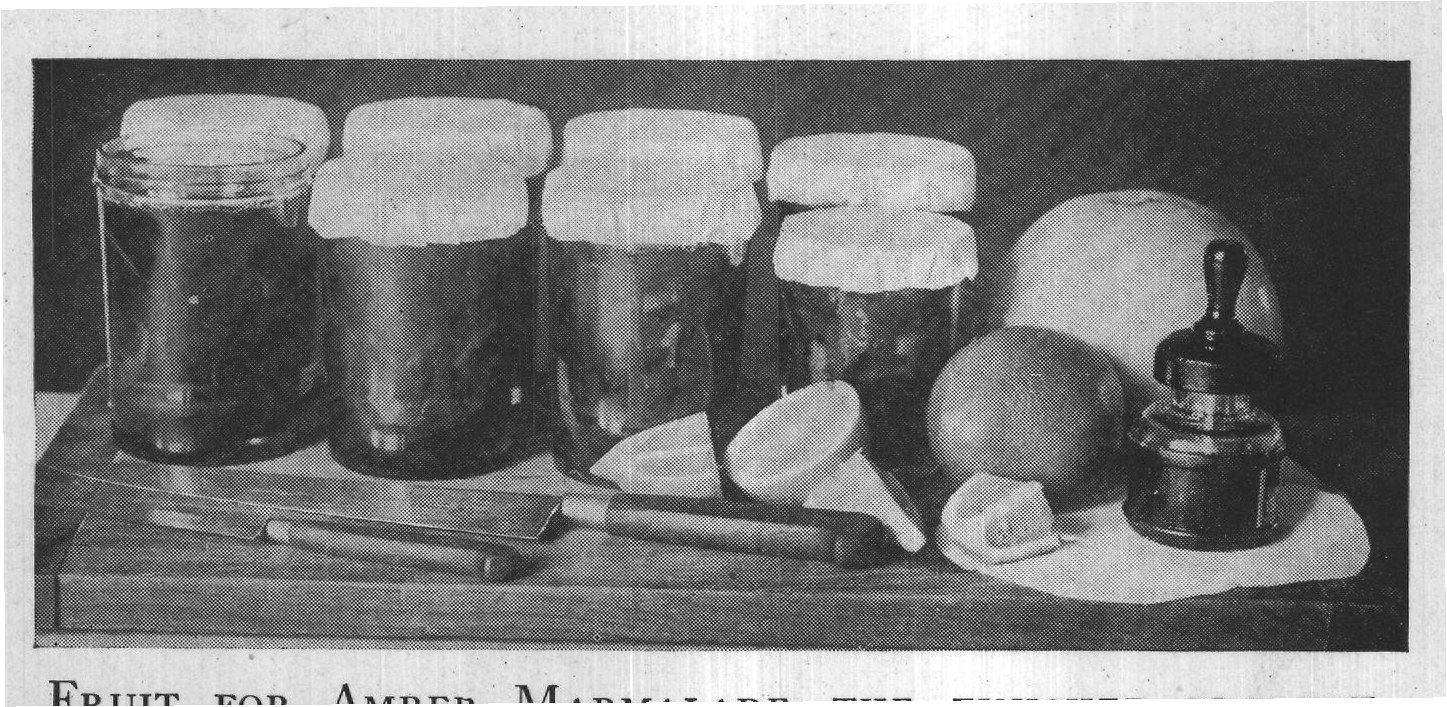
FRUIT FOR AMBER MARMALADE, THE FINISHED PRODUCT,

Page 82. and let stand twenty-four hours. Have ready the lemon peel, neatly shredded, and an ounce of ginger root for each pound of fruit. Add these to the kettle with a cup of water for each three pounds of sugar. Cook until the pumpkin is tender, then pour into an earthen jar. In a few days pour the syrup from the pumpkin.

Boil to reduce and thicken it, and pour, hot, over the pumpkin.
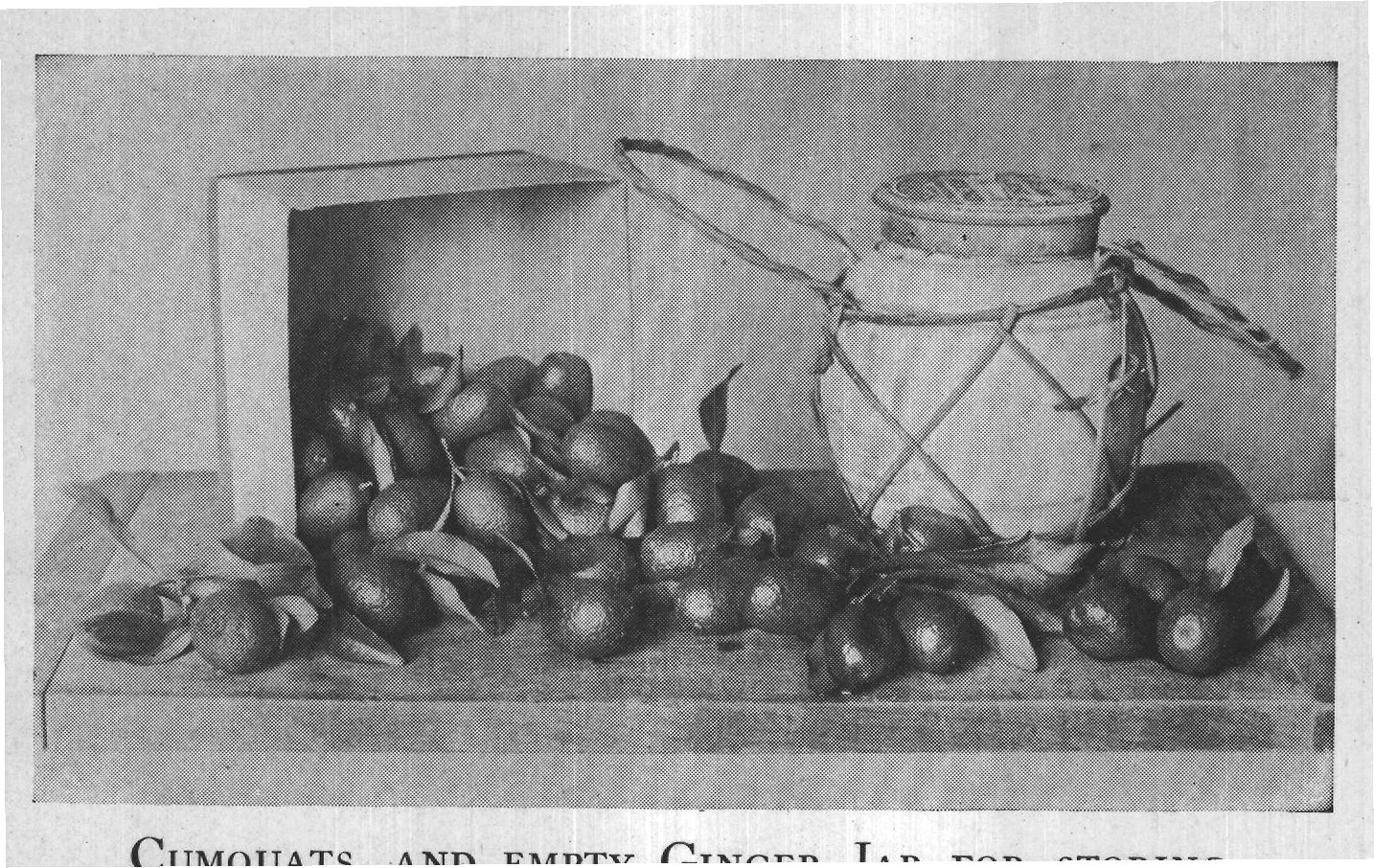
CUMQUATS, AND EMPTY GINGER JAR FOR STORING
For the Modern Kitchen Do not make this as written.

This page has come through as a fragment: the printed illustration captions ("FRUIT FOR AMBER MARMALADE, THE FINISHED PRODUCT, Page 82" and "CUMQUATS, AND EMPTY GINGER JAR FOR STORING") have run into the body text, and the opening of the method — the pumpkin, the sugar, the standing in syrup — is missing. What survives is the tail of a pumpkin preserve, and it cannot be followed safely.

A Little History

Pumpkin preserve belongs to a family of "sweetmeat" recipes in which a bland, cheap, abundant vegetable is carried by sugar, citrus and spice into something that could be set out with tea. The same logic produced watermelon rind pickle, citron melon preserve and vegetable marrow jam: the fruit contributes texture and bulk, the lemon peel and ginger do the flavouring. The long stand in an earthen jar, followed by drawing off the syrup, reducing it and pouring it back hot, is the standard old method for firming fruit without cooking it to pulp, the sugar working into the flesh a little at a time so the pieces stay whole and turn translucent.

← Pumpkin PreservesTomato Figs →