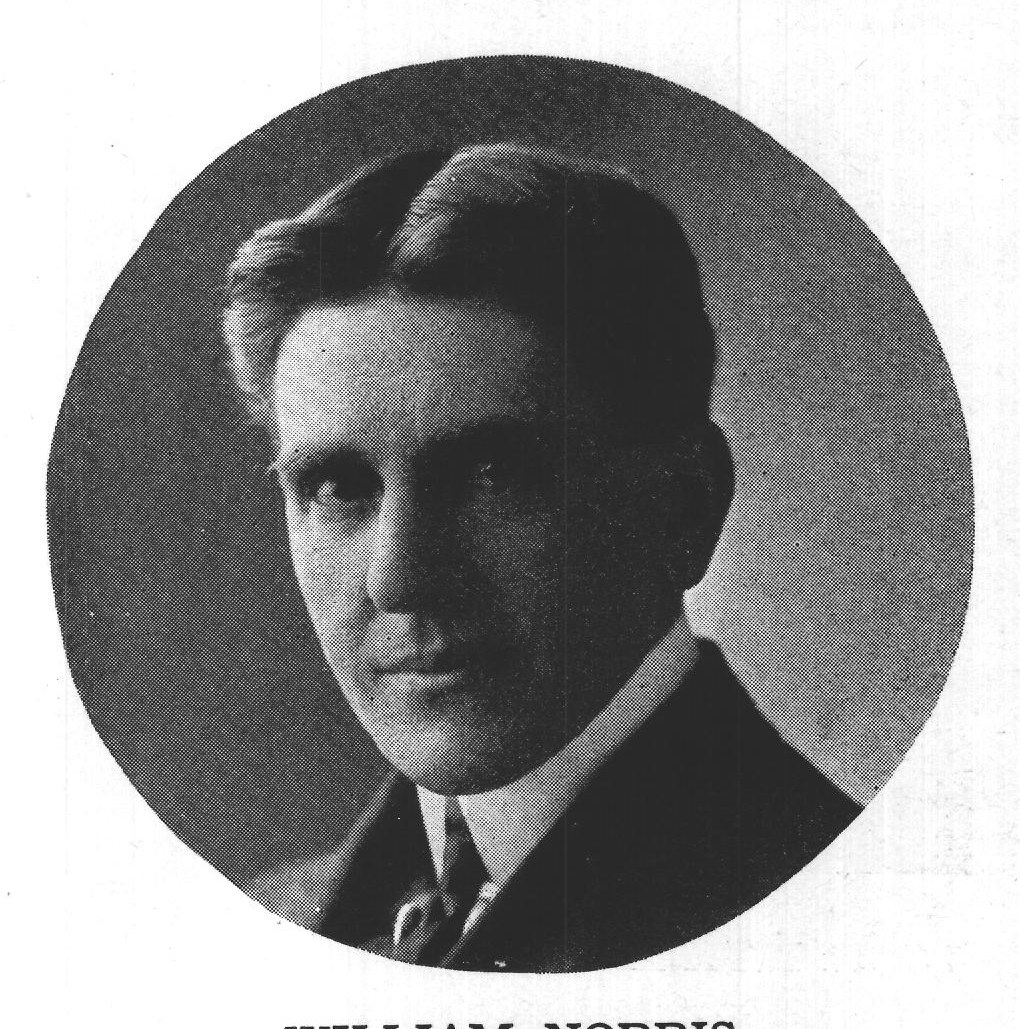
William Norris

FISH MOUSSE
One and one-half pounds raw halibut, skin and bone.
Boil in fish boiler until tender, press through fine strainer, add one grated onion, make a thick cream sauce and add the yolks of three eggs. salt, pepper and paprika to season.
Mix the whites of three eggs with the fish, then add sauce and one-half pint of whipped cream.
Put in wooden bowl and stir with wooden potato masher, then place in ring form and steam in hot water in oven for one hour.
Serve with Hollandaise sauce.
It is absolutely delicious.
Sincerely yours, zwilliam narra
A classic steamed fish forcemeat in the French mousseline style, set in a ring mold and served with hollandaise. The text is transcribed from a signed letter, so a few steps are compressed; the notes below fill the gaps without changing anything.
- The hinge: keep the water bath below a simmerThe mousse sets on egg protein, and a bath that boils will curdle it into something grainy and weeping. Keep the water in the outer pan hot but never bubbling. The recipe gives no oven temperature; a moderate oven is what is implied.
- Read the opening line as an assembly noteThe page begins mid-sentence with "the yolks of three eggs," apparently carried over from the previous entry; the mousse proper starts at "One and one-half pounds raw halibut." Three eggs, separated, cover the dish as written: the three yolks into the cream sauce, the three whites into the fish.
- Fish boilerA long, narrow, lidded pan with a perforated lift-out rack. Any wide pan holding the fish in one layer will do. Poach at a bare shiver, not a boil, for 8-10 minutes per inch of thickness, then drain well before straining.
- "Boil until tender" needs restraintHalibut is lean and turns cottony fast. Pull it the moment it flakes; overcooked fish makes a dry mousse no amount of cream will rescue.
- The egg whites are meant to be beatenThe egg whites -- The instruction is bare: "mix the whites of three eggs with the fish." Classic mousseline forcemeat takes the whites in raw; if you choose to whip them and fold them through, stop at soft peaks, as stiff dry peaks give a spongy, cracked set.
- Half a pint of creamOne cup of heavy cream, whipped to soft peaks and folded in last. Measure before whipping, not after.
- Wooden bowl and potato masherA period substitute for the marble mortar and pestle used in professional kitchens. A food processor does the same work on the poached fish, but stop before it becomes a paste, and fold the whites and cream in by hand.
- Ring formA ring mold or savarin mold, buttered and lined with a buttered paper collar if it is a plain metal one. Set it in a roasting pan and pour in hot water to come halfway up the sides.
- Yield and serviceServes six as a first course, four as a light main. Rest ten minutes before unmolding, and fill the center with the hollandaise the recipe calls for.
This comes from a genre of celebrity cookbook popular in the early twentieth century, in which stage actors were solicited for a favorite receipt and a signature, and the whole was printed to raise funds or to sell on the strength of the names. William Norris was a light-comedy actor of the American stage of that era, and the closing flourish here, "It is absolutely delicious. Sincerely yours," is the letter he mailed in, reproduced as sent, with his signature garbled by the transcription. The dish itself is straight French restaurant technique: a mousseline of white fish bound with panade or thick sauce, lightened with whipped cream and egg white, and poached in a bain-marie. Halibut mousse in a ring with hollandaise belonged to the standard repertoire of hotel and club kitchens working in that idiom.