Fruits
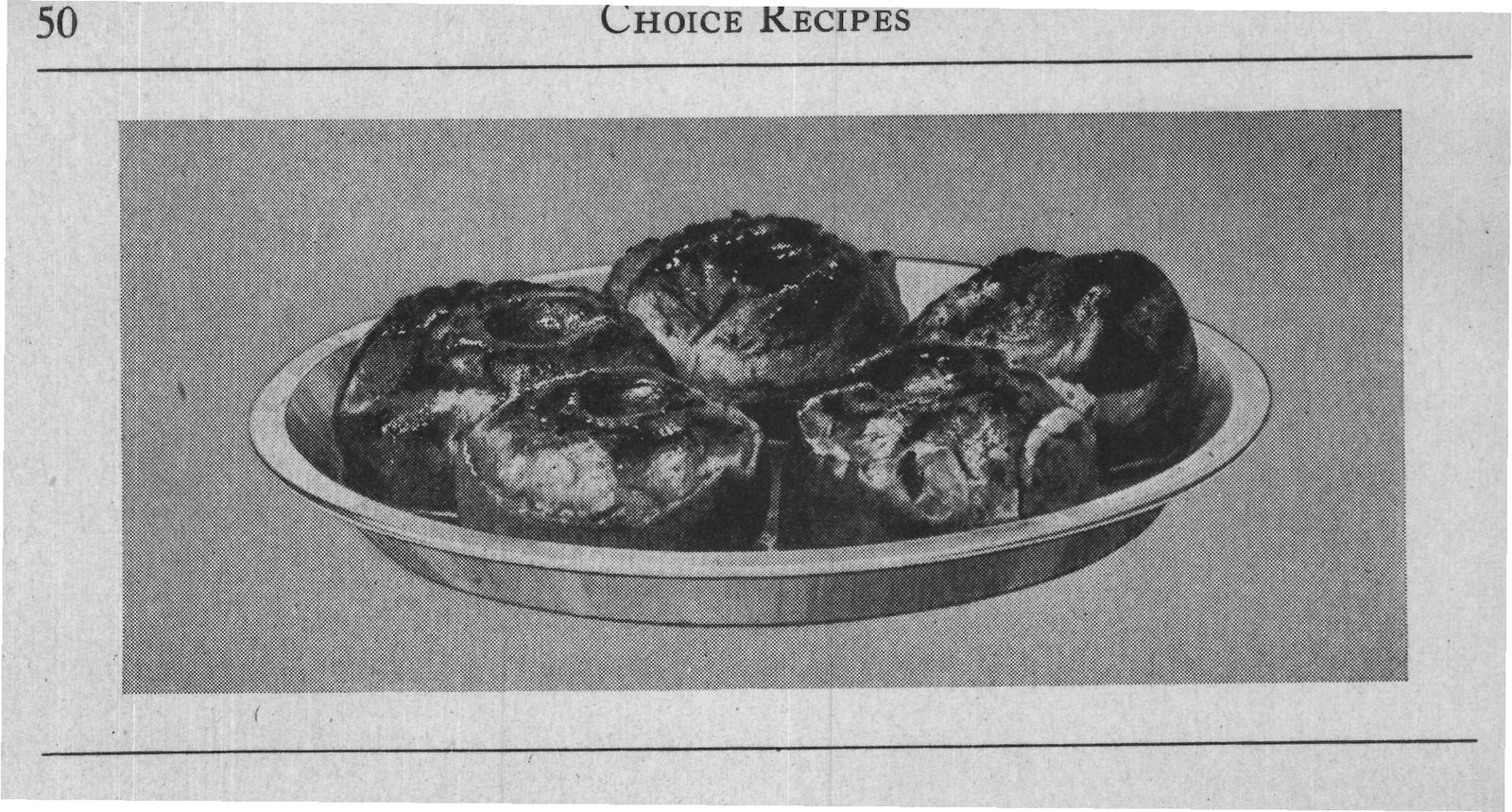
Dried Fruits There are two methods of cooking dried fruits in the fireless. In either method soak the fruit 10 hours. This restores the natural water taken out in the drying process. Always cook fruit in same water in which it has been soaked.
First Method Add sugar to fruit and bring to boiling point on stove; boil 5 minutes and cook in fireless 3 to 4 hours, or over night. No radiators.
T Second Method Heat one radiator 500 degrees and place fruit cold on same for 3 or 4 hours or over night. We recommend the first method.
Baked Apples Wash and core apples, arrange in bottom of 8-qt. or shallow utensil.
Fill center with sugar, no water.
Bake in fireless 1 hour, using two radiators heated 400 degrees.
These are retained-heat instructions written for a fireless cooker: an insulated box in which food finishes cooking on the stored heat of iron or soapstone discs. The temperatures given belong to the discs, not to the food.
- What a radiator isA "radiator" is the round iron or soapstone plate that came with the cooker. It was heated on a stove or in the oven, then dropped into the insulated well above or below the food pot. Nothing in a modern kitchen is a direct substitute except a slow cooker on low, a covered pot in a 200-225F oven, or a wide-mouth vacuum flask.
- 400 and 500 degreesThese figures are the disc temperature, not the food's. The fruit itself never approaches them; it coasts down from somewhere near boiling over several hours. Do not read them as oven settings.
- The ten-hour soakThis is the instruction that still matters most. Modern dried apricots, prunes and apple rings are often partly rehydrated and sulfured, and four to six hours is usually enough; genuinely leathery unsulfured fruit still wants the full overnight soak.
- Cook in the soaking waterSound advice for the reason given and for one the author omits: sugars and fruit acids leach into the water, and discarding it leaves the fruit flat. Add sugar only after soaking, or the fruit draws water out again and stays tough.
- Why the first method is recommendedMethod one brings the fruit to a five-minute boil on the stove before it goes into the box, so it enters hot and stays hot. Method two starts cold and relies wholly on the disc; the fruit spends a long stretch at lukewarm temperatures. With acid fruit that is a texture problem more than a safety one, but the result is uneven.
- Baked apples, no waterThe dry pan works only under a tight lid, which the fireless cooker supplied automatically. In a conventional oven the apples will scorch without a little water or a covered dish. Firm baking apples hold their shape; softer eating apples collapse to sauce.
- Quantities and yieldNo amounts are given at all. Reckon on 1/4 to 1/2 cup sugar per pound of dried fruit, and one to two apples per person.
Fireless cookstoves were sold across North America from roughly 1905 into the 1920s: an insulated cabinet, a set of nesting pots and two or more heavy metal "radiators" that were preheated on the range and then sealed in with the food. The idea is generally traced to the Norwegian hay box, in which a pot was buried in insulation to finish cooking, and it was promoted on the grounds of fuel economy, an unheated summer kitchen and food that could be left unattended all day or overnight. Recipe booklets like this one came with the appliance, which is why the instructions assume the reader knows what a radiator is and gives no ingredient quantities at all. Slow overnight rehydration of dried apples, prunes and peaches in an insulated box was exactly the sort of unattended, low-fuel job these cookers did best.