Home › N › Nectarines, Preserved
Nectarines, Preserved
INGREDIENTS. - To every lb. of sugar allow pint of water, nectarines.
Divide the nectarines in two, take out the stones, and make a strong syrup with sugar and water in the above proportion.
Put in the nectarines, and boil them until they have thoroughly imbibed the sugar. turn it carefully into a pan. The next day Keep the fruit as whole as possible, and boil it again for a few minutes, take out the nectarines, put them into jars, boil the syrup quickly for 5 minutes, pour it over the fruit, and, when cold, cover the preserve down. The syrup and preserve must be carefully skimmed, or it will not be clear.
TIME.-10 minutes to boil the sugar and water; 20 minutes to boil the fruit the first time, ten minutes the second time; 5 minutes to boil the syrup.
SEASONABLE in August and September, but cheapest in September. 2 gallons.-1 lb. of raisins, 3 lemons, 2 lbs.
Nectar, Welsh. INGREDIENTS for of loaf sugar, 2 gallons of boiling water.
AVERAGE COST, 1s. 3d.
Cut the peel of the lemons very thin, NEGUS, TO MAKE. pour upon it the boiling water, and, when cool, add the strained juice of the lemons, the sugar and the raisins, stoned and chopped very fine. Let it stand 4 or 5 days, stirring it every day, then strain it through a jelly-bag and bottle it for present use.
TIME.- 4 or 5 days.
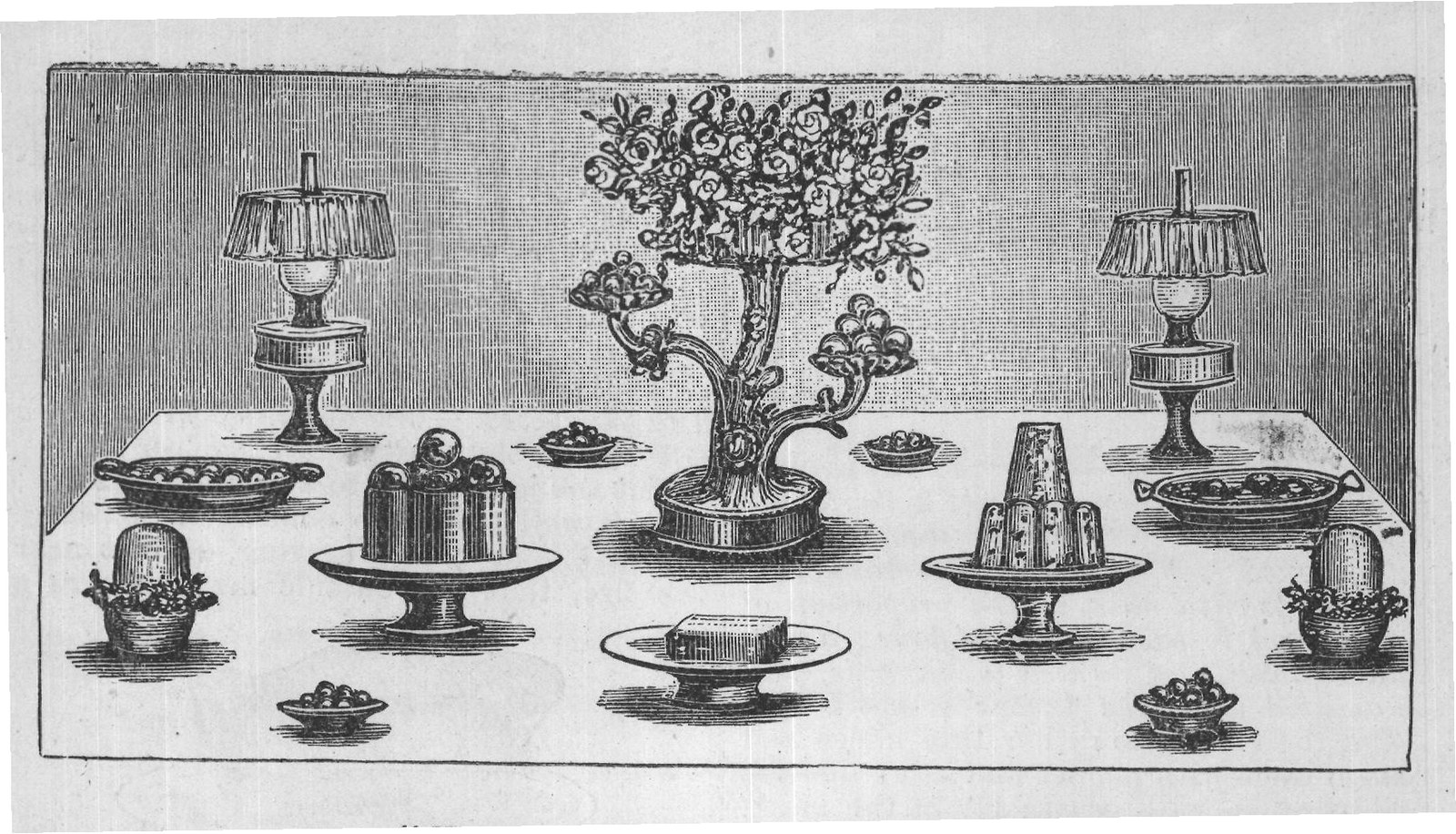
A Victorian sugar preserve that works by repeated short boilings rather than one long one, so the fruit stays whole and takes up syrup gradually. The technique is sound; the vessel and storage advice need updating.
- Syrup proportionThe water quantity per pound of sugar has lost its fraction in the original. Victorian "strong syrup" for preserving fruit whole is generally half a pint of water to each pound of sugar, and that ratio behaves as the method describes.
- Fruit to sugarNo weight of nectarines is given either. Reckon roughly a pound of sugar to a pound of prepared fruit for a preserve of this kind; less sugar gives a softer, shorter-keeping result.
- Pint sizeA British imperial pint is 20 fl oz, about 570 ml, not the US 16 fl oz. It matters when you are aiming at a saturated syrup.
- The hinge: skim, and do not stirThe hinge: skim -- Clarity depends on lifting the scum from both syrup and fruit, as the recipe insists. The instruction to keep the fruit as whole as possible also implies handling it as little as you can; stirring breaks the halves and clouds the syrup with pulp, though the recipe does not say so outright.
- Rest between boilingsThe overnight stand is not a delay for convenience. It lets sugar migrate into the fruit by osmosis at low temperature, which is why the halves stay intact instead of collapsing as they would in a single long boil.
- TimingsTwenty minutes for the first boil suits firm, barely ripe fruit. Fully ripe nectarines will go to shreds in that time; keep them to ten or twelve minutes and rely on the second boiling and the final syrup reduction to finish the job.
- PanUse a wide stainless-steel preserving pan; a deep narrow one gives you a boil-over rather than evaporation.
- Covering and keeping"Cover the preserve down" meant a paper or bladder cover, not a vacuum seal. Treat the result as a refrigerator preserve, or process filled jars in a boiling-water bath to a current tested schedule if you want them shelf-stable.
Nectarines and peaches were wall fruit in Victorian Britain, often trained against south-facing brick or grown under glass in the kitchen gardens of large houses, and Mrs Beeton notes them as seasonable in August and September. The whole-fruit preserving method here, with its alternation of brief boilings and long rests, is the same one applied across the fruit entries of the book, and it belongs to a confectioner's tradition older than the household manuals: sugar was still costly enough that a preserve was expected to look handsome, with the halves recognisable and the syrup clear enough to see through. The insistence on skimming is the whole difference between a preserve fit for the table and one fit only for the storeroom.