Home › Preserving › Carrot Conserve
Carrot Conserve
Cut scraped carrots into small cubes; cook until very tender and the water is nearly evaporated. To each quart of carrot cubes allow two and one fourth cups of sugar and the grated rind and juice of a large lemon. Dissolve the sugar in the lemon juice and small quantity of water remaining in the carrots, then add the carrots and let cook until the syrup thickens.
Store as canned fruit or jelly.
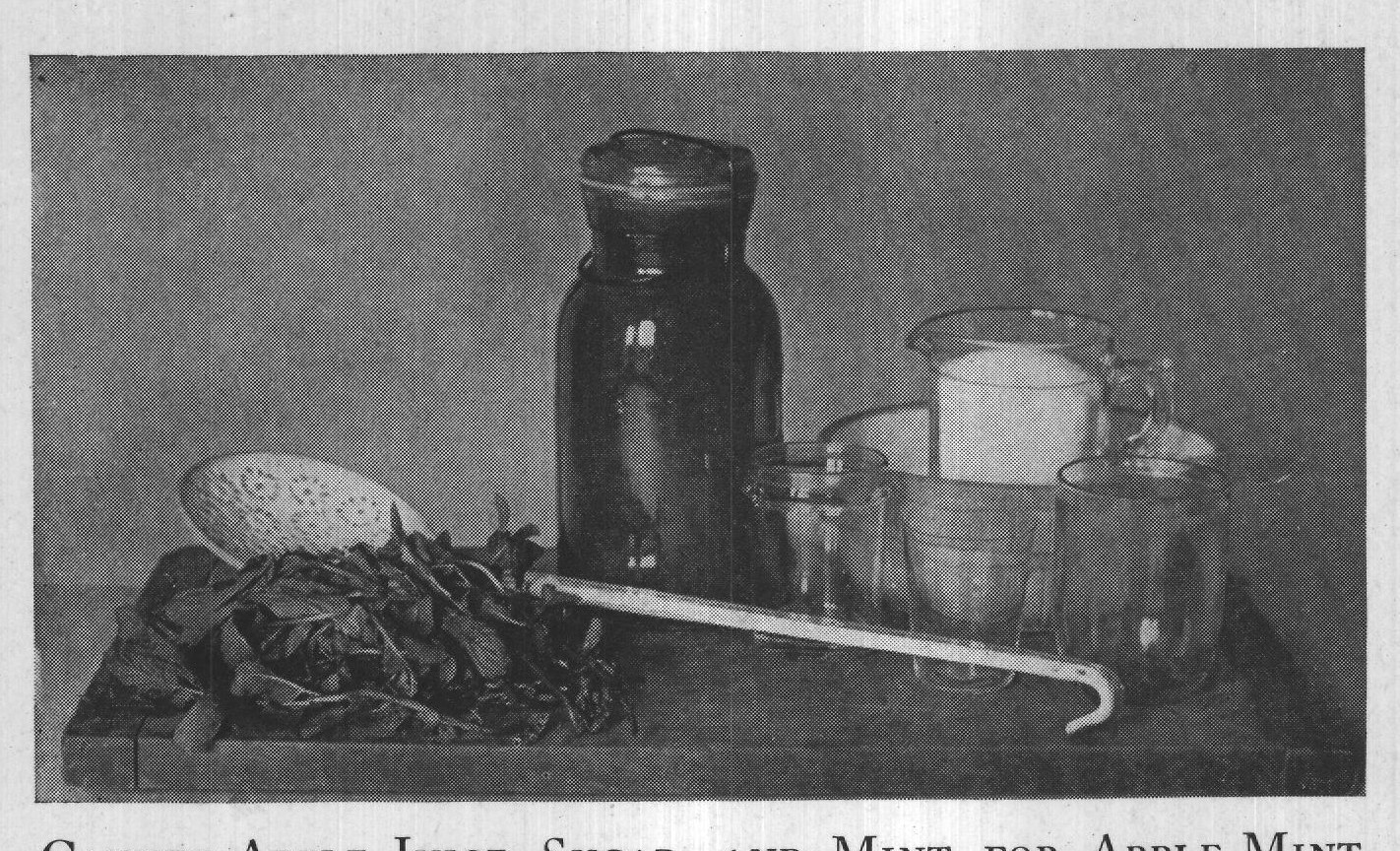
CANNED APPLE JUICE, SUGAR, AND MINT, FOR APPLE MINT
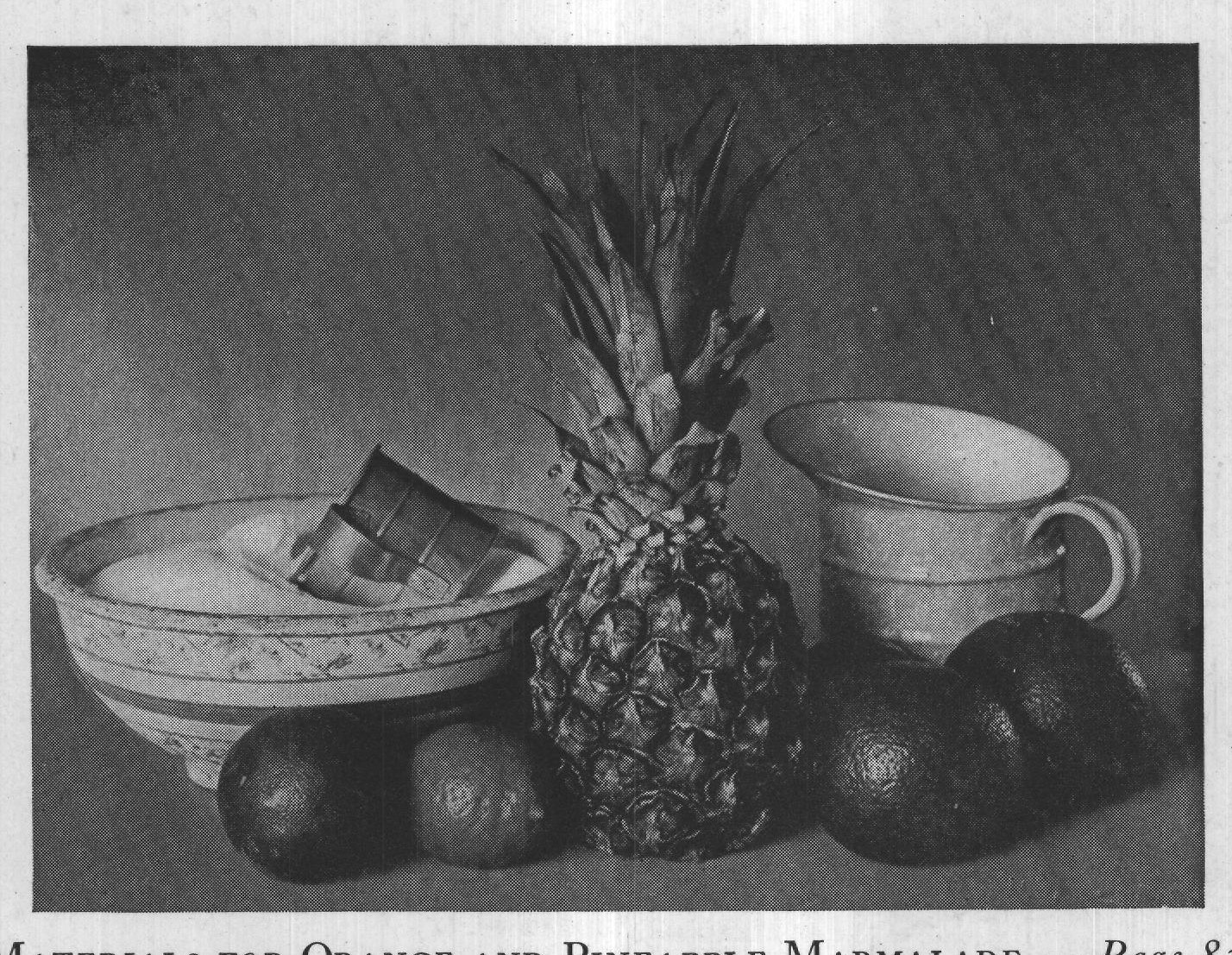
The text as printed is interleaved with stray photograph captions from neighbouring pages ("CANNED APPLE JUICE, SUGAR, AND MINT" and the marmalade caption belong to illustrations, not to this conserve). The recipe itself is a cooked carrot-and-sugar preserve, and its final instruction — "store as canned fruit or jelly" — is where it stops being usable today.
- Why the canning step failsCarrots are a low-acid vegetable, usually given as roughly pH 5.9 to 6.4. The juice and rind of one lemon per quart of cooked cubes cannot be assumed to bring the whole batch below pH 4.6, the line above which Clostridium botulinum spores can germinate in a sealed, oxygen-poor jar. Nothing in the method measures acid or verifies it.
- No process is given at all"Store as canned fruit or jelly" gives no times, no jar size and no method; presumably the reader was expected to work from general directions elsewhere in the book. Even a boiling-water bath never exceeds 212F and cannot destroy botulinum spores in a low-acid pack. A vegetable conserve of this kind needs a tested, published process, not a cross-reference.
- The sugar is not high enough to protect itTwo and one fourth cups of sugar to a quart of carrot cubes is a conserve, not a jelly-strength syrup, and there is no reason to assume the finished product is dry enough for sugar alone to inhibit spoilage organisms. On this evidence, preservation rests largely on the seal -- which is exactly the wrong thing to rely on with carrots.
- Open-kettle fillingPeriod preserving manuals often directed that hot preserves be ladled into jars and capped with no further heating, trusting the steam to pull a vacuum; this recipe does not say which method it assumes. That practice has long since been abandoned because the headspace and lid are not sterilised and seals fail silently.
- If you want carrot conserveUse a current recipe from a tested source, which will specify bottled lemon juice by volume, a jar size, and a timed boiling-water process. Do not adapt the quantities above and assume the acid balance works out.
- Reading the rest of the methodThe technique itself is sound and worth understanding: the carrots are cooked down until nearly dry so the sugar dissolves in their own concentrated liquid rather than in added water, which is why the syrup thickens quickly. That principle carries over to any modern conserve.
Carrot preserves belong to a long European tradition of treating the carrot as a sweet rather than a vegetable, in an era when it was among the sweeter roots a household could grow. Carrot jam is often said to have been promoted in Britain as "mock apricot," the grated root and lemon giving a colour and set close enough to the real thing to pass at a wartime table; that particular label is chiefly associated with British Ministry of Food publicity in the Second World War, later than this book. Its presence in an American preserving manual reflects the same impulse that fills these books with rhubarb, quince and green tomato recipes: the point was to use everything the garden gave, and to stretch an expensive sugar supply. The lemon here is doing double duty -- flavour, and the brightening acidity that keeps a root vegetable conserve from tasting flat -- though as the notes above explain, it is not doing enough to make the jar safe.