Canning, Preserving and Jelly Making

How your great-grandmother filled the cellar every autumn: the 1915 standard guide to canning, preserving, pickling and jelly making.

HomePreserving › Stuffed Pickled Peppers

Stuffed Pickled Peppers

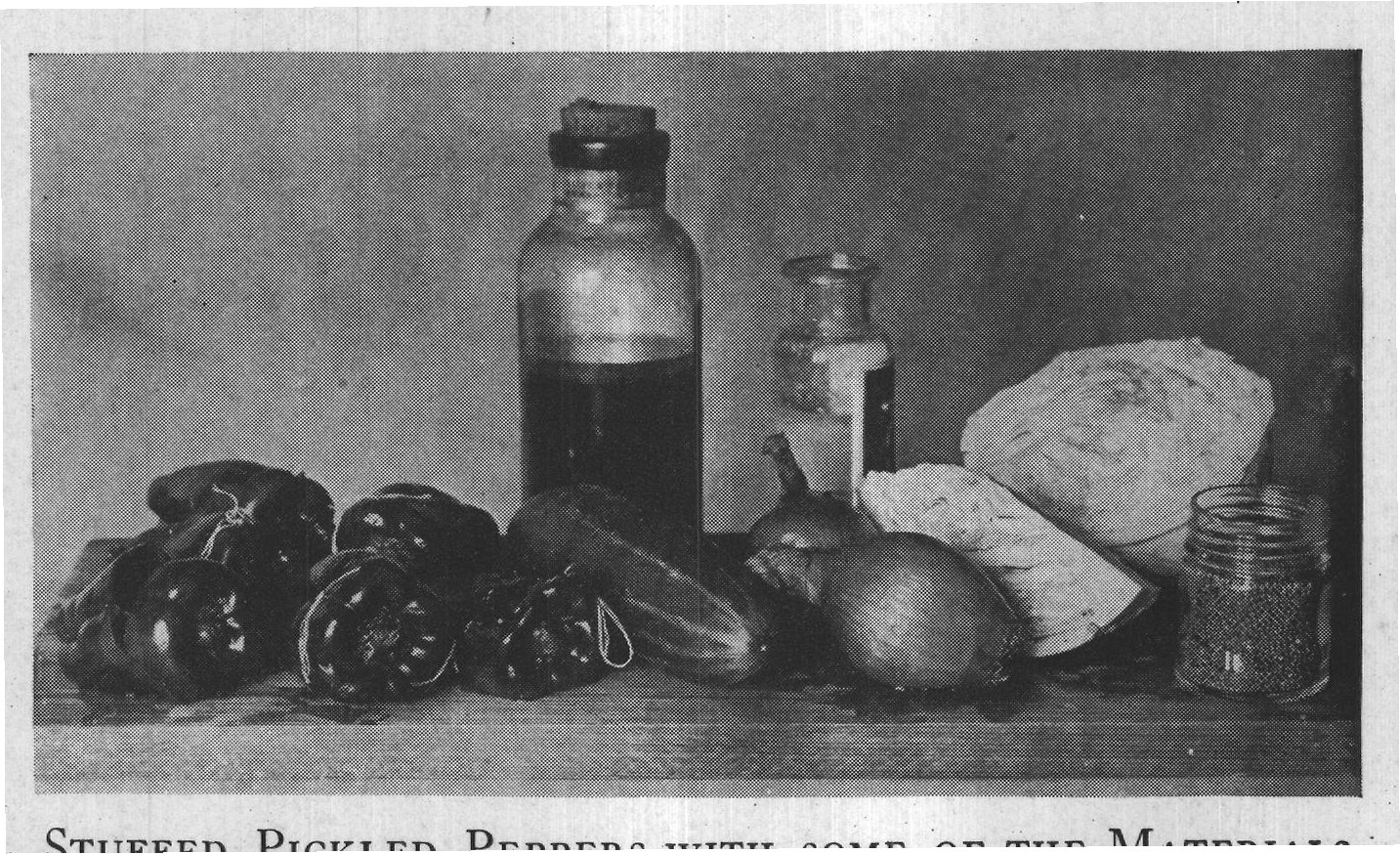
STUFFED PICKLED PEPPERS WITH SOME OF THE MATERIALS

Page 142. leaving a half inch of the pepper to hold the top in place, cut in the scoring. Take out and discard the seeds and veins. Make a brine of salt and water strong enough to float an egg. Let the peppers stand twentyfour hours in this brine. Drain and fill with chopped cabbage, green tomatoes, onions, and peppers, either one alone or all combined, in such proportion as is preferable. Season the chopped vegetables with mustard seed, grated horseradish, whole cloves, cinnamon bark, and nasturtium seeds. Prepare the vegetables in the same manner as in making piccalilli. Use to fill the peppers. When filled, sew the tops of the peppers in place with white thread. Pack the peppers in a stone jar, and cover with cider vinegar, scalding hot. Let stand over night; drain off the vinegar, scald, and return to the peppers. Drain off the vinegar, and scald several succeeding mornings. Then cover with fresh vinegar, made scalding hot, and set the pickles aside. A pint of sugar may be added to each gallon of vinegar. The time of preparation may be shortened by cooking the mangoes half an hour in the hot vinegar. Then drain, cover with a fresh supply and set aside.
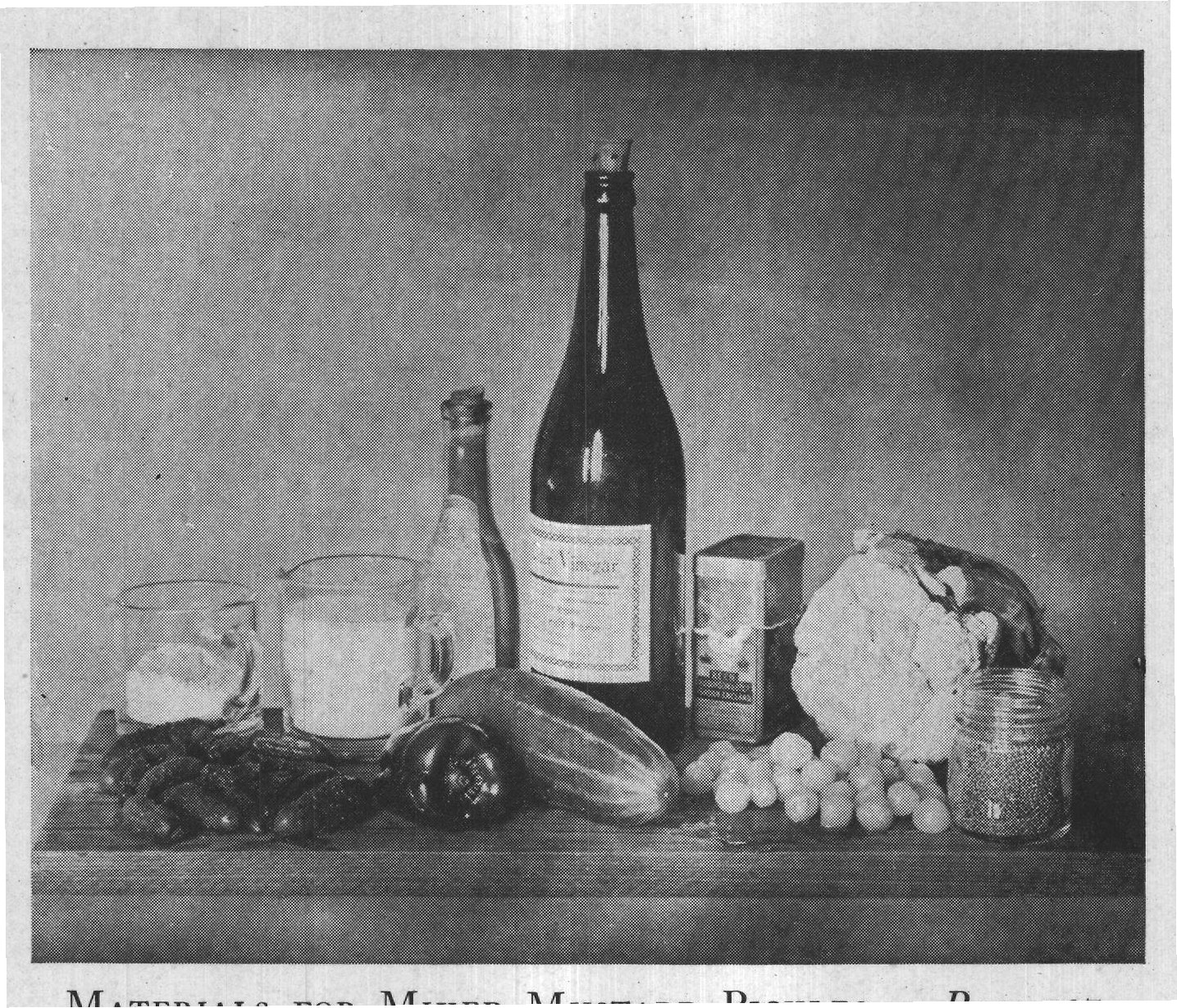
MATERIALS FOR MIXED MUSTARD PICKLES. - Page 137.
For the Modern Kitchen Do not make this as written.

The text begins mid-sentence — the missing opening tells you to cut a lid in the top of each sweet pepper, hinged by half an inch of flesh. Everything else is a straightforward crock pickle, but two things in it are no longer standard practice: the open-jar storage and the vagueness about vinegar strength.

A Little History

The odd word in this recipe is mangoes, which in American English long meant a stuffed pickle rather than a fruit. Pickled mangoes came to England from India in the seventeenth century and were prized; since the fruit itself could not be had in New England, cooks reproduced the idea with what they had — small muskmelons first, later sweet peppers — hollowed, packed with spiced chopped vegetables, sewn shut and steeped in vinegar. By the time this book was written, "mango" for a stuffed pickled pepper was ordinary kitchen vocabulary in much of the United States. The recipe also shows its place in the book by cross-reference: the vegetables are to be prepared "in the same manner as in making piccalilli," and the page carries a caption pointing to the mixed mustard pickle materials on page 137.

← Bordeaux SauceIndia Relish →