Home › Village Receipts › Clam Chowder (Two dozen clams two large)
Clam Chowder (Two dozen clams two large)
Two dozen clams, two large potatoes, six onions, one pint of tomatoes, one-half pound of salt pork, six soda biscuit. Fry out the pork in a frying pan, chop the clams, cut the potatoes in dice, also the onions. Take half of the pork and put in a pot, then half of the potatoes, onions, tomatoes, clams and biscuit. Then on top of that the rest of the pork, potatoes, onions, tomatoes, clams and biscuit. Pour over this enough liquor from the clams to just cover the contents of the pot. If there is not enough, add a little water and boil slowly for an hour. This is more like a stew than a soup and ought to be thick enough to be eaten with a fork.
— Mrs. F. W. Goodrich
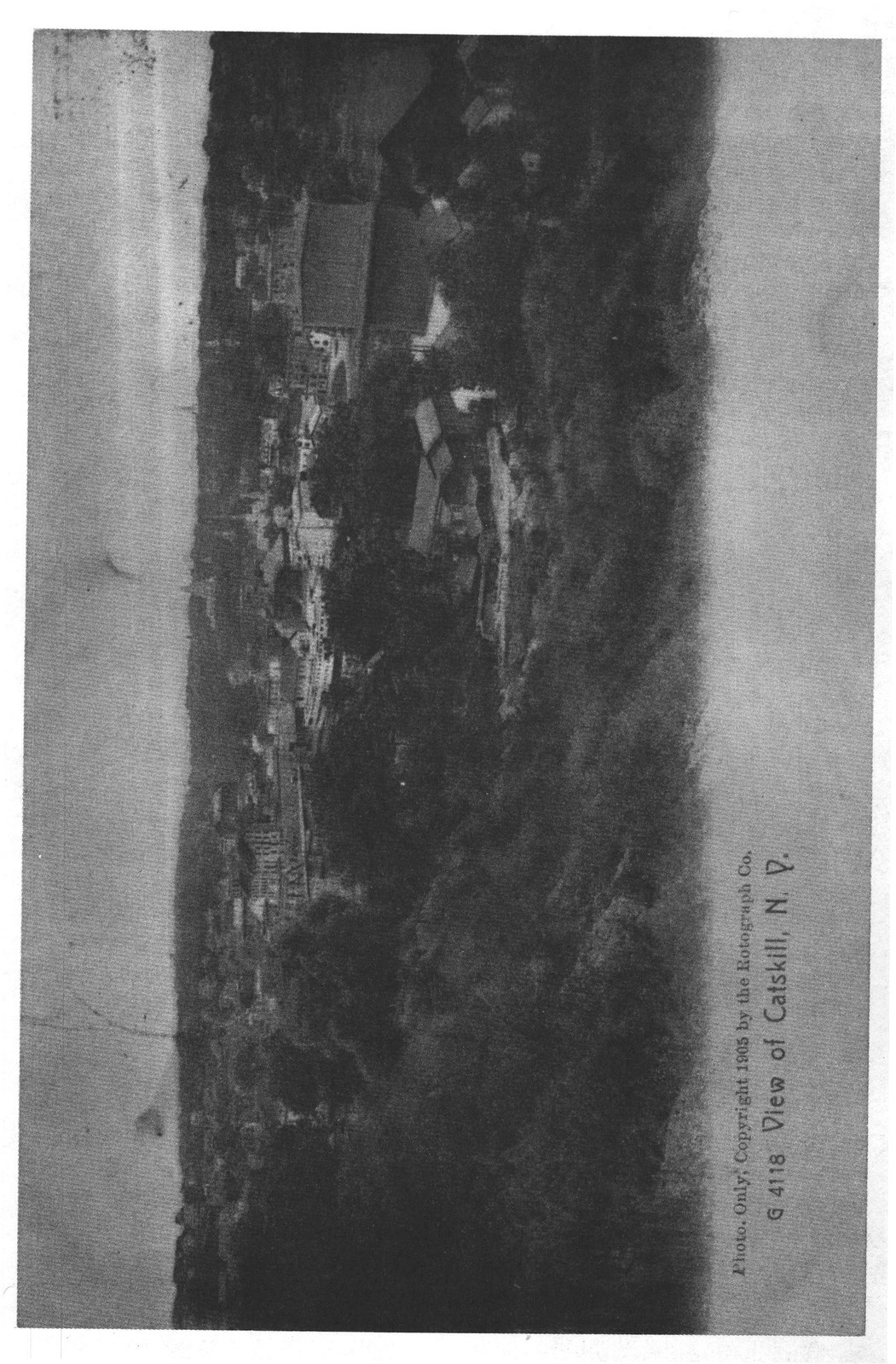
Photo. Only, Copyright 1905 by the Rotograph Co.
G 4118 View of Catskill, N. P.
A Rhode Island–style tomato chowder built by layering rather than stirring, thick enough to stand a fork in. Two things need attention: the clams and the salt.
- The hinge: clams cooked an hourChopped clams simmered a full hour turn to rubber. Build and boil the layers as written, then stir the chopped clams in during the last five minutes; the clam liquor gives the pot its flavour from the start.
- What kind of clamTwo dozen means hard-shell quahogs or large cherrystones, shucked and chopped, with all their liquor reserved; the yield of meat and liquor varies a good deal with the size of the clam, and the recipe wants enough liquor to cover the pot. Steam them open briefly if shucking raw is awkward, and strain the liquor through cloth for sand.
- Soda biscuitIn a chowder this most likely means a hard soda cracker rather than a soft raised biscuit. Six saltine-type crackers or two split common crackers, crumbled, will thicken the pot the same way.
- Six onionsSix onions is a great deal against two potatoes; unless they are small, two or three medium yellow onions, diced, will keep the onions from swamping the clams.
- Salt porkHalf a pound of salt pork, fried out, brings both fat and a great deal of salt. Use the rendered fat and the crisped dice, and add no salt at all until the pot has cooked and been tasted.
- TomatoesA pint of tomatoes means canned, home-put-up or commercial, roughly one 14–15 oz tin with its juice; fresh in season would also serve. Whole tomatoes crushed by hand suit the chunky texture better than purée.
- Boil slowlyA slow boil for an hour is really a bare simmer, lid on, with barely enough liquid to cover. Do not stir the layers apart until the potatoes are tender — the point is a dense, stew-like mass, not a broth.
- YieldServes four to six as a main course, with more crackers alongside.
Tomatoes in chowder mark this as a New York and southern New England habit rather than a Boston one; milk-thickened chowder was the Massachusetts orthodoxy, and the tomato version is the ancestor of what later got labelled Manhattan clam chowder, a name that does not appear in print until well after 1905. Catskill sits on the Hudson, so the clams here would have come from the coast by boat or rail. The instruction to build the pot in layers rather than stir it is older than the tomato: chowder began as a fisherman's dish of alternating salt pork, biscuit and fish, and the word is generally traced to the French chaudière, the cauldron it was cooked in. The stray line of copyright text about the Rotograph Co. appears to belong to a souvenir photograph of Catskill rather than to the cooking.