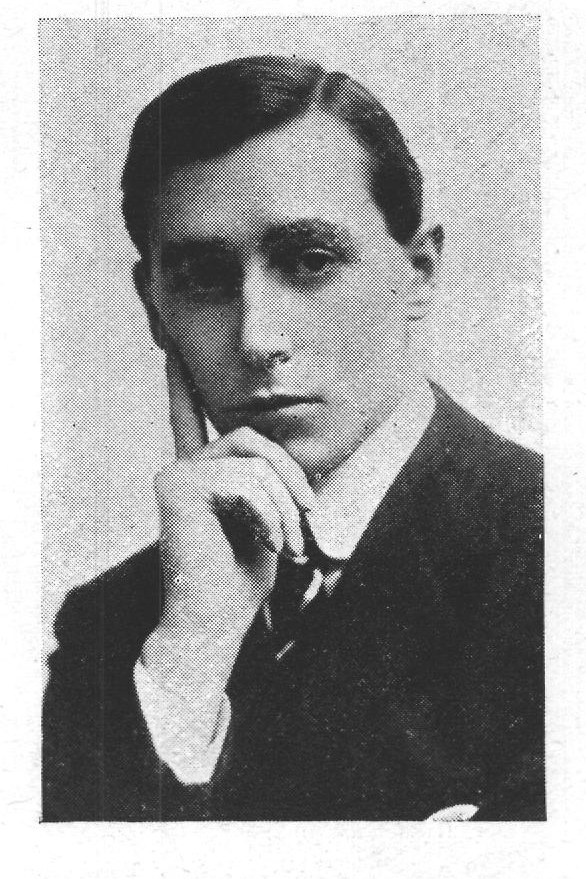
Dion Titheradge

A POCKET STEAK
The main requirement for this dish is a large appetite, which can be obtained almost any way and anywhere. A good plan is to rise early, eat a light breakfast and then play thirty-six holes of golf - • badly.
Take a large piece of Steak - the worse golf you have played the larger should be the piece.
It should also be very thick. Take a dozen Oysters and parboil them. Then slit open the side of the Steak and so make a pocket. Fill this pocket with the Oysters and sew it up securely. Grill the Steak in the ordinary way. Serve piping hot and eat slowly..
This dish is guaranteed to remove any depression caused by a bad day's golf.
Dionicerad M.
CHEESE FONDUE
½ cup bread crumbs 1/2 cup grated cheese ½ cup milk 1 egg Salt, pepper and a speck of bicarbonate soda Dissolve soda in milk. Add crumbs.
Beat yolk of egg very light. Add this to mixture with grated cheese.
Add seasonings to white of egg,
Two dishes run together here: a stuffed grilled steak from Titheradge, and a cheese fondue whose text breaks off mid-sentence. Both need a little translation.
- The hinge: barely parboil the oystersA dozen oysters dropped into simmering liquid need 30 seconds, until the edges just ruffle. They will cook again inside the steak, and anything longer leaves them rubbery by the time the beef is done.
- "Grill" means broilIn British and Australian usage of the period this is overhead heat, not an outdoor grate. A hot broiler or a very hot grill both work; the steak wants a hard sear so the outside is done before the pocket overheats.
- How thick is "very thick"A cut of 2 to 2½ inches is what this needs, from sirloin, rump or a thick porterhouse. Anything thinner will not hold a pocket without tearing, and the joke about golf gives no usable weight.
- Sewing the pocketUse plain cotton butcher's twine and a trussing needle, and leave the ends long so the stitches are easy to find and pull out before serving. Wooden cocktail sticks will do at a pinch.
- DonenessTake the beef to medium-rare at the thickest point and rest it 10 minutes. The oyster filling insulates the centre, so judge by the meat around the pocket rather than by time.
- The fondue is not Swiss fondueThis is a baked cheese pudding of the American type, thickened with crumbs and lightened with beaten egg white — closer to a soufflé than to anything dipped into.
- An ambiguous measurementThe crumbs and milk are both printed as "1½ cup" while the cheese is ½ cup, so one of the two figures is probably a misreading. Taking 1½ cups milk to ½ cup crumbs gives a workable batter, but the reverse reading is equally possible; adjust to a loose batter.
- The sodaA speck of bicarbonate of soda in the milk was a common trick to stop the cheese curdling or the mixture turning grainy. A pinch is genuinely all that is meant; more will taste soapy.
- The missing endingThe text cuts off at the egg white, and gives no oven, timing or yield, so any finish is a reconstruction: beat the white stiff, fold it in, and bake in a buttered dish in a moderate oven, around 350F, until puffed and set, roughly 30 minutes. It should serve two or three.
Steak stuffed with oysters is the dish generally known as carpetbag steak, the name often said to come from the pocket cut into the meat resembling a carpet bag; it is most often associated with Australia, though oysters were cheap enough on both sides of the Atlantic in the nineteenth century for the combination to appear widely, and beef-and-oyster pairings such as steak and oyster pudding are older still. Dion Titheradge (1889–1934) was Australian-born, the son of the actor George Titheradge, and made his career on the London and New York stage before turning to writing revue, which makes the appearance of a colonial steak in this collection of actors' recipes less accidental than it looks. The book itself appears to belong to a genre popular in the 1910s and 1920s, in which theatrical names contributed dishes — often more anecdote than instruction, as the golfing preamble here shows — to raise money or goodwill, with the recipe serving mainly as a frame for the personality.