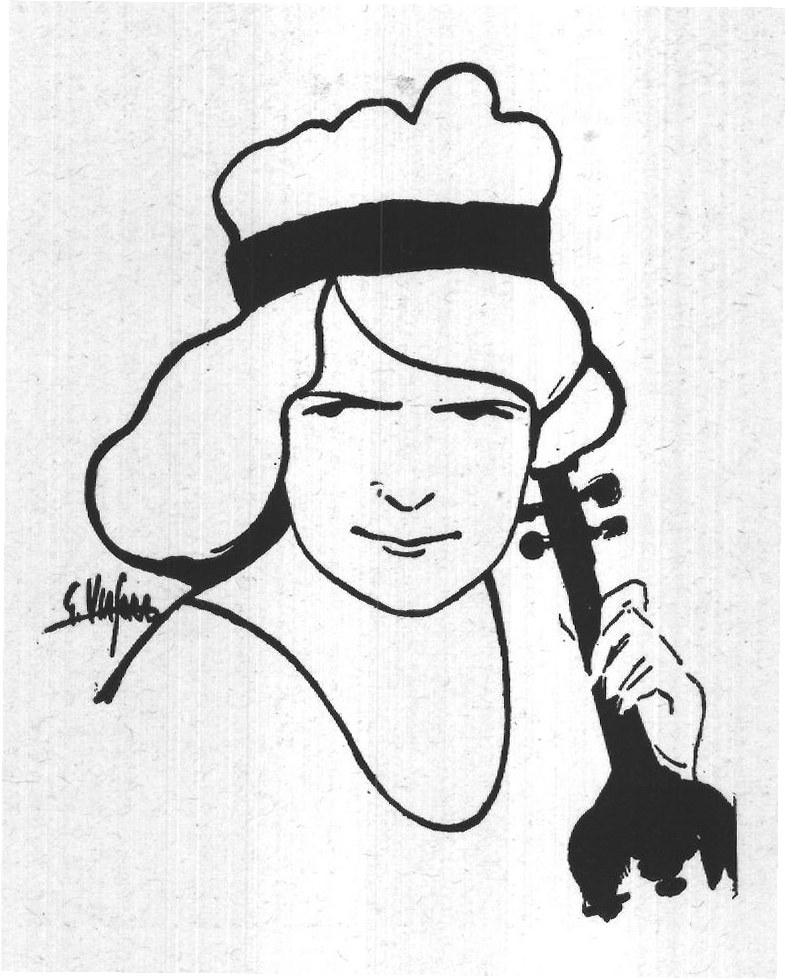
Helen Ware

2/3 cup butter
QUEEN CAKE
2 cups flour-scant 6 eggs-whites 1 1/4 cups powdered sugar 1/4 teaspoon Royal baking 1 1/2 teaspoons lemon juice powder Cream and butter, add flour gradually, mixed and sifted with soda, then add lemon juice. Beat whites of eggs until stiff; add sugar gradually, and combine the mixtures. Bake fifty minutes in a long shallow pan. Cover with frosting.
Sincerely,
The page has come out of the original two-column setting scrambled: the word APFELSTRUDEL and the butter measurement belong to a neighbouring recipe, and the ingredient list for the Queen Cake has been interleaved line by line. What follows is a white butter-and-egg-white cake, and it can be read clearly once the columns are pulled apart.
- Reading the ingredient listSet as two columns, it resolves to: 2/3 cup butter, 2 cups flour (scant), whites of 6 eggs, powdered sugar, 1/4 teaspoon Royal baking powder, lemon juice. The APFELSTRUDEL heading is a stray from the adjoining column and has nothing to do with this cake.
- The sugar is ambiguous"1/4 cups powdered sugar" is almost certainly a broken "1 1/4 cups," since a quarter cup would not carry six egg whites or match the butter. It is a guess from proportion, not from the page, and the original figure is lost.
- Baking powder or sodaThe list calls for Royal baking powder while the method says the flour is sifted "with soda." Follow the list. Royal was a cream-of-tartar powder, close enough to modern double-acting powder for this quantity, which is small in any case — the lift here comes chiefly from the beaten whites.
- Powdered sugarIn this period the term generally meant finely ground granulated sugar, not the cornstarch-cut confectioners' sugar sold today. Superfine (caster) sugar is the nearer equivalent and dissolves properly into the whites.
- Order of workCream the butter, work in the sifted flour and leavening, then the lemon juice — the mixture will be stiff and crumbly, which is expected. Beat the whites to stiff peaks, beat in the sugar gradually to a meringue, then fold the two together in stages rather than stirring, or the aeration is lost.
- Oven and panNo temperature is given, as was normal. A moderate oven, around 350F, suits a cake of this depth. 'A long shallow pan' points to a rectangular sheet pan, perhaps something near 9 by 13 inches; at that size the batter bakes shallow and is likely to be done before fifty minutes in a modern oven — start testing at 30 to 35 minutes.
- FrostingNone is specified. A plain white boiled icing or a lemon water icing would suit the pale crumb better than a buttercream.
- YieldA 9 by 13 sheet cuts into 20 to 24 squares.
Queen cakes are an English inheritance, recorded in eighteenth-century receipt books as small rich cakes baked in patty pans and often in heart-shaped tins, usually with currants and a little rosewater or lemon. By the time American cookbooks took the name up, it had drifted toward a plain white cake leavened with beaten egg whites and a pinch of chemical powder, baked in a sheet and iced. The Royal brand named in the ingredient list is a reminder of how thoroughly proprietary baking powders had displaced saleratus in American kitchens by the early twentieth century. Helen Ware, an American stage actress known for her work in melodrama in the years before the First World War, contributed this to a collection of recipes gathered from theatre people, a genre that flourished in the period and in which the contributor's name mattered rather more than the precision of the measurements.