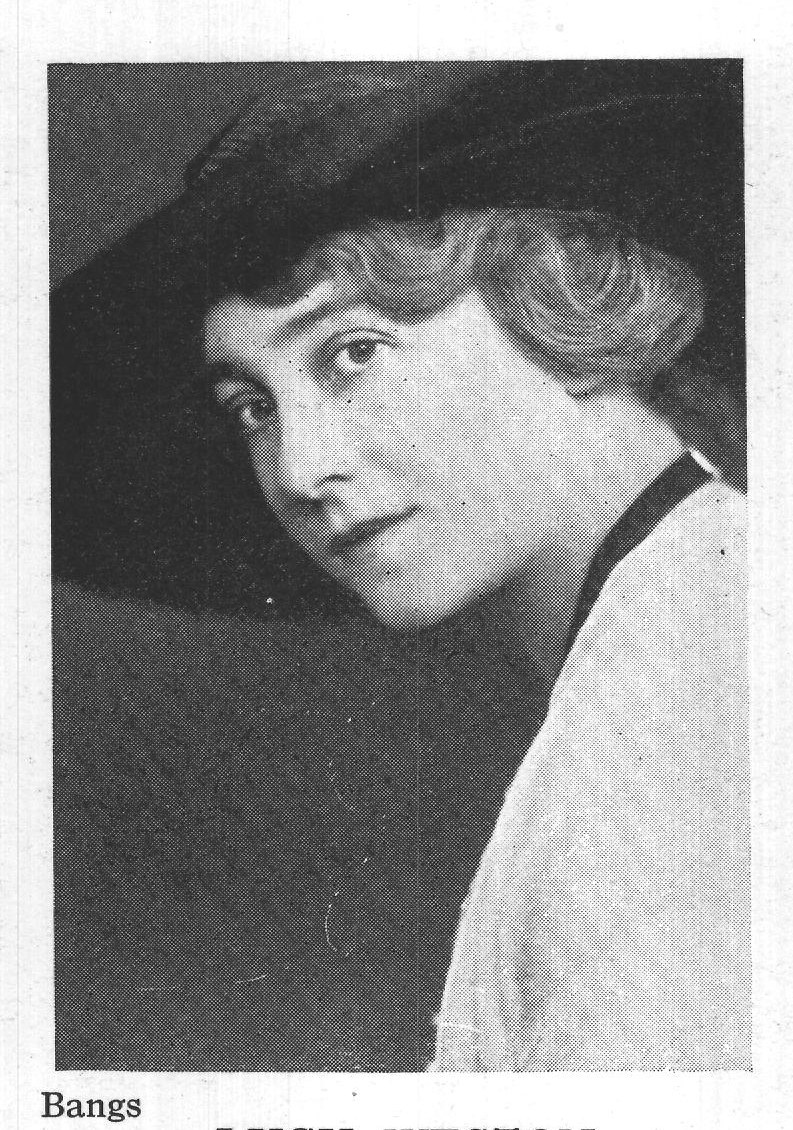
Lucy Weston

MIXED GRILL
Cook link sausages slowly with two tablespoonfuls of hot water in a covered pan until water is absorbed. This steams them. Remove cover and cook large mushrooms with the sausages until both are done.
Have broiling some slices of bacon, lambs kidneys cut in two, small frenched lamb chops and slices of tomato. To the fat in the sausage pan add a little Worcestershire sauce, fresh-mixed mustard and fresh horseradish. Serve an attractive portion of each of the grilled articles on a very hot plate and pour some of the sauce over it.
I yours Sincerely ey veston Ley [BREAST OF CHICKEN A LA FOLLIES AKE breast of chicken and place in casserole with large piece of butter, add a very little flour, pint of cream and season.
Serve with slice of Virginia ham and broiled fresh mushrooms.
This is my own invention and my favorite dish.
Two dishes on one page: a full mixed grill and a cream-braised chicken breast. Both are written for a cook who already knows how to run a broiler, so the gaps are in quantities and timing rather than technique.
- The hinge: everything hot at onceA mixed grill is an exercise in staging, not cooking. Sausages take the longest and mushrooms the shortest, so start the sausages, add kidneys and chops partway, and give bacon and tomato the last few minutes. The plates must be genuinely hot or the assembled portion goes tepid before it reaches the table.
- "Casserole" hereThe word could mean either a lidded stewpan on the stove or a covered earthenware dish for the oven; both senses were current when the book appeared. Either way, cook the chicken gently in butter and cream, covered, over low heat or in a slow oven.
- Steaming the sausagesTwo tablespoons of water in a covered pan sets the sausage through without splitting the skins, then the lid comes off to brown. This still works better than dry-frying from cold, and links from a butcher will hold together where thin supermarket sausages may not.
- Frenched lamb chopsRib chops with the meat and fat scraped from the bone ends. They are small and lean; three to four minutes a side under a hot broiler is plenty, and they should come off pink.
- KidneysLamb kidneys need the white core snipped out after halving. Broil four to five minutes total. Cooked past faintly pink they turn grainy and take on a strong ammoniac edge, which is what gives kidneys their bad reputation.
- The pan sauceSausage fat, Worcestershire, mustard and grated horseradish make a sharp, thin dressing rather than a bound sauce. Start with a teaspoon of each per two servings and taste; fresh horseradish is far more aggressive than the jarred creamed kind.
- Cream and flour proportionsA pint of cream to "a very little flour" and one large piece of butter is a loose formula. For two chicken breasts, a tablespoon of butter, two teaspoons of flour and a cup of cream will reduce to a coating sauce; the full pint is closer to a serving-for-four quantity.
- Virginia hamThe original means dry-cured, salt-forward country ham, sliced thin and warmed through, not the pink boiled deli article. A slice of prosciutto or serrano gives a closer effect than modern sandwich ham.
- Doneness and yieldNeither recipe gives a time, and the mixed grill gives no quantities either, so the yield depends entirely on how much of each item is grilled. Chicken breast poached in cream needs roughly 15 to 20 minutes at a bare simmer, to 165F at the thickest point; the pint of cream suggests a chicken dish for about four.
Celebrated Actor Folks' Cookeries collected dishes from stage performers of the mid-1910s, and these two entries show the two poles of that world: the chophouse and the revue. The mixed grill is a British theatrical institution, the standing supper of the grill rooms attached to London hotels and restaurants where actors ate after the curtain, and the combination of sausage, kidney, chop, bacon, mushroom and tomato on one plate had already hardened into convention by the Edwardian years. Lucy Weston was an English music-hall singer who is generally said to have worked in American vaudeville, which would explain a distinctly London plate appearing in a New York book. The second dish is named only "a la Follies," often taken to point to the Ziegfeld revues that dominated Broadway in this period, though the word was not exclusive to Ziegfeld then, and the claim "this is my own invention" is worth reading as period marketing as much as fact: performers' cookbooks traded on the idea that a star had a signature dish, and a chicken breast in cream with ham and mushrooms was a fashionable enough restaurant idiom that several people could invent it independently.