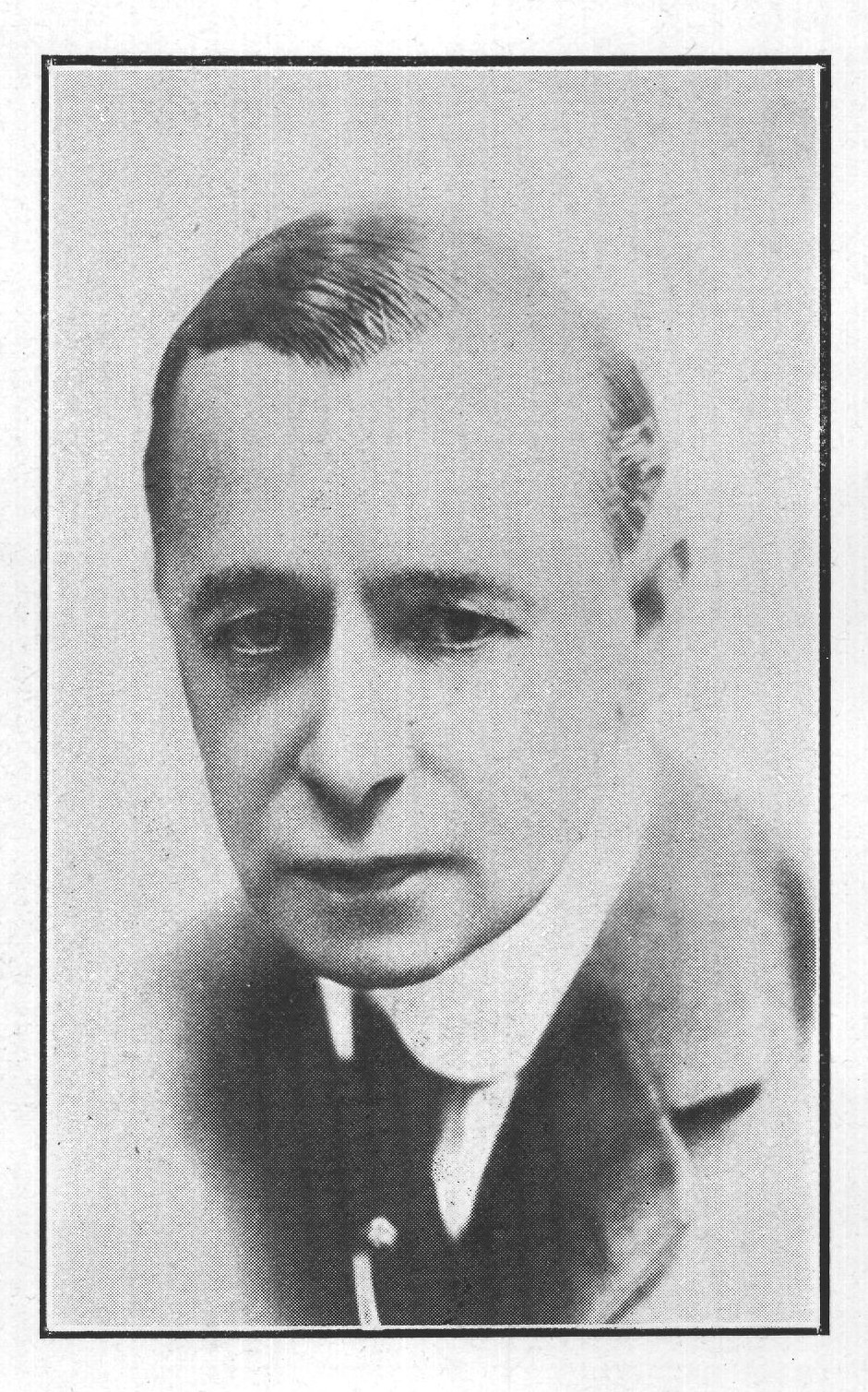
William Collier

PIMENTO AND
CHEESE ROAST
3 canned pimentos, chopped Bread crumbs 2 cups cooked lima beans ¼ pound cream cheese Put first three ingredients through a meat chopper.
Mix thoroughly and add bread crumbs until it is stiff enough to form into a roll. Brown in the oven, basting occasionally with butter and water.
A meatless loaf built on lima beans and cheese, written in the telegraphic style of celebrity cookbook contributions — the quantities are loose and the seasoning is left entirely to the cook.
- The title is a red herring"Steamed Veal" appears in the heading but nowhere in the ingredients or method. It may be a typesetting collision with a neighbouring contributor's heading, though that is a guess. Nothing is steamed and no veal is involved; make it as the ingredient list reads.
- "14 pound" cream cheeseThis is a dropped fraction bar for ¼ pound, that is 4 ounces. In 1916 "cream cheese" meant a fresh unripened soft cheese; a block-style cream cheese works, and its salt and acidity carry much of the flavour here.
- Meat chopperThe hand-cranked grinder of the period. A food processor pulsed a few times gives the same coarse paste — do not run it to a purée or the loaf turns pasty.
- Lima beansTwo cups cooked means drained beans, from either dried limas soaked and simmered until tender or frozen ones cooked through. Drain them well; wet beans mean you will need far more crumbs than the loaf can carry.
- Bread crumbsNo quantity is given because the amount depends on how wet the beans are. Add dry crumbs a handful at a time until the mixture holds a shape when squeezed — usually around a cup to a cup and a half.
- SeasoningThe recipe specifies none at all. Salt, pepper and a little grated onion are consistent with period vegetarian loaves and the dish is flat without them.
- OvenThe recipe gives no temperature and no time, only "Brown in the oven." A moderate to moderately hot oven, somewhere around 375-400F for roughly 40 minutes, basting with melted butter and water, is a reasonable modern reading.
- YieldNone is given; the quantities suggest roughly four as a main course, or six sliced as a side. It slices better after resting ten minutes and is good cold the next day.
Meatless loaves of this kind were everywhere in American cookery around 1916 — bound with crumbs, moulded into a roll and basted like a joint, they were meant to occupy the place on the plate that a roast would have held. They came out of two overlapping movements: the vegetarian and health-reform kitchens of the late nineteenth century, which produced nut roasts and bean loaves in quantity, and the food-economy campaigns that promoted pulses as a substitute for expensive meat — though in the United States those campaigns gathered force only after the country entered the war in April 1917, a year after this recipe. Canned pimentos were a relatively new convenience at this date, imported from Spain and also grown commercially in Georgia by the 1910s, and they show up constantly in period recipes paired with cheese — the pimento-and-cheese combination that would later settle into a sandwich spread. That an actor of Collier's standing contributed a bean loaf rather than a chafing-dish extravagance says something about the genre: celebrity cookbooks of the era were often charity ventures, and contributors frequently sent in whatever the household actually ate.