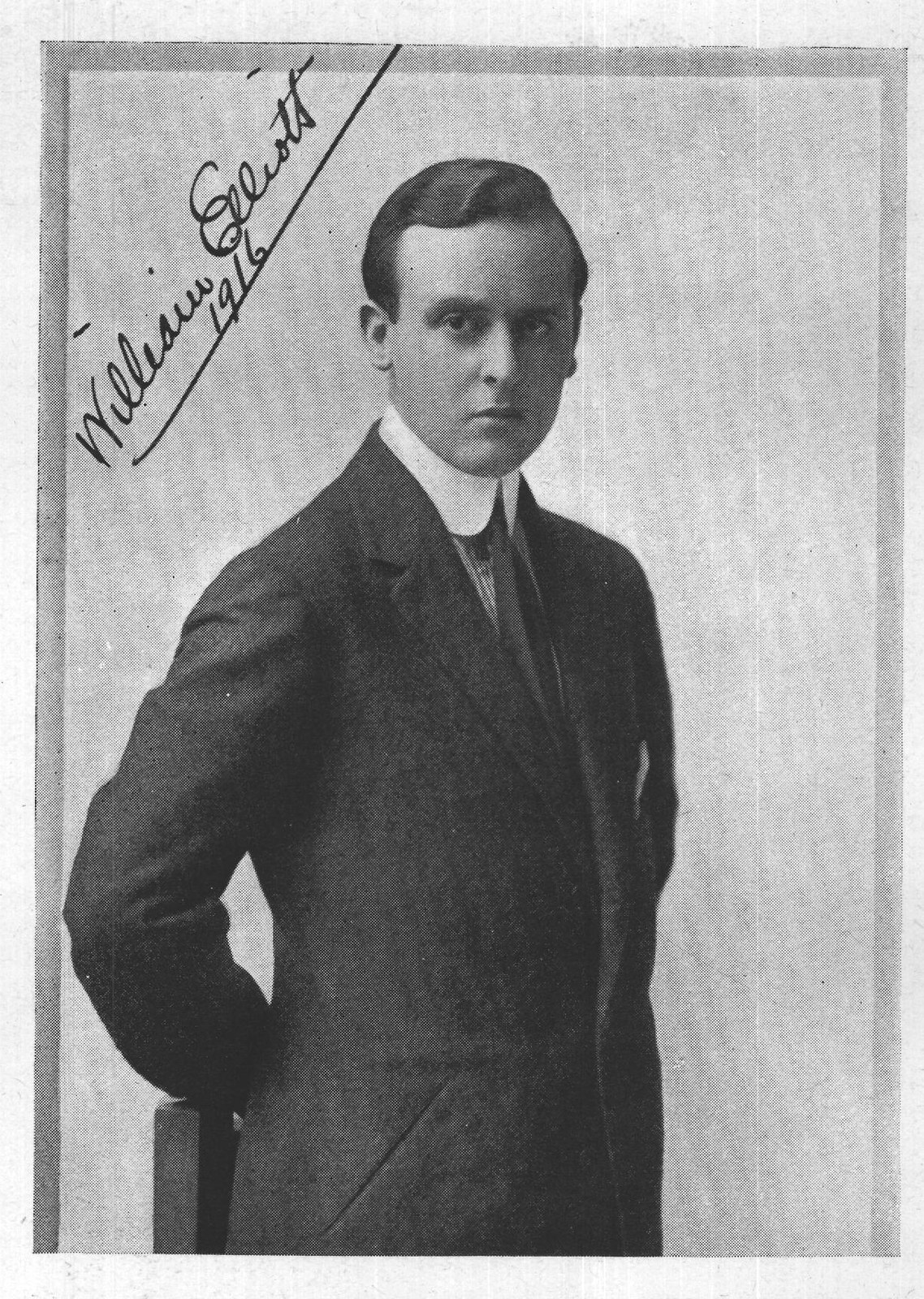
William Elliott

FIG TURNOVERS
Mix and sift three cups of flour, 3/4 teaspoon salt and 4 teaspoons Royal baking powder. Rub 1½ tablespoons butter into the flour. Beat one egg, add to it one cup milk and add gradually to the flour. The dough should be soft but not wet. Turn out onto floured board and roll out until half-inch thick. Cut with a biscuit cutter.
Dip a silver knife handle into flour and bend the cakes in the middle by pressing the knife on them.
Have ready eight or ten figs chopped fine. Put a tablespoon of fig on half of cake, brush over lightly with white of egg, fold other half over and press well together. Bake in quick oven twenty minutes.
Serve hot.
A baking-powder dough, cut in rounds and folded over chopped figs — closer to a filled biscuit than a pastry turnover. The first clause on the page ("Bake for about ten minutes and serve with whipped...") is the tail of the preceding recipe in the book and has nothing to do with this one.
- Quick ovenGenerally taken as somewhere around 400–450°F. Twenty minutes suits a half-inch biscuit dough; check at fifteen, as the fig filling will scorch if the bottoms overbake.
- Royal baking powderThe book was a promotional publication of the Royal Baking Powder Company, which is why the brand is named. Four teaspoons to three cups of flour is in line with ordinary period proportions.
- The figsDried figs, not fresh — fresh ones will leak and steam the dough open. Stem them and chop fine; eight or ten dried figs gives roughly a cup. If they are hard, cover with hot water for ten minutes and drain well before chopping.
- Bending with the knife handleThis scores a crease across the round so it folds cleanly instead of cracking. A floured chopstick or the back of a butter knife does the same job. Do it before filling, not after.
- Egg white as glueBrush only the border, seal, then press the edges firmly with a fork. Filled biscuit dough springs open in the oven if the seam is merely pinched.
- Dough handling"Soft but not wet" means a dough that just holds together; flours vary, so hold back a little of the milk and add it as needed. Handle as little as possible and reroll scraps once at most.
- YieldAbout twelve to fourteen turnovers from a 2½-inch cutter. Best within an hour of baking; they go leathery cold, though a few minutes in a 300°F oven revives them.
Celebrated Actor Folks' Cookeries was a promotional book issued by the Royal Baking Powder Company, collecting recipes credited to stage performers of the day — the reason nearly every recipe in it specifies Royal by name. William Elliott was an American stage actor of the early twentieth century, and the contribution is characteristic of the genre: a homely, quickly assembled sweet rather than anything a professional kitchen would turn out. The dish itself sits in a long American line of biscuit-dough turnovers filled with dried fruit. Figs were an easy choice in this period, with the California fig industry expanding and dried Smyrna-type figs a common pantry staple in boxes and pressed cakes.