Punch
Mrs. Eugenia Phillips
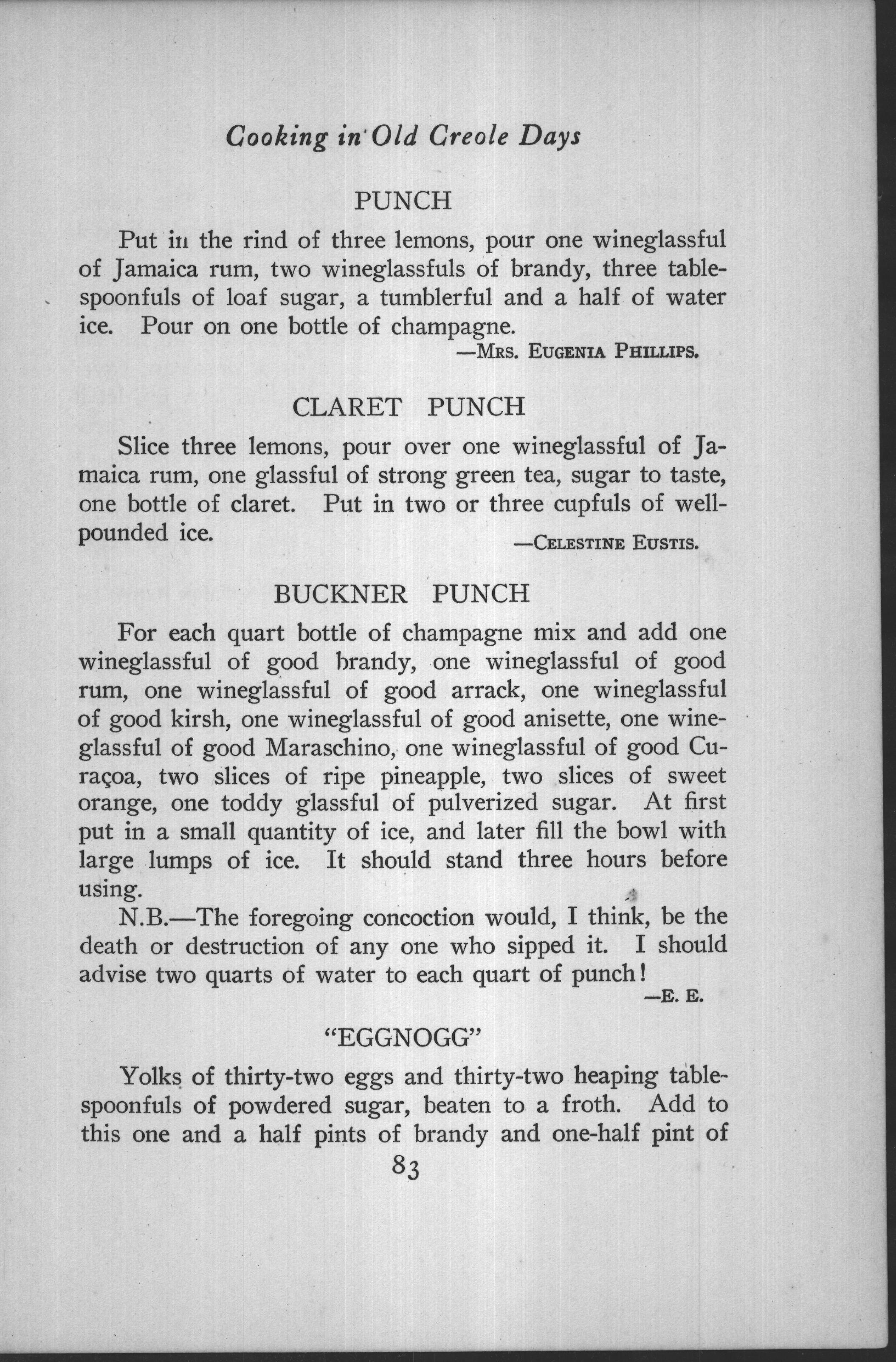
Put in the rind of three lemons, pour one wineglassful of Jamaica rum, two wineglassfuls of brandy, three tablespoonfuls of loaf sugar, a tumblerful and a half of water ice. Pour on one bottle of champagne.
A champagne punch built for a party bowl — spirit-forward, citrus-scented, and chilled with ice rather than watered thin.
- Wineglass measuresA wineglassful is about ¼ cup (2 oz), so this is roughly ¼ cup rum and ½ cup brandy beneath a full bottle of champagne.
- Loaf sugarSugar once came in hard cones cut into lumps; 3 Tbsp granulated or superfine sugar is the equivalent, dissolved before the bubbly goes in.
- The lemon rindOnly the peel goes in, for its fragrant oils — pare it thin and avoid the bitter white pith beneath.
- “Water ice”Here most likely a lemon water ice (a sorbet) that chills and sweetens as it melts; a scoop of good lemon sorbet, or simply a tumbler and a half of cracked ice, works.
- Add champagne lastPour the bubbly in at the end, off the ice, so it keeps its fizz — then serve at once.
Punch is a very old word for a very old drink. By tradition its name comes from the Hindi and Sanskrit pānch, meaning five — for the five elements of the original mix of spirit, sugar, citrus, water, and spice — carried home to Europe by English traders from India in the seventeenth century. By the time this Creole version was written, the communal punch bowl had become the centerpiece of Southern hospitality, and a bottle of champagne poured over rum and brandy marked a celebration well worth the trouble.
From page 83 of the 1904 edition.
Original page from the book