Stewed Tongue for Lunch
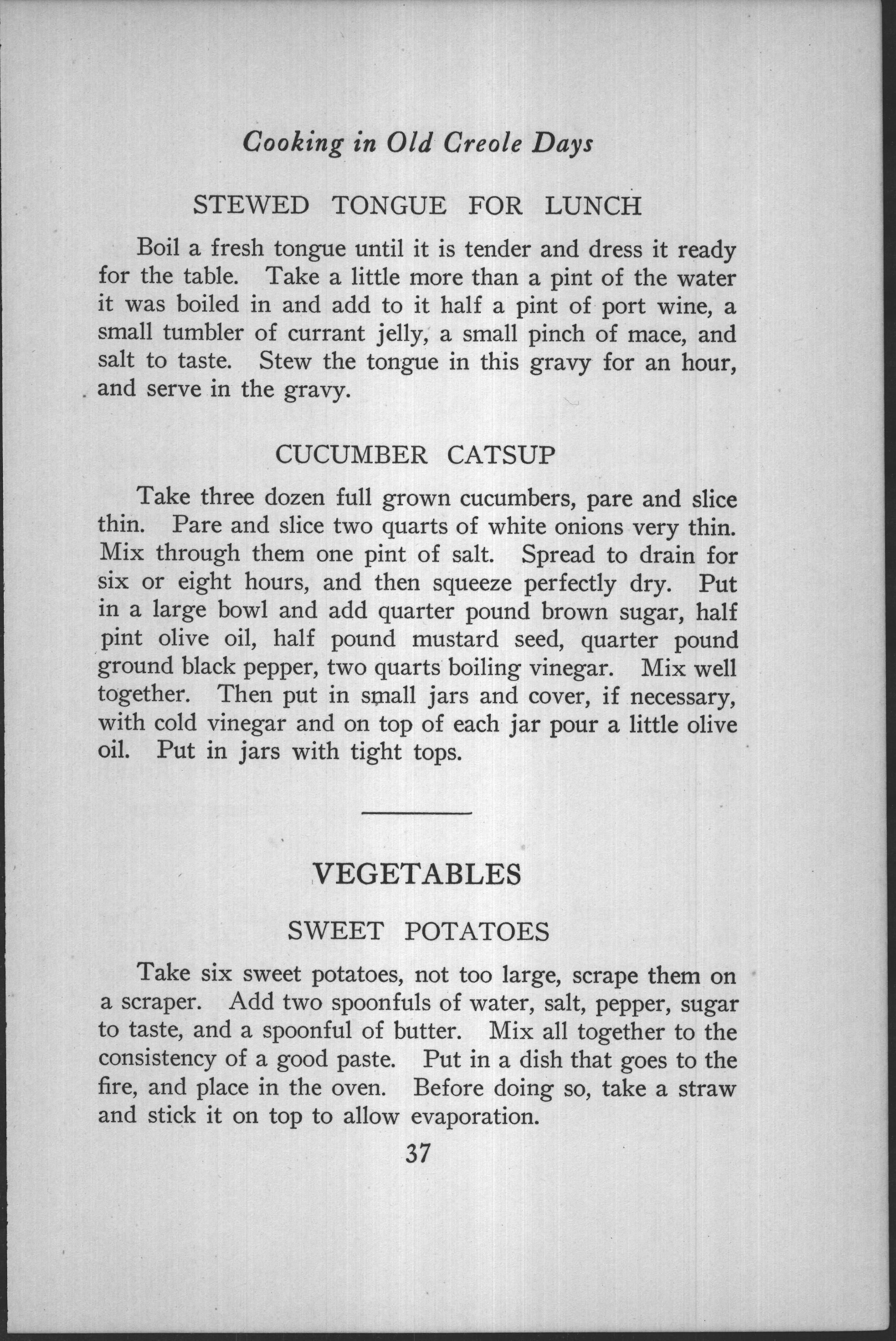
Boil a fresh tongue until it is tender and dress it ready for the table. Take a little more than a pint of the water it was boiled in and add to it half a pint of port wine, a small tumbler of currant jelly, a small pinch of mace, and salt to taste. Stew the tongue in this gravy for an hour, and serve in the gravy.
Boiled tongue given a second, glossy life in a sweet-and-savory sauce of port and currant jelly — a genteel luncheon dish in the old English manner.
- Use a fresh tongueFresh (not corned or smoked) beef tongue, simmered until fork-tender — usually 2–3 hours.
- “Dress it” = peel and trimAs soon as it’s tender and cool enough to handle, peel off the rough outer skin and trim the root; the meat beneath is smooth and tender.
- The liquid measures“A little more than a pint” of cooking water is about 2½ cups; “half a pint” of port is 1 cup; a “small tumbler” of currant jelly is roughly ½ cup.
- “Mace” is nutmeg’s siblingMace is the lacy outer coat of the nutmeg, warmer and more delicate; a pinch is all you need, and ground nutmeg substitutes at a push.
- A Cumberland-style saucePort and red-currant jelly make a classic sweet sauce for cold or rich meats — reduce it a little if you’d like it to cling as a glaze.
Tongue was a cherished cut on Victorian and Edwardian tables, prized for its fine, even grain and served hot or cold, whole or pressed into a mold. Pairing it with port and red-currant jelly draws on a long British love of sweet-tart fruit sauces for meat — the same instinct behind Cumberland sauce, that cold glaze of currant jelly, port, and citrus traditionally served with game and tongue. Such dishes now read as exotic, but for generations tongue was ordinary, thrifty fare, a way to honor the whole animal that a nose-to-tail cook took entirely for granted.
From page 37 of the 1904 edition.
Original page from the book