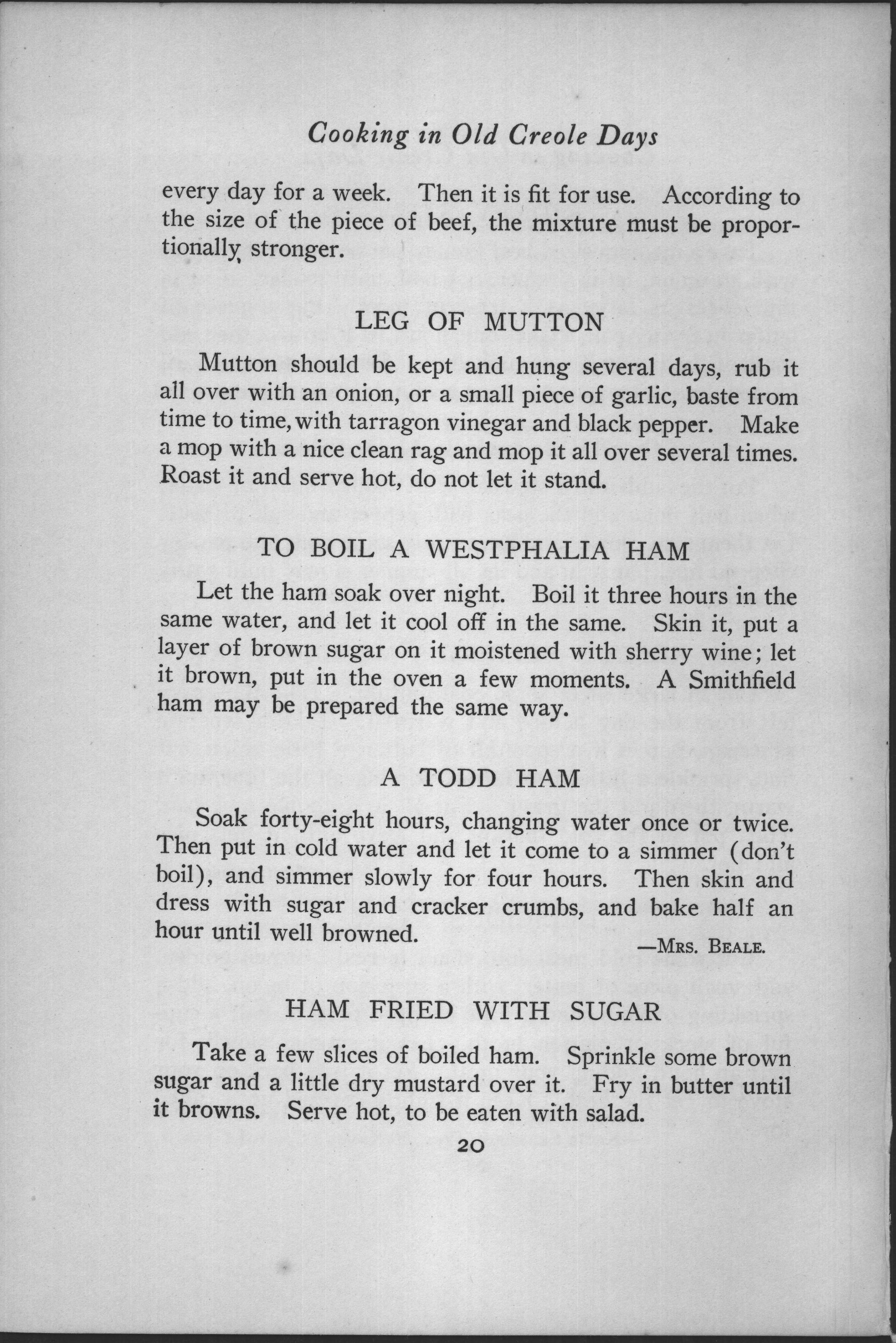
To Boil a Westphalia Ham
Let the ham soak over night. Boil it three hours in the same water, and let it cool off in the same. Skin it, put a layer of brown sugar on it moistened with sherry wine; let it brown, put in the oven a few moments. A Smithfield ham may be prepared the same way.
A simple way with a fine dry-cured ham: a long soak, a gentle boil, and a sherry-and-sugar glaze crisped in the oven.
- Why the overnight soakWestphalia and Smithfield hams are heavily salt-cured, so soaking overnight (changing the water helps) draws out enough salt to make the ham pleasant to eat.
- “Boil” means barely simmerDespite the word, keep the water at a bare shiver, not a rolling boil — hard boiling toughens ham. Three hours at a gentle simmer suits a large one, and cooling it in its own liquor keeps it moist.
- The glazeBrown sugar loosened with sherry (dry or medium) makes the classic glaze; a few minutes in a hot oven, 425–450°F (220–230°C), sets it to a shine.
- Doneness for a cured hamThese hams are already cured; you’re heating, not cooking raw pork. If reheating a fully cured ham, an internal 140°F (60°C) is plenty.
- Smithfield stands inThe recipe rightly notes a Smithfield ham takes the same treatment — it’s the American cousin of these dry, aged, intensely savory hams.
Westphalia ham — Westfälischer Schinken — comes from the Westphalia region of Germany, where pigs were traditionally raised on the acorns of its oak forests and the hams cold-smoked over beechwood and juniper. The result is dark, dense, and deeply savory, prized across Europe for centuries. Pairing it here with a Virginia Smithfield ham is apt: both are dry-cured, aged, and salty enough to need soaking, the aristocrats of the ham world. Their presence in a Creole cookbook shows a kitchen reaching for the very best cured meats, domestic and imported alike.
From page 20 of the 1904 edition.
Original page from the book