Fish
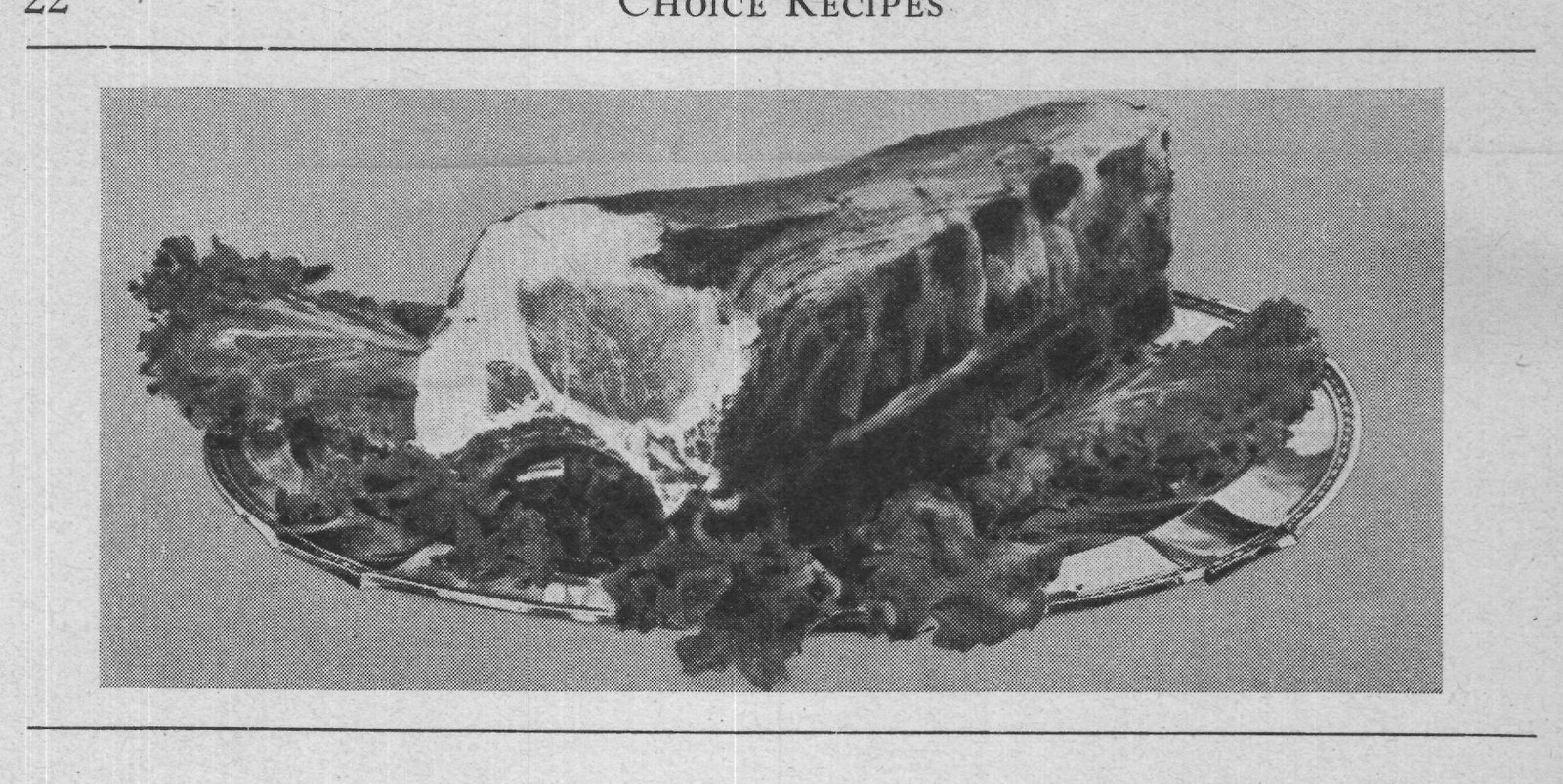
General Instructions ISH cooked in a fireless cooker is delicious. Fish is a food that may be blaze, but the fireless is specially serviceable for cooking fish when one wishes to find the meal cooked when arriving home, as fish does not become soft nor fall to pieces by standing a considerable length of time in the Fireless Cookstove.
Turbot of Fish 2½ cups flaked fish 1½ cup milk 1 slice onion, sprig parsley 1/4 cup butter 2/3 cup bread crumbs 1/4 cup flour, 1/2 teaspoon salt 1/2 teaspoon pepper Lemon juice, yolk of 2 eggs Scald milk, onion and parsley together, remove seasoning.
Melt butter, add flour, salt and pepper, and gradually the milk; then egg slightly beaten. Put layer of fish on the buttered dish. Sprinkle with salt and pepper and add a few drops of lemon juice. Cover with sauce; continue until dish is full. Cover with crumbs and bake 30 minutes with two radiators heated 475 degrees. Lobster a la Newburg One pint lobster meat picked fine, I/2 pint cream, yolks of 3 eggs, 1 gill Sherry wine, 1/2 teaspoon salt, 1/4 teaspoon cayenne, stir thoroughly, put in double boiler, cook 1/2 hour. One hot radiator.
Boiled Fish Wash clean fish, tie in cheese-cloth bag, leaving room for the fish to swell.
Cover with boiling water, using 1 tablespoon of salt and juice of 1/2 lemon to 1 quart of water. Place in fireless 1 hour, using one radiator, heated 450 degrees.
Steamed Fish Use same kinds of fish for steaming as for boiling. Clean, wash and dry fish.
Rub with salt and place in cooker vessel. Cut in two in the Put in a vessel that is well buttered, place in the fireless with 2 radiators heated 475 degrees, and bake for 1 hour. When done turn on platter and pour over sauce. center, if necessary. Add ½ pint of Escalloped Oysters, boiling water, place cover on utensil and put in the fireless, on radiator heated 450 degrees. Steam 1/2 hour.
Remove from fireless and pour over a fish sauce (see recipes under "Sauces"), and sprinkle over all chopped parsley.
Escalloped Salmon One can salmon, 1/2 pound rolled crackers. Put in a well buttered basin, layer of cracker crumbs, thin layer of flaked salmon, season with salt, pepper and small pieces of butter, and continue until all is used, having crackers on top. Pour over 1 pint of hot milk.
Bake in the fireless for 1 hour with two radiators heated 450 degrees.
Fish Stuffing 1/2 cup cracker crumbs Few drops onion juice 1/4 cup butter 1/2 cup stale bread crumbs Salt and pepper to taste 1/4 cup hot water Mix in order given.
Salmon Loaf One large can salmon, remove bones and skin, pick fine, add 2 tablespoons melted butter, 2 eggs well beaten, 1/2 cup bread crumbs, mix all together, season with salt and pepper. (or Oysters en Casserole) Cover bottom of utensil with cracker crumbs to depth of 1/4 inch, then a layer of oysters, salt and add a moderate amount of butter. Add alternately a layer of crumbs and oysters until desired amount is prepared. Pour over enough rich milk to moisten cracker crumbs and place vessel in fireless. Use two radiators heated 475 degrees. Time, 30 to 45 minutes.
Baked Fish Clean a 4-pound fish, sprinkle well with salt inside and out, stuff and sew. Cut five diagonal gashes in each side of backbone and insert narrow strips of fat salt pork. Shape with skewers in form of letter "S" and fasten skewers with small twine.
Place in greased 8-qt. pail, sprinkle with salt and pepper, brush over with butter, dredge with flour and place around fish small pieces of salt pork.
Bake 1 hour. Use two radiators, 475 degrees.
Baked Blue Fish Clean and wipe dry, roll in cornmeal, season with salt and pepper, place in pan with melted butter, put in basket and bake 45 minutes with two radiators.
ALL cuts.
These are retained-heat recipes: soapstone or iron "radiators" were heated on a range, dropped into an insulated box with the food, and the box shut. Translating them for a conventional oven means reading the radiator count as a starting temperature and the stated time as a minimum.
- What a radiator isA radiator is a soapstone or cast-iron disc heated on the stovetop and placed under (and often over) the cooking vessel inside the insulated cabinet. Two radiators at 475F means the food starts hot on both sides and coasts down; one radiator is a gentler, one-sided heat.
- Oven equivalentsThe two-radiator bakes are probably best approximated by a moderate oven, around 350F, since retained heat falls steadily from the moment the lid shuts. The one-radiator dishes are closer to 300F or to a covered pot over the lowest burner.
- Timing runs long by designAn hour for a 4-lb baked fish is a fireless figure, not an oven figure. In a 350F oven the same fish is done in 35 to 45 minutes, at 145F internal and flaking at the backbone; check early rather than trusting the clock.
- "Turbot of Fish"No turbot is involved. The name appears to have been applied to flaked cooked white fish layered with a thick cream sauce and crumbs; leftover cod, haddock or halibut is what the recipe seems to expect.
- A gill of SherryA gill is half a cup, which is generous for a pint of lobster in half a pint of cream. Add the wine at the end, off direct heat, and hold the Newburg below a simmer or the egg yolks will curdle into the cream.
- Half an hour is too long for NewburgLobster meat is already cooked when it goes into the pan. The half hour may simply reflect how long a cooling fireless vessel took to reach setting point; on a stovetop the sauce thickens in five to eight minutes and the lobster toughens after that.
- Escalloped oystersAlternating layers of crumbs and oysters, crumbs on top, is what the recipe describes, and the milk should only moisten, not flood. Oysters need very little heat; bake until the edges ruffle and the top browns rather than to a fixed time.
- Salt pork and lardingThe strips inserted along the backbone of the baked fish are there to baste a lean fish from within. Blanched thick-cut bacon or a few strips of pancetta does the same job; skip it entirely for an oily fish such as bluefish or salmon.
- Canned salmonThe large can of the period was packed with skin and vertebrae, hence the instruction to pick them out. Modern boneless skinless cans need no cleaning; allow roughly a pound of drained salmon in place of one large can, and use plain soda crackers.
- Use a thermometerRetained-heat cooking has no thermostat and no way to hold a temperature. Whichever of these you adapt, take the fish to 145F and any egg-and-cream sauce to 160F before serving.
The fireless cookstove was a heavily insulated box, usually cork- or mineral-wool-lined, sold in large numbers in America between roughly 1905 and the early 1920s and promoted as a fuel-saver in the years when coal ranges still dominated and gas was metered. Recipe booklets like this one set out to prove the cabinet could do more than simmer beans, and the opening note here makes the real selling point plain: food could be left cooking while the household was out, and would not spoil in texture by standing. Fish was a persuasive demonstration precisely because it is fragile, so a chapter showing baked bluefish, escalloped oysters and Lobster Newburg was an argument as much as a set of instructions. The dishes themselves are standard turn-of-the-century American cookery, with the reliance on canned salmon and rolled crackers marking the period as clearly as the soapstone radiators do; the trade collapsed once thermostatically controlled gas and electric ovens made the whole apparatus unnecessary.