Pies
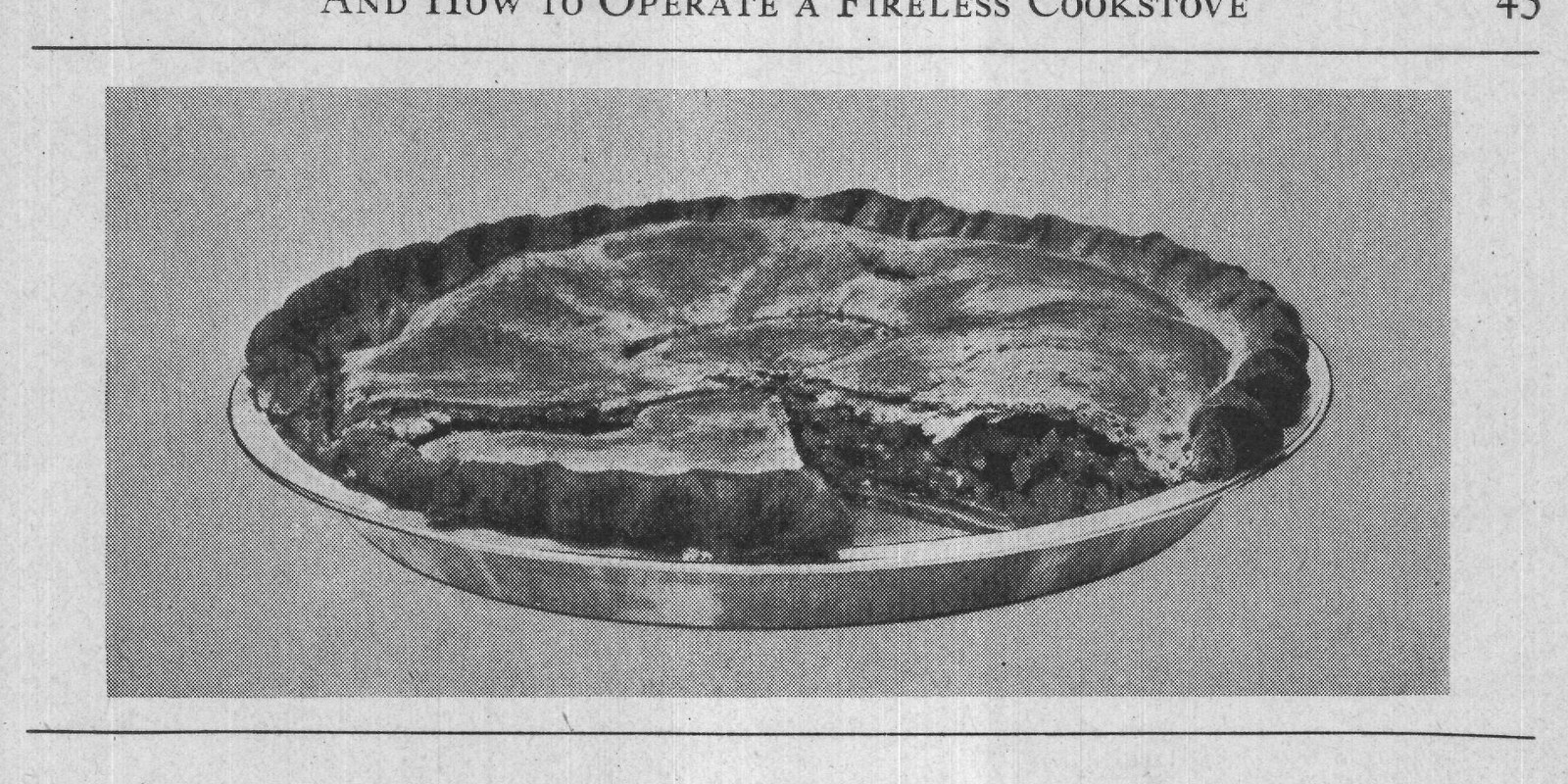
Pastry for Pies NE and one-half cups sifted flour, 1 teaspoon salt, ½ cup lard (or lard and butter), 7 tablespoons ice water. Sift flour and salt together, cut in shortening with two silver knives until thoroughly mixed, add water. Work as little as possible. This will make one pie.
Apple Pie Line the plate with the pastry. On the bottom scatter 1/4 cup of sugar mixed with 1 tablespoon flour, laying apples carefully up to the desired thickness. Wash top crust with milk just before baking. Sprinkle sugar on the top according to the desired taste, putting in small pieces of butter.
Sprinkle with cinnamon or nutmeg.
Bake in fireless, using two radiators heated 475 degrees for about 40 minutes. Any fruit pies can be baked like this.
Cherry Pie Seed ripe cherries; sweeten to your liking, sieve a small quantity of flour over the fruit to thicken the juice.
Bake in two crusts in the fireless ½ hour. Use two radiators heated 475 Pumpkin Pie 2 eggs well beaten 3/4 cup sugar 2 cups milk 1½ cups pumpkin Salt to taste, season with nutmeg, cinnamon and a little ginger. Add a little melted butter. Bake in the fireless 30 minutes. Use two radiators heated 475 degrees.
Lemon Pie Take the juice and grated rind of one lemon, being careful not to grate Bread Pudding through to the outer rind. 1 tablespoon cornstarch, 1 cup sugar, 1 egg, scant 1 tablespoon butter, and 1 cup of boiling water. Put water into small saucepan and add cornstarch stirred smooth in a little water; when it boils after stirring, remove from the stove and add butter and sugar which have been previously well stirred together; when cool, add eggs and lemon. Pour into crust in pan and bake in fireless, using two radiators heated 475 degrees, 20 minutes. After baking cover with meringue and place in the cooker to brown, using one radiator.
These are fireless-cooker instructions: the "radiators" are soapstone or cast-iron discs heated on a range top, then dropped into an insulated box above and below the food. Everything here translates to a conventional oven, but the numbers need reading carefully.
- What "two radiators heated 475 degrees" meansNot an oven set to 475F. Two heat discs brought to 475F and sealed in the insulated box give a falling heat that starts hot and drops steadily. In a modern oven, start pies at 425-450F for the first 15 minutes, then drop to 350F for the remainder.
- Water in the pastrySeven tablespoons of ice water for 1½ cups flour is more than modern practice, which is usually nearer 4 to 5. Add water a tablespoon at a time and stop when the dough just holds together; the full amount will give a tough, slack crust.
- Fat and knivesLard still works, and half lard, half butter gives better flavour. The two knives are cutting the fat into pea-sized pieces; a pastry blender or your fingertips do the same job faster. Keep the fat cold.
- Pan size and yieldThe recipe says only "This will make one pie" and gives no plate size. The quantity of fat to flour suggests enough for a single crust, so for the two-crust apple and cherry pies you will likely need to double it.
- Apple and cherry pie timingFruit pies need the crust set and the fruit fully soft; 40 minutes at falling heat is short for firm baking apples. In a conventional oven allow 45 to 60 minutes and look for juice bubbling thickly through the vents.
- Cherry pie thickening"A small quantity of flour" is vague. For 4 cups of pitted cherries use 3 to 4 tablespoons of flour, or about half that quantity of cornstarch, tossed with the sugar before it goes in the shell.
- Pumpkin filling1½ cups pumpkin means cooked, drained purée, not raw pumpkin. Canned purée (not pie filling, which is pre-sweetened) is the direct substitute. Bake at 425F for 15 minutes, then 350F until a knife inserted an inch from the centre comes out clean, about 35 to 45 minutes more; the middle should still wobble slightly.
- Lemon fillingThe cornstarch must come to a full boil and thicken before it leaves the heat, or the filling stays thin. Let it cool before the egg goes in, exactly as directed, so the egg does not scramble.
- Browning the meringueOne radiator in a cooling insulated box will dry a meringue but barely colour it. Brown it in a 400F oven for 8 to 10 minutes, or under the broiler with the door open and your eye on it.
Fireless cookstoves were sold in large numbers in the United States between roughly 1905 and the 1920s: an insulated wooden or metal chest holding soapstone or iron discs that were heated on the kitchen range, then shut in with the food to cook by stored heat. The appeal was fuel economy and a cool kitchen in summer. Pies were the hard case, since pastry wants dry radiant heat. The pies themselves are plain American standards of the period, apple, cherry, pumpkin and a cornstarch-thickened lemon under meringue.