Home › Recipes › The Use of Radiators
The Use of Radiators
New Radiators-Caution There is moisture lodged within the tiny air chambers of new soapstone radiators. Instead of subjecting the new radiators to an intense heat, which might turn this moisture into steam, and crack the stone, it is advisable first to drive out this moisture by placing the new radiators in a hot oven. After being baked thoroughly, this raw moisture is driven out of the stone and there is little danger of breakage. It is also true of new radiators that they heat more slowly than after being in use for some time; therefore the baking of the stone, when new, tends to "break it in."
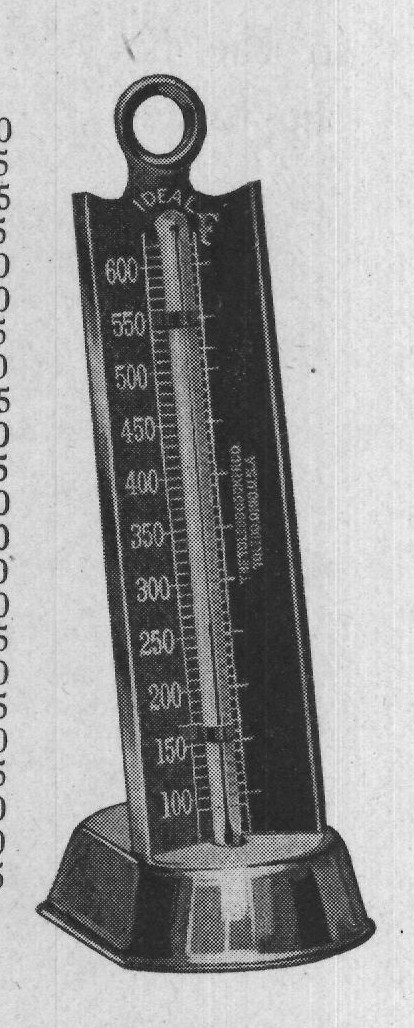
Where to Heat the Radiators Radiators may be heated on any kind of stove having a direct flame; gas, kerosene, gasoline, acetylene, etc.
In the winter time radiators may be satisfactorily heated right on the hot coals of your furnace, base burner or cookstove.
How to Heat the Radiators If you have a stove in which the flame can be regulated, turn the flame moderately low for the first ten minutes and then turn it on full. You can heat the radiators more quickly in this way than if you turn the flame on full from the start, while, if it should happen that the radiators are very cold, the gradual heating would decrease the danger of breakage due to being subjected too suddenly to intense heat.
A Suggestion for Economy over If a pan or asbestos mat is placed the top of the radiator, it will assist in concentrating the heat and shorten the period of heating. By placing the utensil containing the food to be cooked on the radiator while it is heating, the contents can be heated by the same fuel. When not in use, the radiators should be kept in a dry, warm place. Not only does this help to guard against breakage, but it then requires much less fuel to heat them.
Soapstone radiators can never be sold under a guarantee not to break, for the reason that this material is a product of nature, quarried from the ground, and good luck with them depends largely upon the care given them by the operator of the fireless.
Should you be unfortunate enough to break a radiator, new ones may be had at small cost from your dealer.
Illustrating the Use of Radiators inside the racks and between the No. 1 No. 2 Look at No. 1. One heated radiator is placed under the kettle and a second is put in the top of the utensil, in a radiator rack provided for that purpose. This is for roasting and baking meats, fowl, bread, etc., and also for boiling, steaming, stewing, when large portions of food are being cooked. The cover of the utensil is never used when two radiators are employed in this manner.
Now-No. 2. This shows three radiators, arranged for baking, used with two individual pie or cake shelves. For baking, two radiators should be used. With these racks several bakings can be done in one compartment at the same time, because the middle radiator can be used as the bottom radiator for one rack and the upper radiator for the other. The utensils containing the bread, biscuits, cake, etc., are placed radiators.
When to Use One Radiator One radiator is used in the bottom of the cooking compartment of the Fireless when foods are to be boiled or steamed. Some operators use two radiators for boiling or steaming food. This is a matter of judgment; it depends upon how quickly the cooked food is desired, and also upon the quantity being cooked.
When to Use Two Radiators Two radiators are always used for roasting or baking. One heated radiator is placed in the bottom of the compartment, a second is placed in the radiator rack in the top of the utensil containing the food.
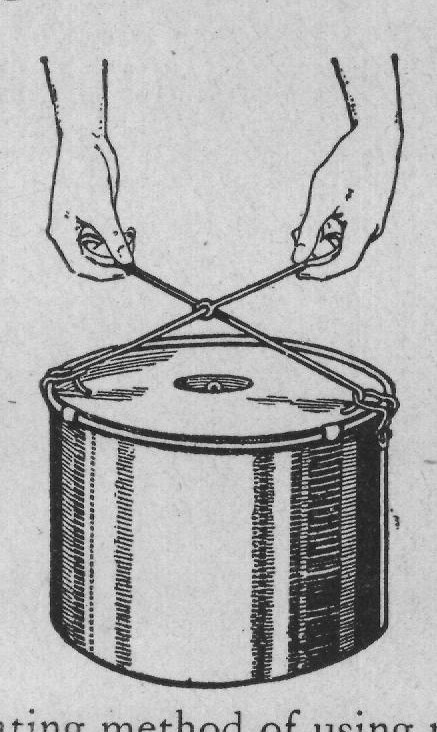
Illustrating method of using radiator hooks, for handling utensils Cooking Large or Small Portions Read-Important The heated radiators should be near the food that is being cooked. It is not practical to cook a small quantity of food in a large utensil, with the radiator far removed from the food.
It is preferable to use a shallower utensil for smaller quantities of food.
But, if your equipment of utensils does not include the shallow 4-quart utensil, the difficulty may be overcome by using a deeper radiator rack in a larger vessel. This deep rack brings the radiator closer to the cooking food.
When large portions of meat or beans are being roasted or baked, it is advisable and necessary to reheat the radiators. This cannot injure the cooking food and only temporarily halts the cooking process. The radiators having been well heated, it takes little time and fuel to reheat them.
Reheating the radiators depends largely upon their being hot enough to start with, and upon the kind of food being cooked. Foods containing much water absorb the heat from the radiator quickly, and cool off sooner than food containing a small amount of moisture.