Pilau
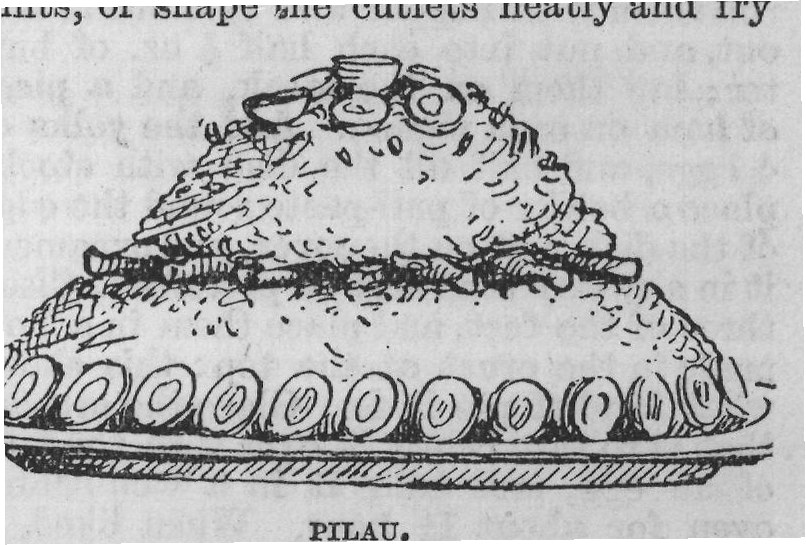
INGREDIENTS for dish for 4 persons.-A chicken or a few cutlets from the neck of mutton, 6 onions, 2 mangoes, if procurable, rice, 6 oz. of butter, seasoning.
AVERAGE COST, 2s. 3d.
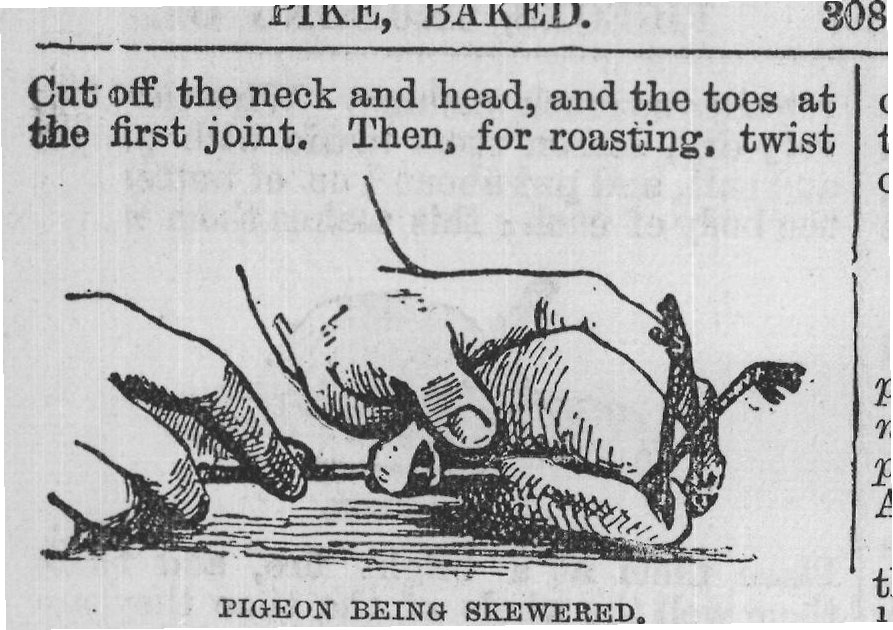
Slice the mangoes and peel and mince the onions, and put them in a stewpan with 1/4 lb. of butter and a good seasoning of the legs and ran a skewer through both pepper and salt. Cut the chicken into pinions and legs as shown. joints, or shape the cutlets neatly and fry 00000000 PIGEON READY FOR COOKING.
A late-Victorian Anglo-Indian pilau, built on the standard method of frying spiced onions in butter, browning the meat, then cooking rice in the same pot with stock. The ingredient list is given loosely, in the manner of the period, so a few quantities have to be settled by the cook.
- Rice, unmeasuredThe original lists rice without a quantity. For four people allow 12 oz (about 1 3/4 cups) of long-grain rice and roughly twice its volume in stock; a long-grain rice such as basmati suits the dish, though the original names no variety.
- Mangoes'2 mangoes, if procurable' most likely points to hard green mangoes, sour rather than sweet, of the kind used in Anglo-Indian cookery; the recipe itself does not specify. A ripe supermarket mango will make the dish sugary; use a firm underripe one, or substitute a tablespoon of lime pickle or a squeeze of lime.
- StewpanA stewpan is a wide, straight-sided pan with a lid, not a stockpot. A heavy casserole or deep sauté pan does the job, and the width matters because the rice must steam in a shallow layer.
- ButterSix ounces of butter for four is generous by modern taste; 3 to 4 oz is ample. Clarified butter or ghee is better here, since whole butter browns and burns during the long frying of the onions.
- Six onionsSix onions is a lot by modern reckoning; three to four medium onions, sliced thin and fried slowly to deep brown, give the sweetness the dish depends on. Rushing them at high heat gives bitterness rather than colour.
- Neck of muttonCutlets from the neck are fatty and full of connective tissue and need an hour or more of gentle cooking before the rice goes in. Lamb neck or shoulder is the modern equivalent; if you use chicken, jointed thighs and drumsticks hold up far better than breast.
- SeasoningThe method spells out what is meant: 'a good seasoning of ... pepper and salt'. No spices are named. Cooks who want the dish to taste like a pilau rather than buttered rice and onions often add curry powder or whole spices, but that is an addition, not what the recipe specifies.
- Finishing and servingOnce the stock is absorbed, cover the pan and let it stand off the heat for 10 minutes before forking through; this stage is what separates pilau from a wet stew. Serves four as a main course.
Pilau, pilaf, pulao and pilav all descend from the same Persian and Central Asian technique of cooking rice in a measured quantity of seasoned stock so that the grains stay separate. It reached British kitchens through the East India Company and the returning Anglo-Indian household, and by Beeton's day it had settled into the standard English repertoire as a way of using up a fowl or a cheap cut of mutton with rice. The wistful note "2 mangoes, if procurable" is the giveaway that this is a colonial recipe transplanted home: mangoes were freely available to a cook in Calcutta or Madras and almost unobtainable in a British market town.