Turnips, Boiled
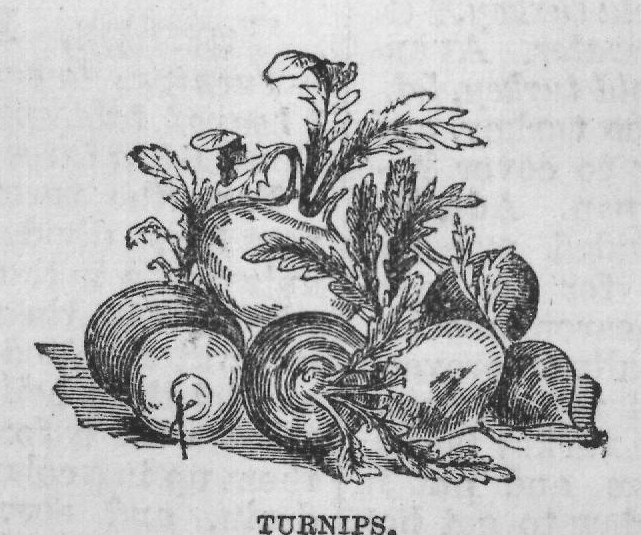
INGREDIENTS. -Turnips to each 1/2 gallon of water allow 1 heaped tablespoonful of salt. AVERAGE Cost, 6d. a large bunch.
Pare the turnips, and, should they be very large, divide them into quarters; but, unless this is the case, let them be cooked whole. Put them into a saucepan of boiling water, salted in the above proportion, and let them boil gently until tender. Try them with a fork, and, when done, take them up in a colander: let them thoroughly Boiled turnips are drain, and serve. usually sent to table with boiled mutton, but are infinitely nicer when mashed than served whole; unless nice and young, they are scarcely worth the trouble of dressing plainly as above.
TURNIPS, MASHED.
TIME. Old turnips, to 1 hour; young ones, about 18 to 20 minutes.
SEASONABLE. - May be had all the year; but in spring only useful for flavouring gravies, &c.
Turnips, German Mode of Cooking. INGREDIENTS for dish for 4 or 5 persons.-8 large turnips, 3 oz. of butter, pepper and salt to taste, rather more than 1/24 pint of weak stock or broth, 1 tablespoonful of flour. AVERAGE COST, 10d.
Make the butter hot in a stewpan, lay in the turnips, after having pared and cut them into dice, and season them with pepper and salt. Toss them over the fire for a few minutes, then add the broth, and simmer the whole gently till the turnips are tender. Brown the above proportion of flour with a little butter; add this to the turnips, let them simmer another 5 minutes, and serve. Boiled mutton is usually sent to table with this vegetable, and may be cooked with the turnips by placing it in the midst of them; the meat would then be very delicious, as, there being so little liquid with the turnips, it would almost be steamed, and, consequently, very tender. TIME.-20 minutes.
SEASONABLE.- May be had all the year.
Three related methods run together here: turnips boiled whole, the same mashed, and a buttered braise given as the "German mode". The notes below cover all three.
- The stock measurementThe printed page gives rather more than 1/24 pint of weak stock, and that is what our text now reads. It is a very small amount, about a tablespoon and a half, so the turnips effectively steam in the butter rather than simmer in liquid; keep the lid on and the heat low, and add a spoonful more broth only if the pan threatens to catch.
- Which turnipBeeton's "large bunch" at 6d means white turnips sold with their tops, not the large yellow swede sold as turnip in much of Britain. Swede works in both recipes but is sweeter and needs longer; white turnips are the peppery, faster-cooking vegetable intended.
- Salt proportionOne heaped tablespoon to half a gallon works out at roughly 1 tablespoon per 2 litres of water, in line with ordinary modern practice for boiling vegetables and worth keeping.
- Boiling timesThe printed time for old turnips reads "to 1 hour" (the first figure appears to have dropped out), against 18 to 20 minutes for young ones; the long time is for old, woody roots. Young or medium turnips cut into 2 cm pieces are tender in 12 to 15 minutes; whole ones take 20 to 30. Test with a knife tip rather than trusting the clock, and stop as soon as it slides in — overboiled turnip turns watery and sulphurous.
- Draining before mashingThe instruction to let them "thoroughly drain" is the hinge for the mashed version. Turnips hold far more water than potatoes; return them to the dry pan over low heat for a minute or two to steam off before mashing with butter, or the result is soup.
- The brown flourBrowning a tablespoon of flour in butter is a small brown roux. Cook it until it smells nutty and turns the colour of weak tea, then stir it into the pan liquid gradually so it does not seize into lumps; five minutes' further simmer is enough to lose the raw taste.
- Mutton cooked in the middleBurying a joint of mutton among the turnips is a braise, and it needs far longer than the 20 minutes given for the vegetable alone. If you want the dish, cook the meat first in a covered pot until nearly tender, then add the diced turnips for the last half hour.
- YieldThe German mode is given for four or five as a side dish. Eight large turnips is generous — reckon about 1.25 kg peeled weight.
Turnips were the workhorse root of the British kitchen garden before the potato displaced them, cheap enough that Beeton prices a whole bunch at sixpence and dismissive enough that she says old ones are "scarcely worth the trouble" of plain boiling. Their pairing with boiled mutton is one of the fixed marriages of Victorian dinner-table convention: the sharp, slightly bitter root cut the fat of a plain-boiled leg or neck. The "German mode" reflects a genuine central European habit of stewing diced roots in butter with a browned-flour thickening rather than boiling them in water, and Beeton had a habit of labelling such methods by nation — German, Dutch, à la française. Her remark that spring turnips are "only useful for flavouring gravies" is a seasonal judgement worth remembering: by then the stored crop has gone pithy and the new crop is not yet in.