Vegetable Goose
INGREDIENTS for small dish. lb. of bread-crumbs, 1 onion, 1 teaspoonful of parsley and herbs, chopped, 1 oz. of butter, pepper and salt.
AVERAGE COST, 3d.
Soak the bread-crumbs in cold water, and squeeze them nearly dry, then mash them. Mix in the other ingredients, the onion chopped small; butter a Yorkshire pudding dish, put the mixture in and bake in a good oven for about an hour. Serve hot.
TIME.-1 hour.
SEASONABLE at any time.
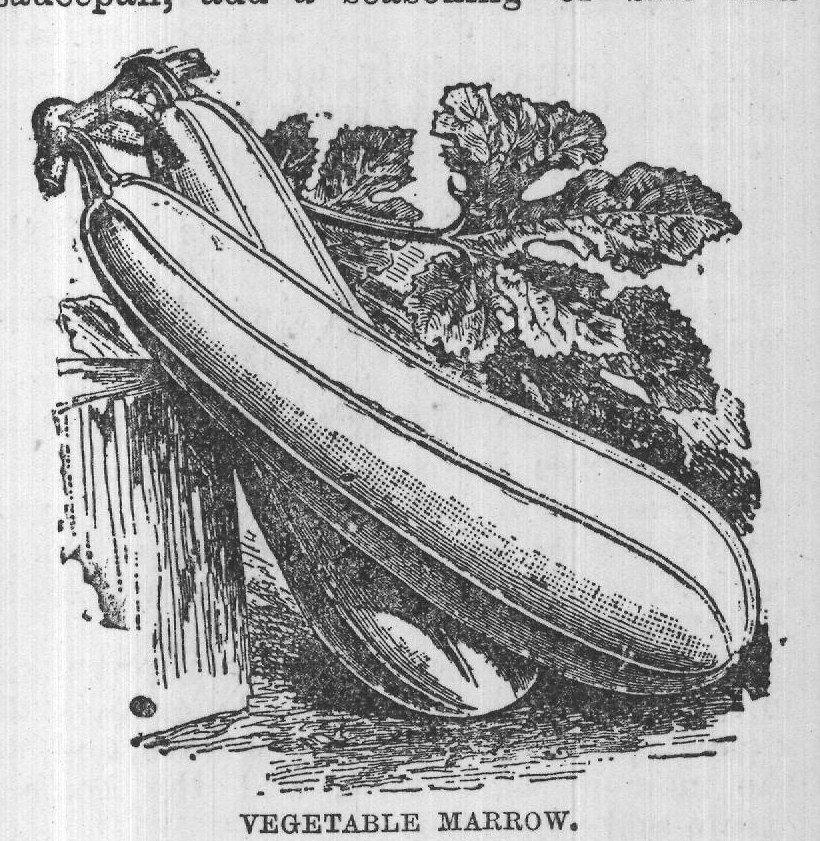
VEGETABLE MARROW. a slice, halve, and, should they be very large, quarter them. Dish them on toast, and send to table with them a tureen of melted butter, or, in lieu of this, put small pieces of salt butter over them.
Large vegetable marrows may be preserved throughout the winter by storing them in a dry place, or hanging them from a kitchen-ceiling by their stalks; when wanted for use, a few slices should be cut and boiled in the same manner as above; but, when once begun, VEGETABLE MARROW ON TOAST. the marrow must be eaten quickly, as it keeps but a short time after it is cut.
Vegetable marrows are also very delicious mashed: they should be boiled, drained, and mashed smoothly with a wooden spoon. Heat them in a saucepan, add a seasoning of salt and VEGETABLE MARROW. pepper and a small piece of butter, and dish with a few sippets of toasted bread placed round as a garnish.
TIME.-Young vegetable marrows, 10 to 20 minutes; old ones, to hour.
SEASONABLE in July, August and Sep- Note. This is a vegetarian recipe, but the tember; but may be preserved all the winter. pudding is nice served with hot meat.
This is sage-and-onion stuffing baked on its own as a pudding — the "goose" is the flavouring, not the bird. It is quick to put together, but a couple of the quantities and directions need translating.
- The bread-crumb quantityThe ingredient line has lost its fraction and reads simply "lb. of bread-crumbs". For a small dish, half a pound (about 225 g, or roughly 4 cups of soft fresh crumbs) gives the right balance against one onion and an ounce of butter. A full pound would be dry and under-seasoned.
- "Parsley and herbs"The recipe does not name the herbs, but in a dish called a goose the intended one is almost certainly sage, the traditional partner to onion in poultry stuffing. A teaspoon of dried sage, or a tablespoon chopped fresh, alongside the parsley.
- Oven heatA "good oven" is best read as moderately hot, somewhere around 375-400/190-200 — the pudding wants to set and brown rather than dry out slowly.
- Yorkshire pudding dishA shallow metal or enamel tin, not a deep casserole. The mixture should sit no more than an inch or so deep so it crisps on top and at the edges.
- TimingThe recipe gives about an hour for the small dish it specifies. If you spread the mixture thinner than an inch it may be browned and set sooner, so check for a firm, golden surface rather than watching the clock.
- Soaking the crumbsSoaking and squeezing dry is what keeps the pudding moist without added stock or egg. Squeeze firmly — crumbs left sodden will steam rather than bake, and the middle stays pasty.
- ButterOne ounce is 2 tablespoons. Bump it to 2 oz if you want a richer result. The note at the foot of the page adds only that the pudding is nice served with hot meat.
- YieldA "small dish" at this quantity serves three or four as a side, two as a main with gravy and greens.
- The costThreepence for the whole dish places it firmly among Beeton's cheap standbys — bread, an onion and a scrap of butter, all pantry goods.
Mock dishes of this kind were a fixture of Victorian frugal cookery: a "vegetable goose", like mock turtle soup, borrowed the name of an expensive dish by reproducing its seasoning rather than its substance. Roast goose meant sage and onion, so sage and onion baked alone could stand in for it at threepence. Beeton's editors flag it as a vegetarian recipe — a category the later editions of the book increasingly acknowledged, as organised vegetarianism grew in Britain through the second half of the nineteenth century — while noting it also served the older purpose of stretching a small joint of meat across more plates.