Home › Sauces, Salads, Pickles and Condiments › Mixed Pickles
Mixed Pickles
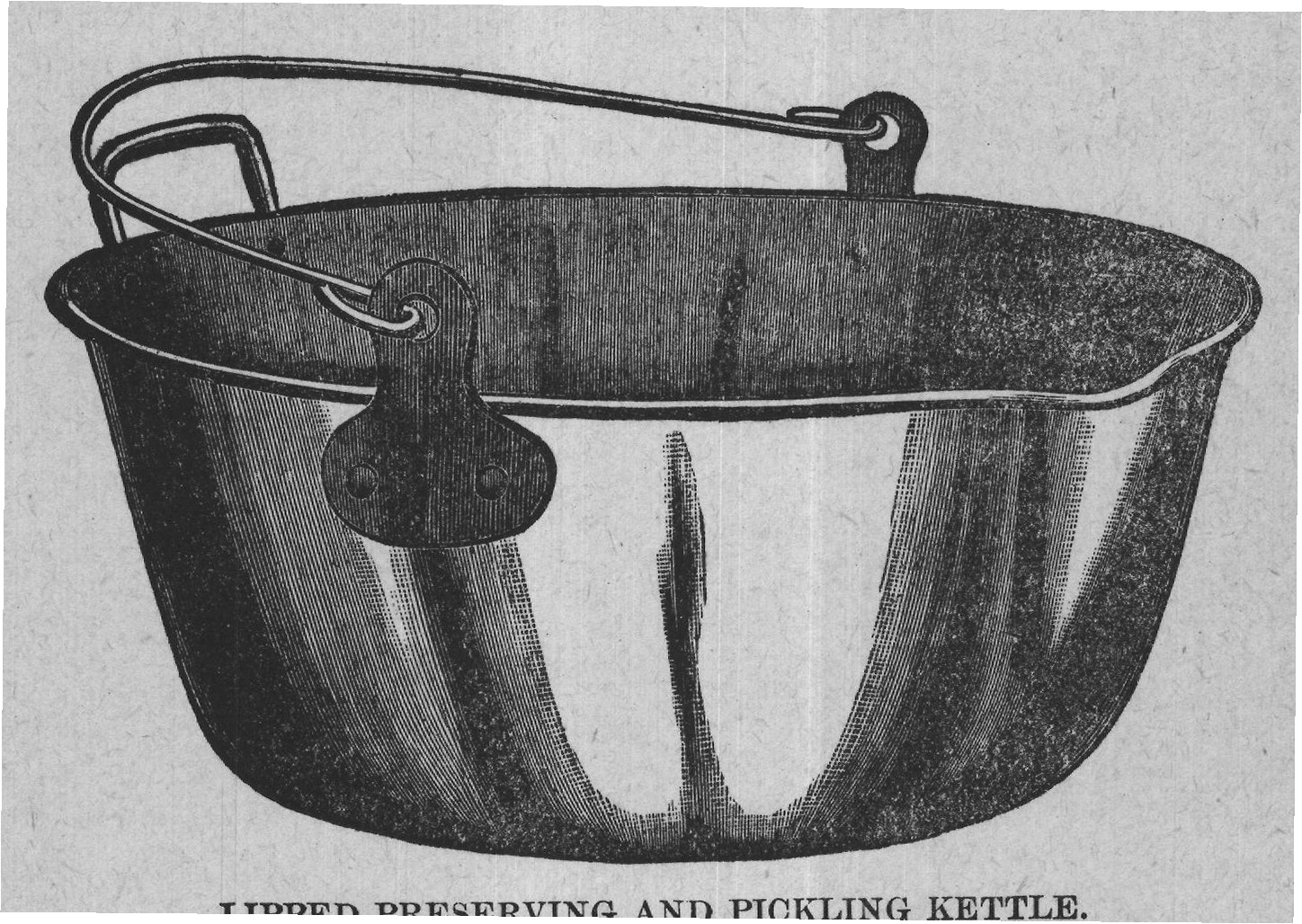
Every suitable vegetable, even melon cut in pretty shapes, may be used. All small things, like cucumbers, onions, martynia, radish pods-all these should be small, and go in whole. Other things as cabbage, cauliflower, tomatoes, beans, etc., are sliced or cut in proper pieces. Put whatever you make your pickles of in strong brine for twenty-four hours. Drain three hours, place in a preserving kettle with eight ounces of white mustard-seed, a tablespoonful of ground black pepper and enough vinegar to just cover all, adding a saltspoonful of powdered alum. Let the whole come to a boil. Drain again, and when cold mix in half a pint of ground mustard, and cover with strong cider vinegar, adding turmeric enough to color if you like. These proportions are sufficient for three hundred small cucumbers, three heads of cabbage, the same of cauliflower, a quart of beans, the same of tomatoes, and the necessary horseradish, pepper, onions, etc. IX. Sweet Pickles.
SWEET pickles are green, or nearly ripe fruits, prepared with spices, and the addition of a good deal of sugar to the vinegar. The general plan of preparation is alike with all, the spices and preparations of sugar being varied to meet extra acidity in the fruits, or to suit the special taste of individuals. Peaches and all soft, ripe fruits may be prepared as follows:
This is a full-crock recipe scaled for a farm household: the stated proportions cover roughly a bushel of vegetables. The method itself is sound — brine, a brief vinegar boil, then a cold mustard dressing — but almost everything about the amounts and vessels needs translating.
- Scale it down hardThree hundred cucumbers, three cabbages, three cauliflowers, a quart of beans, a quart of tomatoes and unspecified horseradish, peppers and onions is the intended batch. Divide the whole recipe by eight or ten for a manageable few quarts; the seasonings scale linearly.
- Archaic measuresA saltspoonful is about a quarter teaspoon. Half a pint of ground mustard is a cup by volume, not by weight. Eight ounces of white mustard-seed is weight — about a cup and a half of seed.
- "Strong brine"Period books commonly describe this as a brine salty enough to float a fresh egg; no fixed ratio is given here. Use non-iodised salt; iodine and anti-caking agents cloud the liquor and can darken the vegetables.
- White mustard-seedThis is what is now sold as yellow mustard seed, the mild pale kind. It is not the same as brown or black seed, which is considerably hotter and will change the balance.
- MartyniaThe young seed pods of the devil's claw plant, once grown for pickling and now essentially absent from markets. Omit it, or substitute small okra or nasturtium seed pods.
- The alumPowdered alum was the standard crisping agent and is still legal as a food additive, but it leaves a metallic astringency and is unnecessary. Cold, very fresh vegetables and trimming the blossom end from cucumbers do the same job better.
- The kettle"Preserving kettle" here means a large lipped pot for boiling, not a baking dish. It must be non-reactive — stainless or enamel. Vinegar in bare copper, iron or aluminium picks up metal and off colour.
- Vinegar strength"Strong cider vinegar" meant full-strength, undiluted vinegar; actual period acidity varied and was not measured. Use a vinegar labelled 5 per cent acidity as a minimum; anything weaker will not preserve the pack.
- KeepingThere is no sealing or processing step here, so treat the result as a refrigerator pickle: pack into clean jars, keep the vegetables fully submerged, and store cold. Flavour settles after two or three weeks.
Mixed pickles of this kind — a jumble of whatever the garden gave, bound together with mustard and turmeric — descend from the Anglo-Indian pickles and piccalillis that entered British cookery in the eighteenth century, and they run through nineteenth-century American books under a shelf of names: mixed pickle, chow-chow, mustard pickle. The turmeric, described here as optional colouring, is the fossil of that Indian ancestry. The passage that follows on sweet pickles, with its fruit and sugar, marks the other half of the same autumn work.