Home › Sauces, Salads, Pickles and Condiments › Pickled Red Cabbage
Pickled Red Cabbage
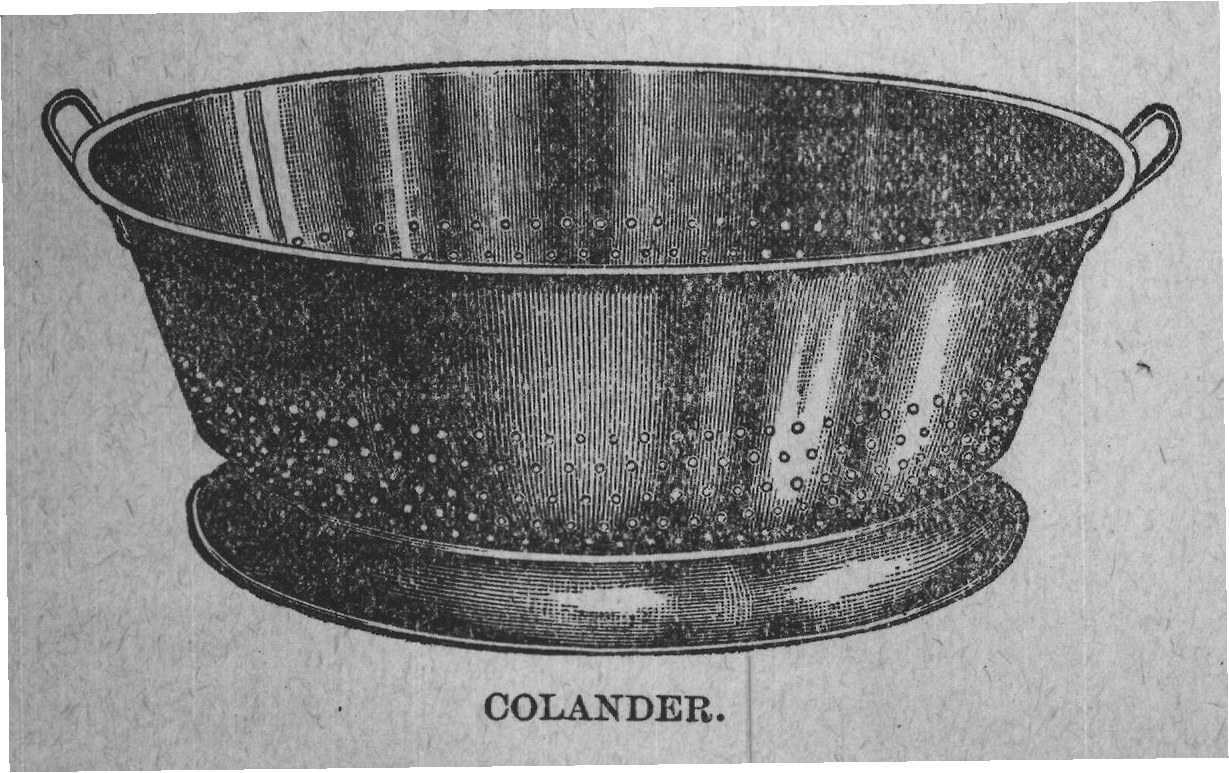
Select sound red cabbages, and to each quart of vinegar, add half an ounce of ginger, well bruised, one ounce of whole black pepper, and, when liked, a little cayenne. Take off the outside leaves, cut in quarters, remove the stalks, and cut it across in very thin slices. Lay these on a dish, and strew them plentifully with salt, covering them with another dish. Let them remain for twenty-four hours, turn into a colander to drain, and, if necessary, wipe lightly with a clean, soft cloth. Put them in a jar; boil up the vinegar with spices in the above
A straightforward vinegar pickle whose success depends almost entirely on the 24-hour salting and on not cooking the cabbage. Note that the text breaks off mid-sentence: the vinegar is boiled with the spices, then left to go cold before it is poured over the drained cabbage.
- That stray word at the start"COLANDER" is not part of the instructions; it appears to be a heading or catchword carried into the body text from the surrounding page. Ignore it; the colander itself appears where it belongs, at the draining stage.
- Spice quantities by volumeHalf an ounce of bruised ginger is roughly a 1-inch piece of fresh root, or about 2 tablespoons of dried slices. One ounce of whole black peppercorns is about 4 tablespoons, which is a great deal by modern taste; half that still gives a well-spiced brine.
- Cold vinegar is the hingeThe vinegar is boiled with the spices only to draw out their flavour, then must be completely cold before it goes over the cabbage. Hot brine cooks the shreds and you get limp, dull pickle instead of crisp magenta.
- Vinegar strengthUse a commercial vinegar at 5 per cent acidity — malt, cider or plain distilled. Homemade or diluted "salad" vinegars below 5 per cent will not preserve the cabbage reliably.
- Salting and drainingTwenty-four hours in salt is not excessive; it pulls out the water that would otherwise dilute the brine. Drain thoroughly and blot, but do not rinse under the tap or you undo the firming effect.
- Pans and jarsBoil the vinegar in stainless steel or enamel. Iron, aluminium and copper react with both the acid and the cabbage's anthocyanins, turning the pickle grey-blue and metallic.
- Storage, not canningThis is a keeping pickle, not a heat-processed one. Cover with a non-metal lid, store in the refrigerator, and give it a week before eating. It stays crisp for perhaps two months, then softens.
Pickled red cabbage is often said to be among the older English store-cupboard pickles, appearing in eighteenth- and nineteenth-century household books almost word for word as here. It served as a sharp, brightly coloured relish for cold meat, boiled beef and the heavy winter dishes of a period when fresh salad vegetables largely vanished between November and spring. Red cabbage was preferred over green for pickling partly because it kept its texture and partly for the colour, which acid fixes as a vivid purple-pink — the same chemistry that makes red cabbage a schoolroom indicator today.