Important: Safety Warning
This page describes home-canning methods from before the causes of botulism were understood. Canning low-acid foods without a pressure canner, as described here, can allow the growth of Clostridium botulinum, whose toxin is among the deadliest known. Follow current USDA home-canning guidelines instead.
This information has been left in for historical purposes but should not be acted upon.
Home › Preserving › Turnips
Turnips
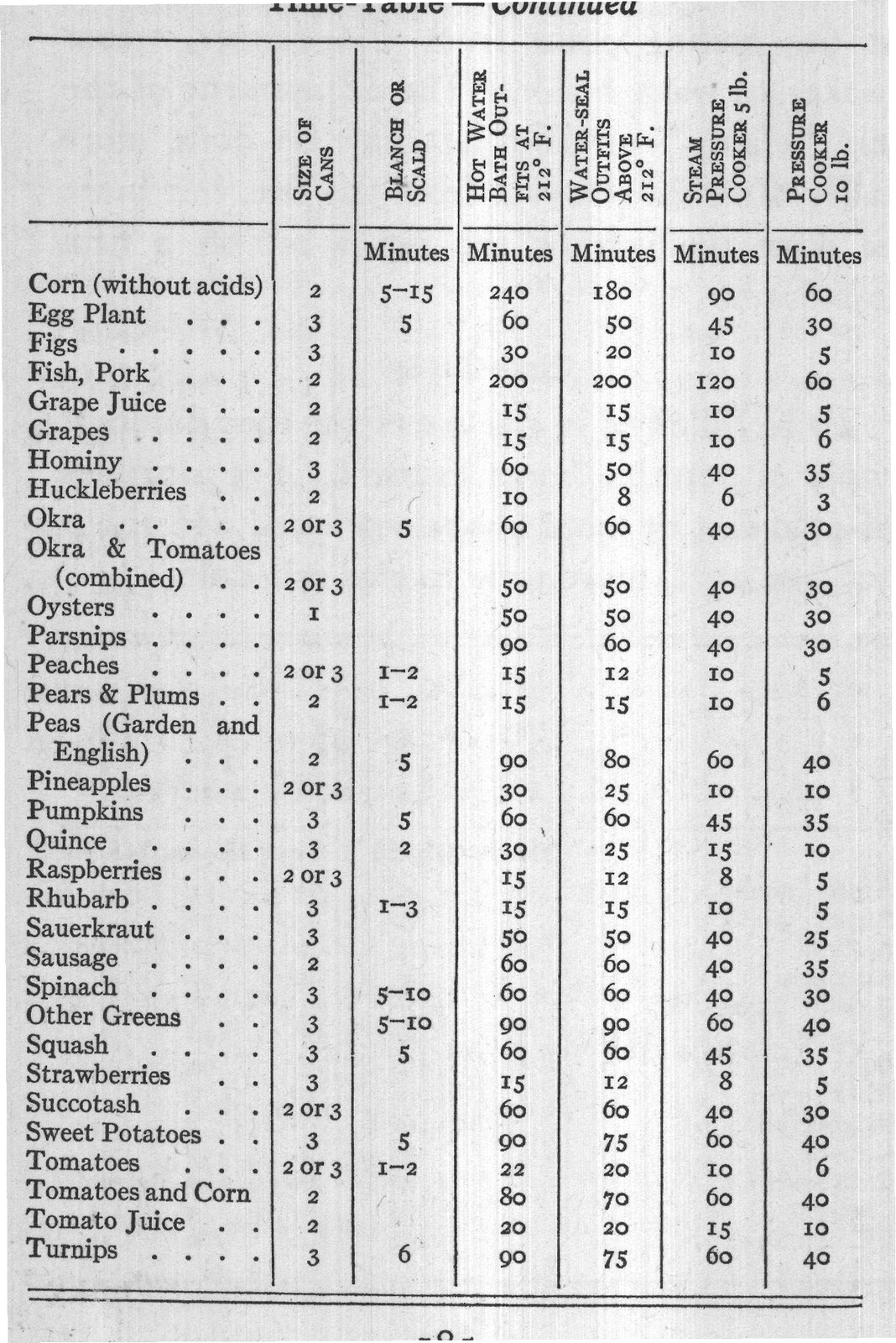
Notes on Cold Pack Method of Canning See page 22 The term "Cold Pack Method of Canning" is liable to be misunderstood. Often it is thought that by this method all cooking is done away with, as is the case with acid food, cranberries and rhubarb, which are successfully canned by sealing in jars filled with cold water.
By the cold pack method food is sterilized in the jar rather than in the open kettle. The flavor, texture, and color of many fruits and most vegetables are better conserved when the canning is done in the jar, but where a quantity of food (as apples) is to be canned for home use, the canning is best carried out in the open kettle. More fruit can be put into a jar.
Some vegetables, as spinach, are too bulky to be packed at once in jars, beets contain too much refuse and for these, cooking in the open kettle is preferable, but the canner or cooker is of value in finishing the process.