Celebrated Actor-Folks' Cookeries

Mary Pickford, Enrico Caruso, Lillian Russell and a hundred more stars of 1916 — each sharing the dish they actually cooked. The original celebrity cookbook.

HomeY › Blanche Yurka

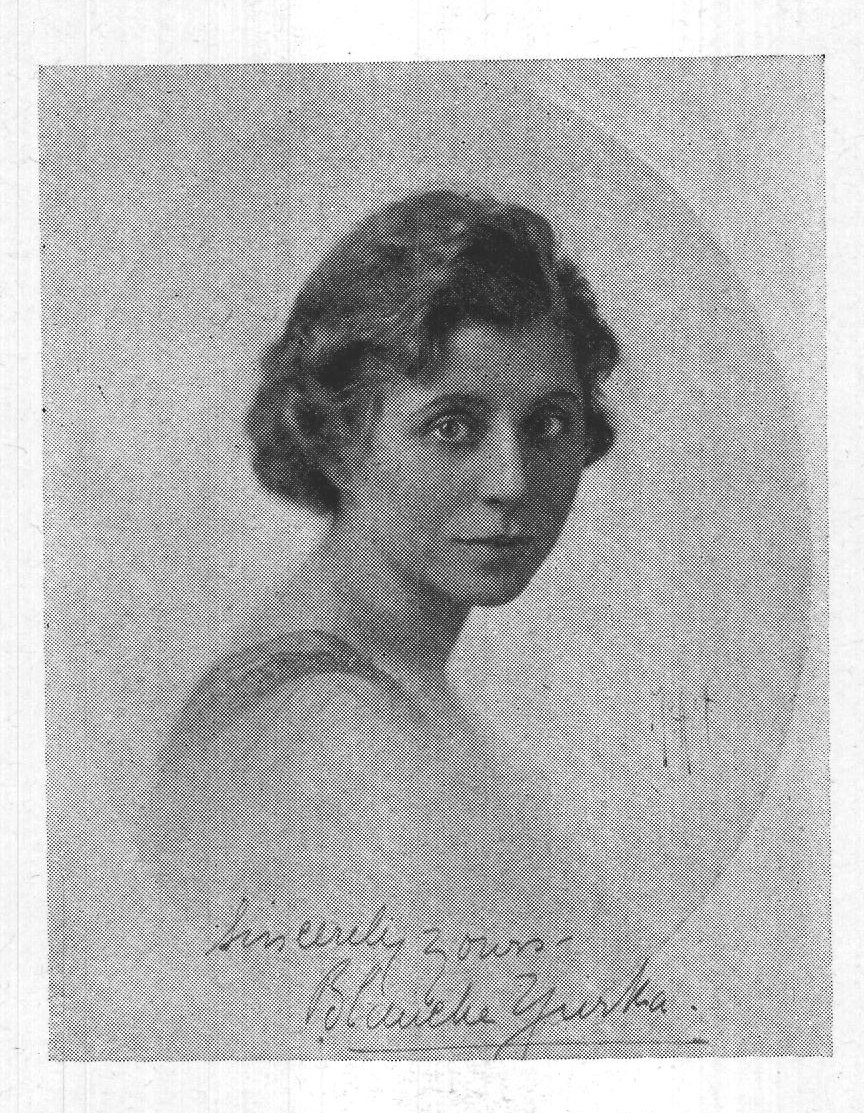
Blanche Yurka

BLANCHE YURKA
BLANCHE YURKA

BOHEMIAN GOULASH

Cut into small squares two pounds of beef, taken from the shoulders. Place on frying pan two tablespoons butter and one large onion, finely minced. When well browned add meat. Salt to taste, add four cloves, eight kernels allspice, a slice of lemon, one bay leaf, two tablespoons vinegar, and one tablespoon of sugar. Cover and stew slowly. When meat is tender, dust with one tablespoon flour, add a little water, two tablespoons tomato catsup and a pinch of paprika.

Mix thoroughly; let it boil over and serve together with minced browned potatoes.

The above is a Bohemian version of goulash, a favorite dish among all Slavonic peoples.

Blauche Yurka-

SCALLOPED FINNAN-HADDIE

2 pounds finnan-haddie 1 tablespoonful butter 1 tablespoonful flour 4 hard-cooked eggs ½ teaspoonful salt 1/8 teaspoonful pepper 1 tablespoonful chopped chives 3/4 cupful milk Wash the fish, cover with boiling water, and simmer for ten minutes; make a sauce of the butter, flour, salt, pepper, and milk and add the chives. Skin the fish and flake it. Butter a baking-dish, put in a layer of the fish, then one of the sauce and one of the eggs (chopped). Continue in this way until all is used: sprinkle with dry bread crumbs mixed with a little melted butter and cook in the oven about twentyfive minutes till brown on top. Sincerely yours,

For the Modern Kitchen

Two contributions here: a Czech-style beef goulash and a scalloped smoked haddock. Both are straightforward, but the original leaves out oven temperature, cooking times and yields.

A Little History

Blanche Yurka (1887-1974) was a stage actress, born in St. Paul, Minnesota to Czech immigrant parents, and best remembered on screen as Madame Defarge in the 1935 A Tale of Two Cities. Her note that this is "a Bohemian version of goulash" fits: Bohemia was the western part of the Czech lands, and Czech guláš derives from Hungarian gulyás (from gulya, a herd of cattle, hence "herdsman's" stew) by way of the shared Habsburg kitchen, but it took its own turn. Where the Hungarian dish leans hard on paprika, this one uses only a pinch and builds its flavour instead on cloves, allspice, bay, lemon, vinegar and sugar, a sweet-sour register common across Central European braises. The finnan haddie is a different inheritance altogether, a familiar American supper dish by the 1920s, its name traditionally traced to the fishing village of Findon near Aberdeen, though Findhorn is also proposed.

← Clara Kimball YoungFlora Zabelle →