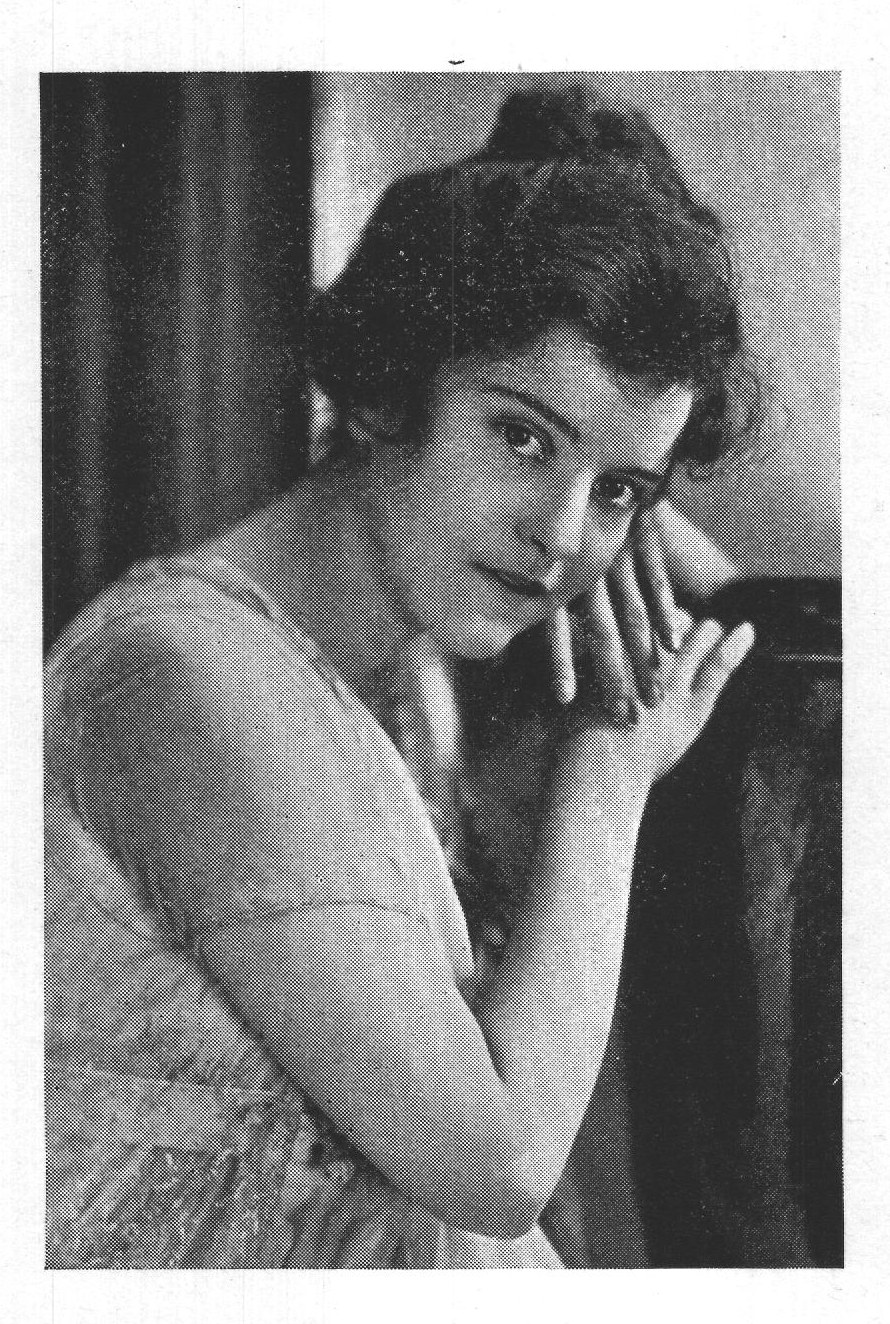
Madge Kennedy

LETTUCE SALAD WITH NUTS
Take a cream cheese and work smooth with a fork, adding gradually just enough thick, sweet cream, to make a stiff paste. Divide into three or more portions. Color one portion green with parsley and chives pounded into a paste; another red, with pounded sweet red pepper or spiced beets chopped fine; a third yellow, with crushed yolk of hard-boiled egg; a fourth brown, with pounded pecan nuts. Mold in tiny balls and put one or more of each color in nests made with lettuce leaves.
It's a dreadful problem to think of what you really like best to eat. - 180 madge Tennedy
A salad of tinted fresh-cheese balls in lettuce cups, from the era when a first course was judged largely on how it looked. Nothing here is difficult, but the cheese must be stiff enough to hold a ball after the coloring pastes go in, so add the cream sparingly.
- The hinge: keep the paste stiffEach coloring agent brings its own moisture, so stop adding cream well before the cheese looks smooth and pliable. If a portion slackens after you work in the parsley or beets, chill it 20 minutes and it will roll cleanly.
- "A cream cheese"In 1916 this meant a small cake of fresh unripened cheese, sold in a package of a few ounces rather than a modern 8 oz block. One 8 oz block of modern cream cheese, softened, is a workable equivalent, though it is firmer and needs a little more cream.
- "Thick, sweet cream"Sweet means unsoured, not sugared. Heavy cream is right; a tablespoon or two total is usually enough for 8 oz of cheese.
- The greenPound the parsley and chives to a paste as the recipe directs, then squeeze them in a cloth before working them in, or the green portion will be the loosest of the four.
- Spiced beetsThese are beets pickled in a sweet-spiced vinegar, home-put-up or bought. Pat them very dry and mince fine; the vinegar will otherwise thin the cheese and dull its look.
- Sweet red pepperA jar of pimientos, drained and pounded, gives the truest red and would have been easy to come by. A roasted and skinned red bell pepper works the same way.
- MoldingRoll balls no larger than a marble, with damp hands or between two teaspoons, and refrigerate them on a tray for at least half an hour before plating so they hold their shape against the lettuce.
- Yield and serving8 oz of cheese divided four ways gives roughly 40 small balls, enough for six to eight lettuce cups. No dressing is specified; a plain oil-and-lemon dressing on the leaves, applied before the balls go in, suits it better than mayonnaise.
This comes from Celebrated Actor Folks' Cookeries (1916), a collection of dishes solicited from stage and early screen performers, of whom Madge Kennedy was then among the busiest — a Broadway comedienne who moved into Goldwyn pictures that same decade and was still acting in films and television half a century later. The salad itself is of a piece with Progressive-era party food: molded, tinted, individually portioned, and built for the eye, the same impulse that produced jellied salads and stuffed-tomato cups in the women's magazines of the day. Packaged fresh cream cheese was well established in American groceries by this date, and recipes of the period often treat it as a neutral base to be flavored and colored rather than as a cheese to be tasted on its own. Kennedy's aside about the dreadful problem of naming a favorite food is the sort of personal line the book's compiler, Mabel Rowland, appears to have invited from her contributors.