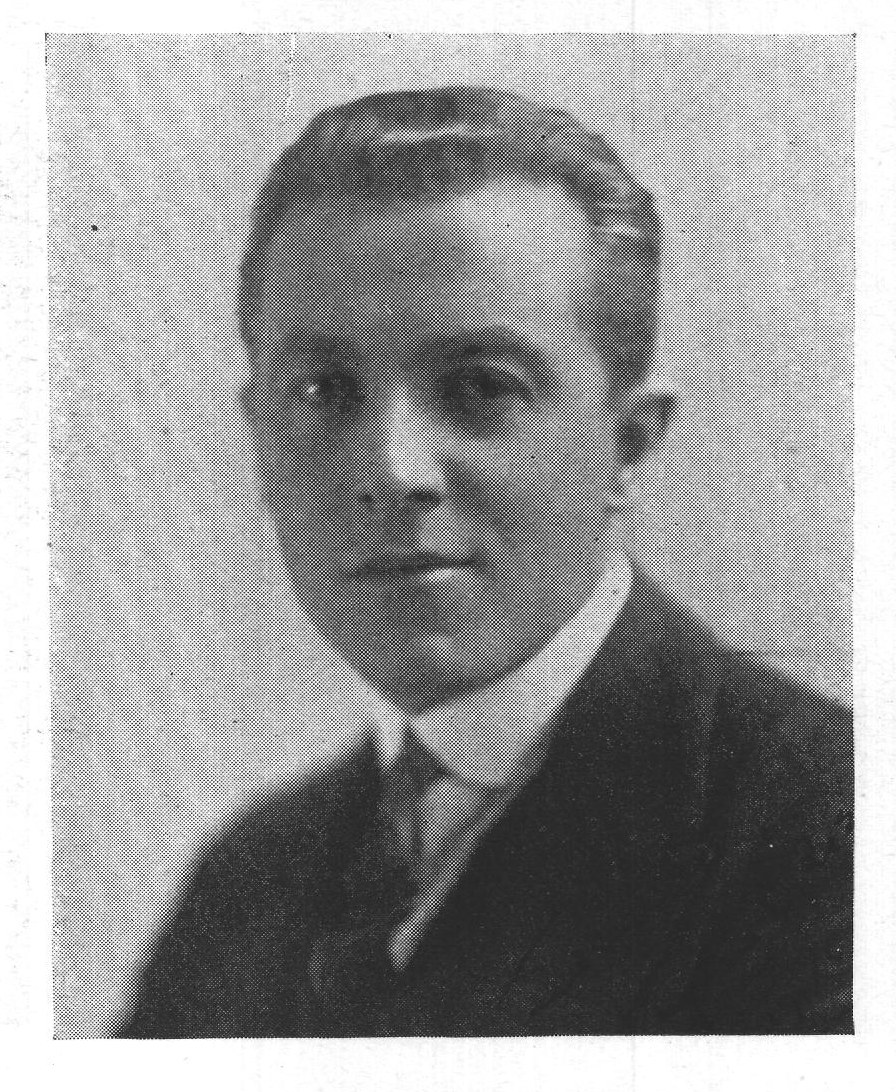
Eugene O'Brien

1 quart tomato juice 1 package Knox gelatine 1½ bell pepper 2 pimentos 1½ bunch celery 1 small green onion Pass the vegetables through the meat chopper and then add the tomato juice.
Make the gelatine according to directions on the box and, after stirring thoroughly, cool in ice box. I suppose you put it into a mold then, and Lord help you! ξενα Οβηιεί
A tomato aspic, written in the shorthand of a cook who assumed you owned a meat grinder and could read a gelatine box. Two of its measurements are genuinely vague, and the gelatine step as written will not work.
- Dissolve the gelatine in something hotThe recipe defers to the box directions, which would have covered softening the granules in a little cold liquid and then dissolving them fully in hot liquid. That is the step that matters: dry granules stirred straight into cold tomato juice stay as grit and the mold never sets.
- A "package" of KnoxA modern envelope is ¼ oz, about 2¼ teaspoons, and sets 2 cups of liquid. What a Knox "package" of this period actually held is not certain, so the original quantity is ambiguous; for a quart of juice plus the ground vegetables, two envelopes is a workable figure, three if you want it firm enough to slice.
- 1½ bunch celeryIn period usage a "bunch" generally meant a whole head, and a head and a half ground against a quart of juice would swamp the dish. Three or four stalks is closer to what the proportions want, but this is a reading imposed on the text rather than what it states.
- PimentosNot fresh peppers but the canned or jarred roasted red pimentos sold everywhere in this period. Drain them well, since the packing liquid dilutes the set.
- The meat chopperA hand-cranked grinder with a coarse plate. Short pulses in a food processor give the same effect; run it continuously and you get tomato-pepper slush with no texture.
- Season itThe recipe lists no salt, and unsalted tomato juice set in gelatine tastes flat and metallic. Salt, a little onion or celery salt, lemon juice or vinegar, and a few drops of hot sauce all belong here, added to the hot liquid where they will dissolve.
- UnmoldingChill at least four hours, or overnight. Dip the mold briefly in warm water, run a thin knife around the rim, and invert onto a plate — the joke about the Lord's help is aimed at exactly this step.
- Yield and servingAbout six cups, so around eight servings in a ring mold or individual cups. Aspics of this kind were commonly served on crisp lettuce with mayonnaise or boiled dressing.
Molded tomato aspic was a fixture of American entertaining from the early 1900s through mid-century, and it owes much to pre-measured granulated gelatine, generally traced to Charles Knox of Johnstown, New York, in the 1890s. Before that, cooks who wanted a jelly had to boil calves' feet or work with isinglass; the sealed package turned a laborious dish into something a household could produce on a weekday, and the company's advertising and recipe leaflets promoted savory salads alongside sweet jellies. That is why a contributor to a celebrity cookbook of this era could write "1 package Knox gelatine" and expect to be understood without further explanation. Eugene O'Brien was a stage and silent-film leading man of the period, and his contribution, closing with a mock-Greek rendering of his own name and a shrug about the molding, is characteristic of these actor-collection books, where the joke was often more carefully composed than the method.