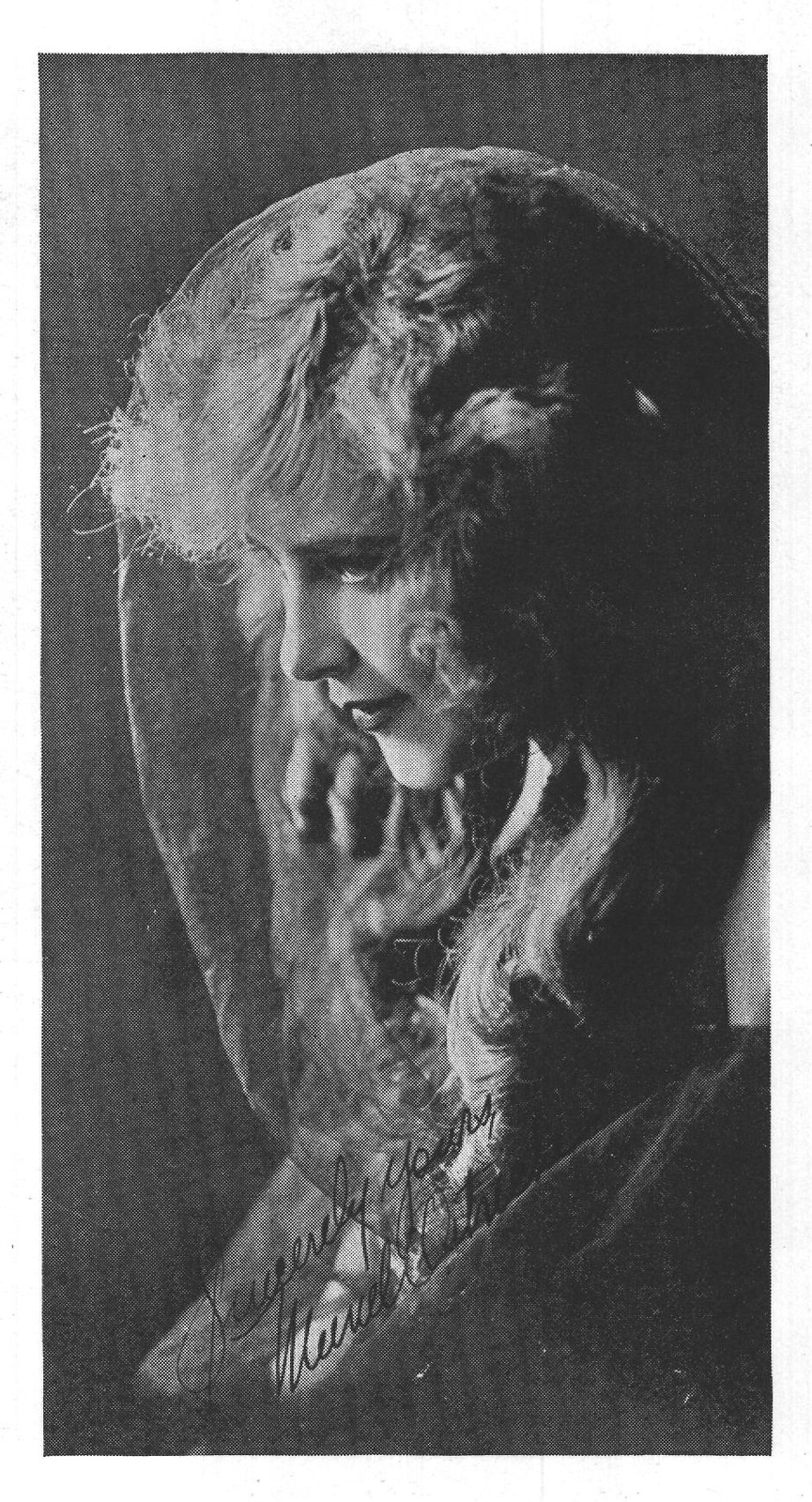
Muriel Ostrich

PEANUT AND LENTIL ROAST
1/2 cup shelled roasted peanuts 1/2 tablespoon butter 1/2 cup lentils 1/2 cup toasted bread crumbs Milk ½ teaspoon salt 1/4 teaspoon pepper Soak lentils over night; in morning drain, cover with cold water and allow to come to a boil. Drain again and cook in fresh water until tender. Drain and put through colander. Add peanuts (chopped), butter, bread crumbs and seasoning. Mix with sufficient milk to make like mush. Bake in a buttered baking dish one hour over a medium flame. Garnish with parsley. Serve with brown sauce or Sauce Piquante.
A meatless loaf from the vegetarian corner of the actors' cookbook, scaled small — the quantities serve two, maybe three as a side. The opening clause about baking a crust belongs to the preceding recipe and has nothing to do with this one.
- Oven, not stovetop"Bake ... over a medium flame" is a gas-range instruction; read it as a moderate oven, around 350F. An hour at that heat should set the loaf and brown the top.
- The soak is optionalModern split or whole lentils cook tender in 20-30 minutes from dry. The overnight soak, the initial boil and the discarded water were standard for older, dustier pulses; skip them and simply simmer in fresh water until soft.
- Drain hardThe hinge of the dish. Lentils that go into the mixture wet will not set, and no amount of extra crumbs fixes it. Drain thoroughly, then mash or pass through a sieve while still hot.
- "Put through colander"This means pressing the cooked lentils through the perforations to make a coarse purée, not just draining them. A potato masher or food mill does the same work.
- Peanuts and saltRoasted peanuts today are usually salted. Use unsalted if you can, or cut the 1½ teaspoons of salt back and taste before baking.
- Milk quantityUnspecified. "Like mush" means a thick, spoonable batter that just slumps. Expect roughly 1/3 to 1/2 cup, added a little at a time.
- The sauce is not optionalA lentil and peanut loaf is dry and dense on its own. Brown sauce here means a flour-thickened meat or vegetable gravy; sauce piquante is the same base sharpened with vinegar, shallot and capers or chopped pickle.
Nut roasts of this kind came out of the late-nineteenth-century vegetarian and health-reform movement, where ground peanuts and pulses were promoted as a protein substitute for meat — the sanitarium kitchens associated with the Kellogg family in Battle Creek did much to popularise both peanut butter and the baked nut loaf. Muriel Ostriche was a silent-film actress at her most visible in the 1910s, and celebrity cookbooks of the era liked to collect exactly this sort of contribution: cheap, meatless, faintly modern-sounding, and the kind of dish a young performer in a boarding house might actually have eaten. The pairing with brown sauce or sauce piquante shows how carefully these recipes borrowed the vocabulary of the meat course, so that the meatless dish arrived at the table dressed the same way a cutlet would.