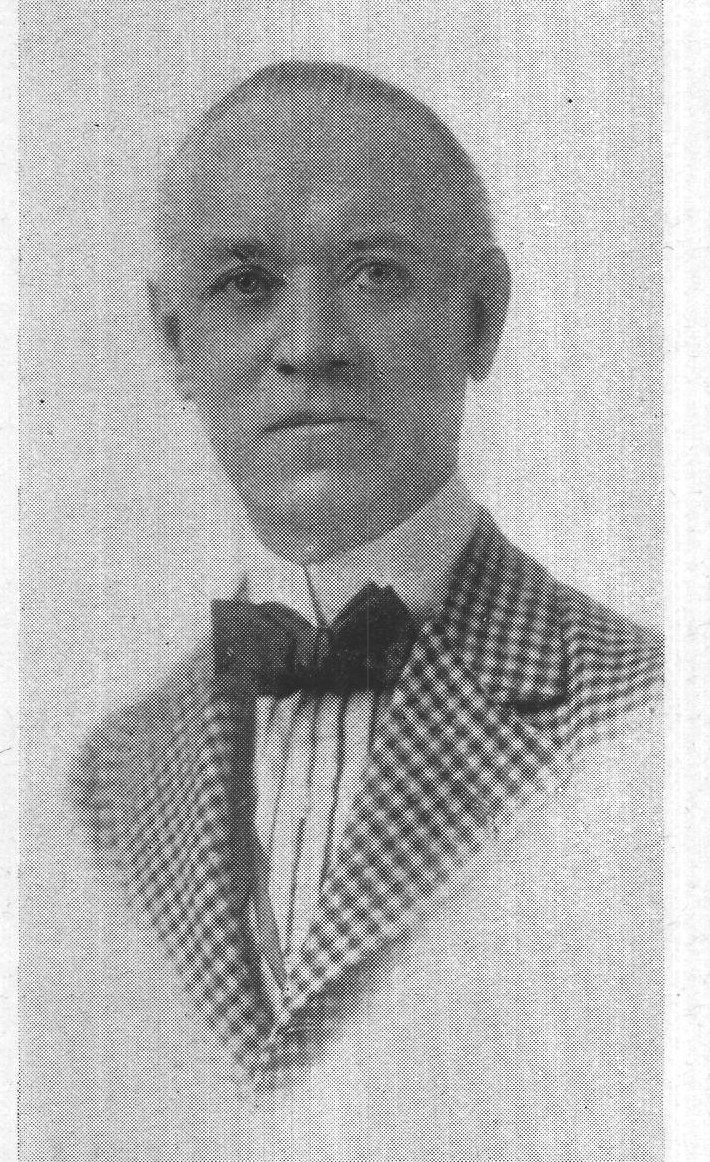
Frank Keenan

CHOCOLATE BREAD PUDDING
2 cups stale bread crumbs 4 cups scalded milk 2 squares unsweetened chocolate 2/3 cup sugar 2 eggs 1/4 teaspoon salt 1 teaspoon vanilla Soak bread in milk thirty minutes; melt chocolate in saucepan placed over hot water, add one-half sugar and enough milk taken from bread and milk to make of consistency to pour; add to mixture with remaining sugar, salt, vanilla and eggs slightly beaten; turn into buttered pudding dish and bake one hour in a moderate oven. Serve with hard or cream sauce.
With best wishes,
A straightforward baked bread-and-custard pudding; the only real technique is tempering the chocolate paste smoothly into the soaked bread so it does not streak.
- Oven temperature"A moderate oven" is usually taken as somewhere around 350-375F. An hour at that heat suits a dish of about two quarts, which is what this quantity of mixture needs; the pudding is done when a knife slid into the centre comes out clean and the surface is just set, still with a slight wobble.
- Squares of chocolateA square of unsweetened chocolate is 1 ounce, so this calls for 2 oz total — the standard baking-bar segment is still 1 oz, so two squares of Baker's or similar is a direct substitute. Cocoa powder is not an even swap because of the missing cocoa butter.
- Stale bread crumbsThese are soft torn crumbs from day-old bread, not dry packaged crumbs, which would drink the milk unevenly and turn pasty. Two cups of soft crumbs is roughly 3 to 4 slices of a plain white loaf, crusts trimmed or not as you like.
- Melting over hot waterThe saucepan set over hot water is an improvised double boiler. Keep the water below a simmer and the pan clear of it; unsweetened chocolate scorches if pushed much above about 120F, and a stray splash of water will make it seize into a grainy mass that is hard to bring back.
- The pouring consistencyThe point of thinning the chocolate with milk borrowed back from the soaked bread is to get it fluid enough to disperse. Add that milk a spoonful at a time and stir it in fully before the next — dumping it in at once is what makes the chocolate stiffen and clump.
- Eggs lastBeat the eggs in only after the chocolate mixture has been combined and cooled somewhat. Hot chocolate paste poured straight onto raw eggs will curdle them into visible threads.
- Water bathThe original bakes the dish directly. Setting it in a pan of hot water gives a more even, less grainy custard, which is what modern practice would do with any baked custard of this ratio.
- Yield and the saucesServes six to eight. "Hard sauce" is creamed butter and powdered sugar flavoured with vanilla or spirits, served cold in a lump so it melts over the hot pudding; "cream sauce" in cookbooks of this period may mean a thin sweetened pouring custard, a sweetened cream-and-butter sauce, or simply cream.
Chocolate bread pudding sits at the junction of two nineteenth-century household habits: never throwing away stale bread, and the falling price and wider distribution of unsweetened baking chocolate in American kitchens. The method of bread pudding — soak crumbs in scalded milk, enrich with eggs, bake in a moderate oven — is lifted almost word for word from the cookery-school style of the 1890s and 1900s, and Fannie Farmer's Boston Cooking-School Cook Book carries closely parallel wording for bread and chocolate puddings, right down to melting the chocolate over hot water and thinning it to a pouring consistency. One might infer from a page like this that the contributions gathered from actors were sometimes the family's version of a printed recipe already in wide circulation, signed off with a personal line, though that is a guess rather than a documented practice. Keenan, a Shakespearean and melodrama actor who moved into silent film, would have been on the road for much of the year, and a pudding like this belongs to the domestic side of that life rather than the stage.