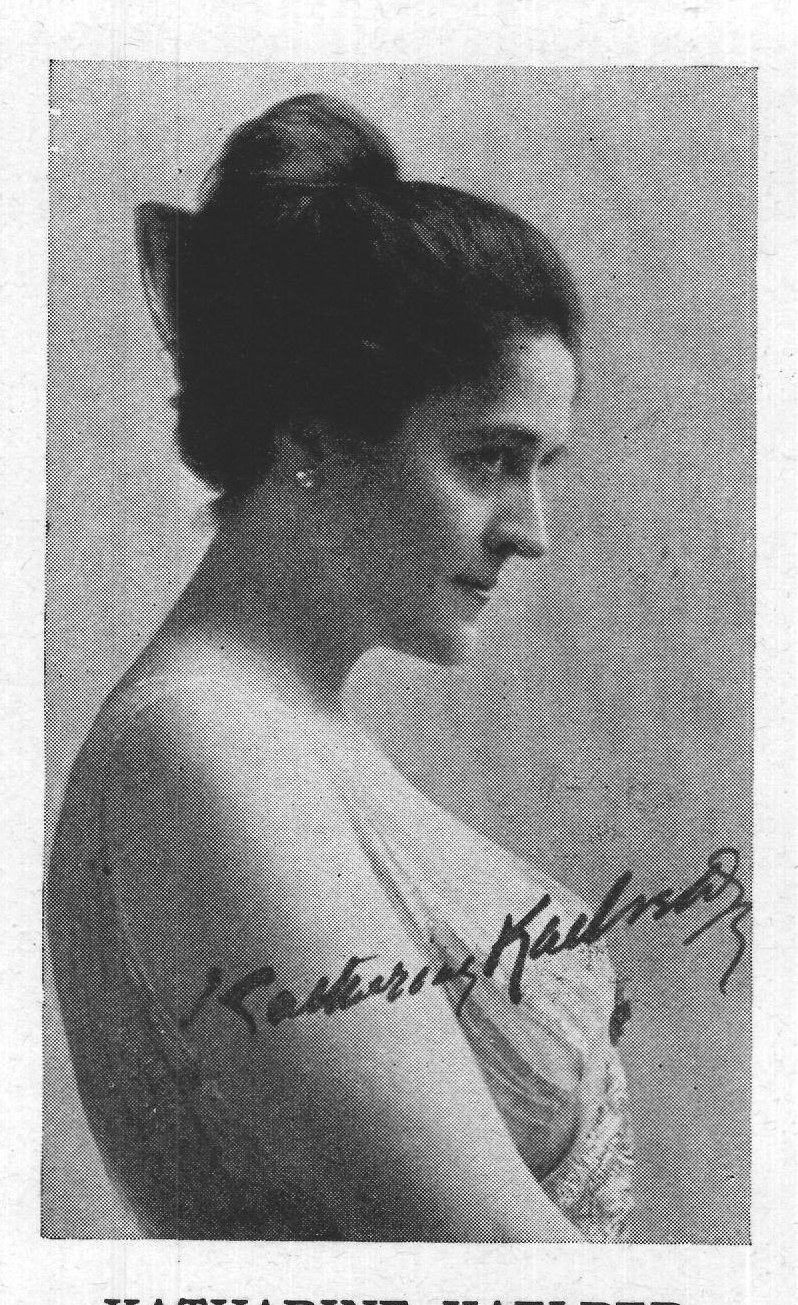
Katherine Kaelred

SPANISH EGGS
Empty a can of tomatoes into a frying pan, thicken with bread and add two or three green peppers, cut up small and a little butter to taste.
Simmer gently and then break on the top the number of eggs required. Dip the hot tomato mixture on them until cooked.
This is a dish that is nice equally for breakfast, dinner or late supper after the show. It is possible to make it in a chafing dish and I love making it myself.
Yours sincerely, Kacharing Keeloriz
MUTTON WITH
2 tablespoons butter 2 tablespoons flour 1/4 teaspoon salt Few grains pepper
MUTTON WITH CURRANT JELLY SAUCE
1 cup brown stock ½ cup jelly (currant) 1/2 tablespoons Sherry wine 6 slices cold cooked mutton Brown the butter, add flour, seasonings and stock, gradually; then add jelly. When melted, add mutton.
When meat is heated, add wine. If mutton gravy is at hand, use instead of making brown sauce.
Two unrelated dishes share this page: an eggs-poached-in-tomato supper written in the actress's own voice, and a standard chafing-dish or leftovers treatment for cold mutton. The first is loose and forgiving, the second is a printed formula with at least one garbled quantity.
- The hinge: sauce over the eggs, not under"Dip the hot tomato mixture on them" means spooning the simmering sauce over the yolks so the tops set without turning the whites tough. Keep the heat low and stop while the yolks still move; a few minutes is usually enough.
- Can of tomatoesPeriod cans varied, running from about 20 oz (a No. 2) to around 32 oz (a No. 3), so a modern 28 oz can of whole or crushed tomatoes is the right scale. Break the whole tomatoes up with a spoon before the eggs go in.
- "Thicken with bread"Stale white crumbs, stirred in until the sauce mounds on a spoon rather than running. Start with half a cup for a 28 oz can and add more only if the mixture still weeps liquid, since a watery base will not hold the eggs.
- Green peppersSweet bell peppers, which is what "green peppers" meant in American books of this date, not chillies. Two or three is a generous amount; they want a few minutes in the butter before the tomatoes go in or they stay raw and squeaky.
- YieldThe tomato base as written should take something like six to eight eggs and serve three or four with bread.
- Chafing dishShe is describing tableside cooking over a spirit lamp, which gives very gentle heat. A heavy skillet on a low burner reproduces it; a thin pan over high heat will scorch the tomato before the eggs set.
- On the mutton's jelly and sherry measuresThe printed page was checked: the sauce takes half a cup of currant jelly to one cup of brown stock, with half a tablespoon of sherry. That is a sweet sauce by modern taste, so add the jelly by the spoonful if you prefer it leaner.
- Mutton itselfMeat from a sheep over about two years old, strongly flavoured and rarely sold in American supermarkets now. Slices of cold roast leg of lamb behave the same way in this sauce; the point of the dish is reheating yesterday's roast without drying it, so warm the slices through in the sauce only and do not let it boil.
- Brown stock and brown sauceBrown the butter and flour to the colour of a hazelnut before the stock goes in, or the sauce tastes of raw flour. Beef stock stands in for the original brown stock; as the recipe says, leftover pan gravy is better than either.
Katherine Kaelred was a British-born actress working on the American stage in the years around 1910, and this book is one of the celebrity charity cookbooks that publishers assembled by writing to well-known performers for a favourite receipt — hence the chatty note about supper "after the show" and the mangled facsimile signature, which the printer or later scanner has turned into nonsense. "Spanish eggs" belongs to a large family of period dishes in which tomato and sweet pepper together earned the label Spanish, on the same logic that gave American menus Spanish rice and Spanish omelette; the method, eggs dropped into a thick simmering tomato sauce, is essentially what English and American cooks were doing decades before shakshuka became a familiar name for it. Her mention of the chafing dish places the recipe precisely: the chafing dish was the fashionable apparatus of the 1890s and 1900s, kept in the parlour for late suppers, and actors who came home at midnight had good reason to own one. The mutton with currant jelly sauce, by contrast, reads as filler drawn from a standard cookery manual — currant jelly with sheep meat was a fixed English pairing, and the whole formula exists to make cold roast worth serving twice.