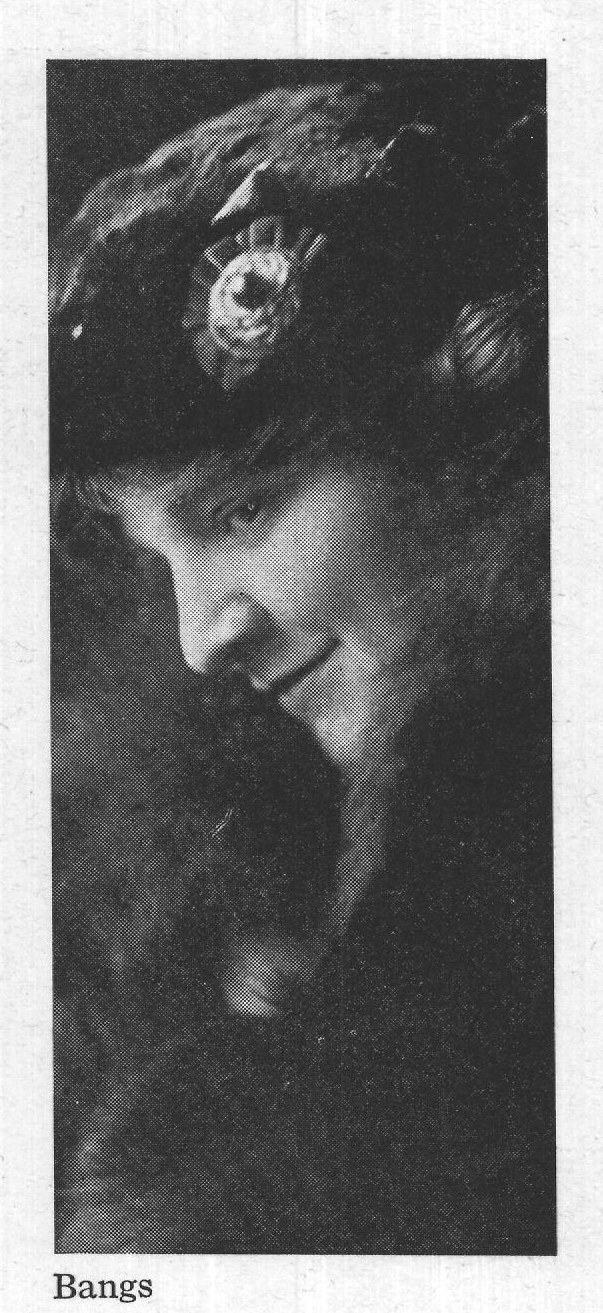
Doris Keane

ENGLISH CHUTNEY SAUCE
½ pound ripe tomatoes 1 pound tart apples 2 cupfuls granulated sugar 3 large green peppers 12 small onions I 1/2 cupful chopped mint-leaves 1⅓ cupfuls seeded raisins 3 cupfuls vinegar 2 teaspoonfuls dry mustard 1 teaspoonful salt Chop tomatoes, add salt, and mix. Chop together the apples, onions, and raisins and add the mint.
Scald and cool the vinegar, add sugar and mustard, mix all the ingredients together, and allow them to stand at least ten days before using, stirring them occasionally. This will keep indefinitely.
Sincerely,
This is an uncooked preserve: nothing in it is ever brought to heat except the vinegar, which is scalded and then cooled before it goes in. The instruction to let it stand ten days at room temperature and the promise that it will "keep indefinitely" are the parts that do not survive scrutiny.
- Nothing is cookedBritish-style bottled chutney is typically simmered, which both reduces the mixture and heats every particle of fruit and vegetable. Here the tomatoes, apples, onions, peppers and raisins go in raw and stay raw. Scalding the vinegar separately and letting it cool does nothing for the produce it is later poured over.
- The acidity is not controlledThree cupfuls of vinegar carry a substantial quantity of low-acid solids — tomatoes, onions and green peppers, of which only the tomatoes are weighed at 1½ pounds — plus two cupfuls of sugar. The original gives no vinegar strength and no way to check the finished pH, so there is no assurance the mixture lands in the safe range for an unheated, unsealed preserve.
- Ten days on the counterThe mixture simply stands unheated, with no temperature specified and no brine or acid calculation. What develops during that period depends entirely on the kitchen it stands in.
- No jar, no seal, no processingThe recipe never mentions sterilised jars, headspace, sealing or a boiling-water bath, yet claims indefinite keeping. Mould and yeast on the surface of an open, sugary, room-temperature mixture are the ordinary outcome over months.
- Tomatoes are not what they wereSome modern varieties are lower in acid, and current preserving guidance calls for added acid in canned tomato products in any case because tomato pH sits close to the borderline. A period assumption about tomato acidity should not be carried forward.
- Garbled quantitiesThe mint is printed as "I 1/2 cupful" and the raisins as "11/3 cupfuls" — almost certainly 1½ and 1⅓, but the typesetting is broken and the amounts cannot be read with confidence. "12 small onions" and "3 large green peppers" are counts, with no weight given.
- If you want the flavourThe combination — tomato, apple, green pepper, mint, raisin, mustard — is a good one and worth having. Use a current, tested chutney recipe with a cooking stage and a proper processing method.
Doris Keane's fame rested almost entirely on Romance, Edward Sheldon's 1913 play, in which she was the Italian opera singer Cavallini; she took it to London in 1915 and ran with it there for years, which is why an American actress ends up contributing an "English" chutney to a celebrity cookbook. Chutney reached Britain through the East India Company trade — the word derives from Hindi cha tṇī — and by the late nineteenth century the bottled, sweet-sour, raisin-heavy British version had drifted a long way from anything served on the subcontinent, becoming a standard of the cold-meat table and the curry tray. Recipes like this one, built on tomatoes, apples and green peppers rather than mangoes, are the further American adaptation of that already-adapted sauce. Uncooked chutneys do turn up in period household books, though how common the method was is hard to say; the confident line "this will keep indefinitely" reflects an era before anyone was measuring pH in a domestic kitchen.