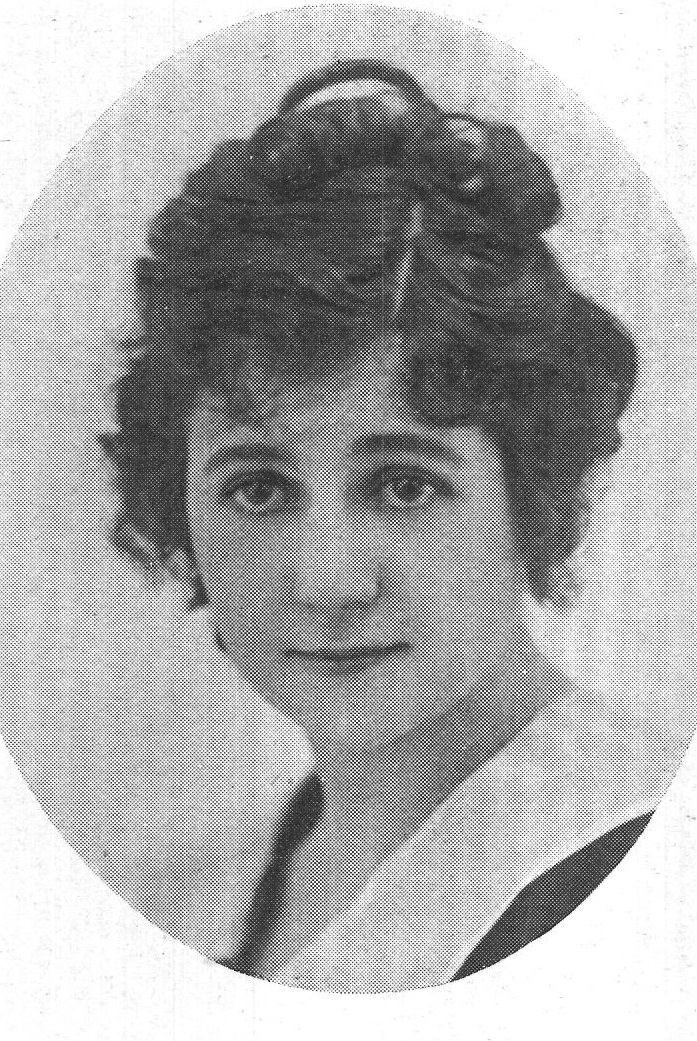
Mabel Trunelle

さき
LOBSTER A LA WASHINGTON
Remove the meat from the live lobster, same as in a Newburg, cutting into pieces an inch square. Roll in bread crumbs and fry in butter, season with salt and pepper while cooking. Serve on napkin garnished with parsley and lemon.
I love "trying" to cook, and this is one of my favorites.
A short, confident recipe that assumes you can already break down a raw lobster. Everything hinges on getting the meat out of the shell uncooked and then frying it fast.
- "Same as in a Newburg"Here it means splitting the raw lobster and picking the tail, claw and knuckle meat out of the shell before any cooking, though many period Newburg recipes in fact started from boiled lobster. Plunging the lobster into boiling water for 2-3 minutes first loosens the meat from the shell without cooking it through, and makes the picking easier.
- Killing the lobsterA common method is a firm knife thrust down through the head between the eyes, then splitting lengthwise. Chilling the lobster in the freezer for around 20 minutes beforehand makes it sluggish and easier to handle.
- Making the crumbs stickRolling wet lobster straight in dry crumbs gives a patchy coating. Pat the pieces dry, dip in beaten egg or a little melted butter, then crumb; fine dry crumbs adhere better than fresh soft ones.
- Frying timeInch cubes of raw lobster need only 3-4 minutes in foaming butter, turning once, until the crumbs are gold and the meat opaque. Beyond that it tightens and squeaks against the teeth.
- Butter alone will burnAt the heat needed to brown crumbs, whole butter darkens quickly. Use clarified butter, or add a spoonful of neutral oil to the pan, and wipe out any scorched crumbs between batches.
- Serving on a napkinA folded linen napkin on the platter was standard for fried food, meant to absorb butter and keep the crust from steaming. A rack over a warm plate does the same job.
- YieldOne 1.5 lb lobster gives roughly five to six ounces of picked meat, enough for two as a first course or one as a light main.
Dishes labelled "a la Washington" appear in American hotel and club cookery around the turn of the twentieth century, alongside the better-documented lobster Newburg, which is generally traced to Delmonico's in New York in the 1870s. The name may have been largely decorative, though the evidence is thin. This collection gathered contributions from stage and screen performers of the era, and the closing line, with its modest quotation marks around "trying," is characteristic of the genre: the celebrity cookbook traded less on culinary authority than on the pleasant fiction of being let into someone's dining room.