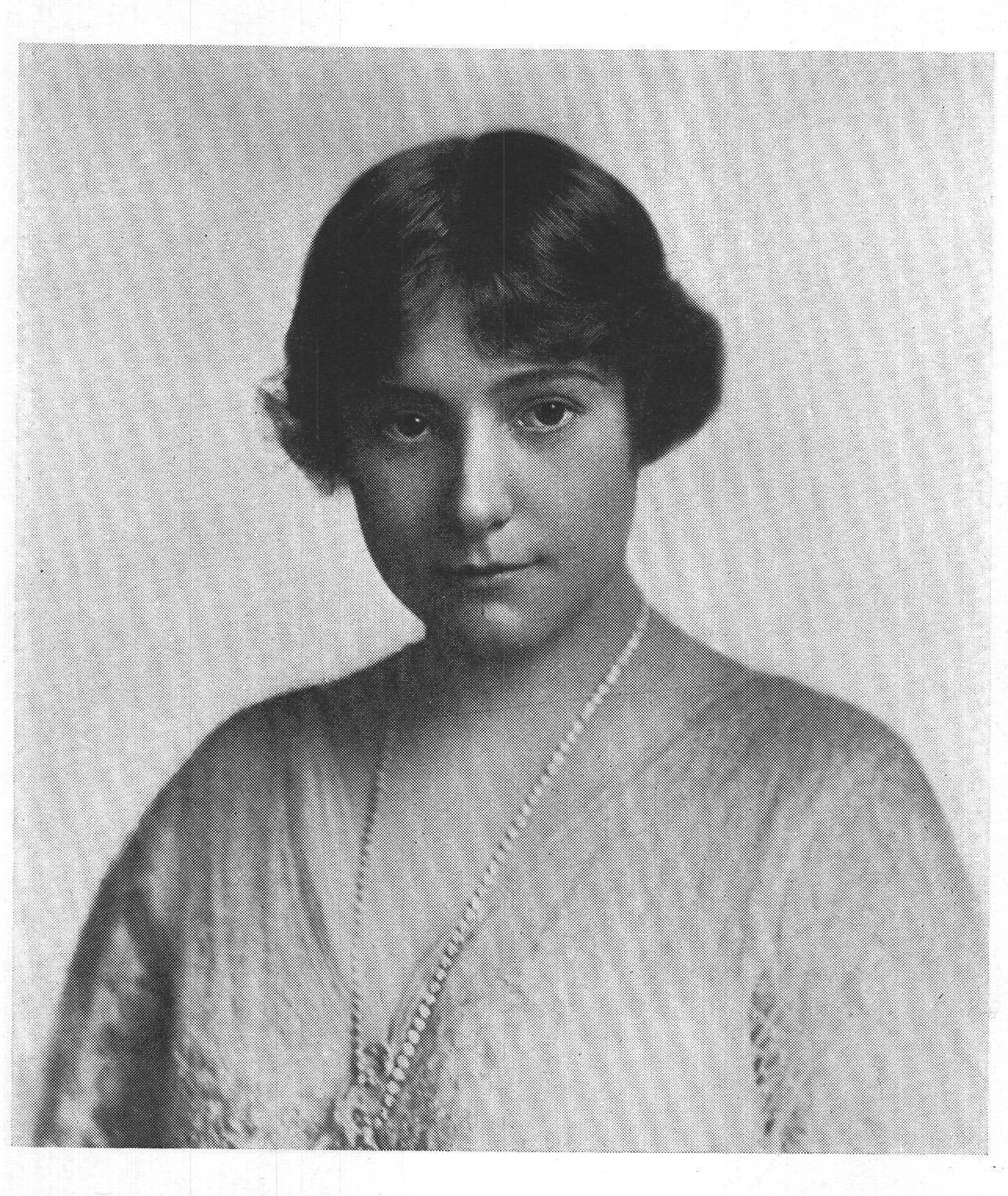
Margaret Illington

MOCK GNOCCHI
Cooked farina, about 3 cup- 1 cupful grated cheese fuls Paprika 1 pint of medium-thick white sauce Rinse good-sized timbale-molds or small custard-cups with cold water, and pour in the farina. Let stand till cool. Turn out into a shallow buttered baking dish, and pour the sauce, which should be highly seasoned with salt and pepper and a little cayenne, around them. Sprinkle the cheese over the top and dust with paprika. Brown in a quick oven.
A page-break in the original has run the tail of a potato pancake recipe into this heading; what follows is entirely the mock gnocchi. It is semolina pudding, chilled in molds, sauced and browned.
- FarinaFarina here is milled wheat middlings — Cream of Wheat or fine semolina. Cook it in salted milk or broth until very stiff, thicker than breakfast porridge, or the molded shapes will slump in the sauce.
- "About 3 cupfuls, cooked"The measure is of finished cereal, not dry grain. Roughly 3/4 cup dry farina to 3 cups liquid gives about that volume.
- Rinsing the moldsThe cold-water film keeps the hot farina from gripping the metal, so the set shapes turn out cleanly.
- Timbale-moldsSmall straight-sided dariole molds; the recipe says 'good-sized', so anything from about half a cup up. Ramekins, custard cups or even a muffin tin work; the shapes should be tall enough to stand above the sauce.
- Medium-thick white sauceA pint is 2 cups, and "medium" in this period means about 2 tablespoons each butter and flour per cup of milk. It must be aggressively seasoned, as the farina itself is bland.
- The cheeseGrated cheese in an American kitchen of this period would most often have been Parmesan or a dry aged Cheddar. Parmesan browns well and suits the dish.
- Quick ovenConventionally read as a hot oven, roughly 425-450F. The farina is already cooked, so the baking is only to brown the top; 15 to 20 minutes, and a moment under the broiler if it is still pale.
- YieldThree cupfuls of farina will fill roughly six molds, enough for a light supper or luncheon dish for three or four, or a side for six.
This is gnocchi alla romana under an apologetic name: the Roman version is semolina cooked stiff, cooled, cut into rounds, and baked with butter and cheese, and it contains no potato at all. American cooks of the 1910s marked the semolina version as "mock" — the same instinct that produced mock turtle soup and mock duck, where the word signals a substitution rather than a fraud. It appears in a collection of dishes contributed by stage people, a popular charity-book format of the period in which the name on the page mattered as much as the cooking; Margaret Illington was a Broadway actress of the era.