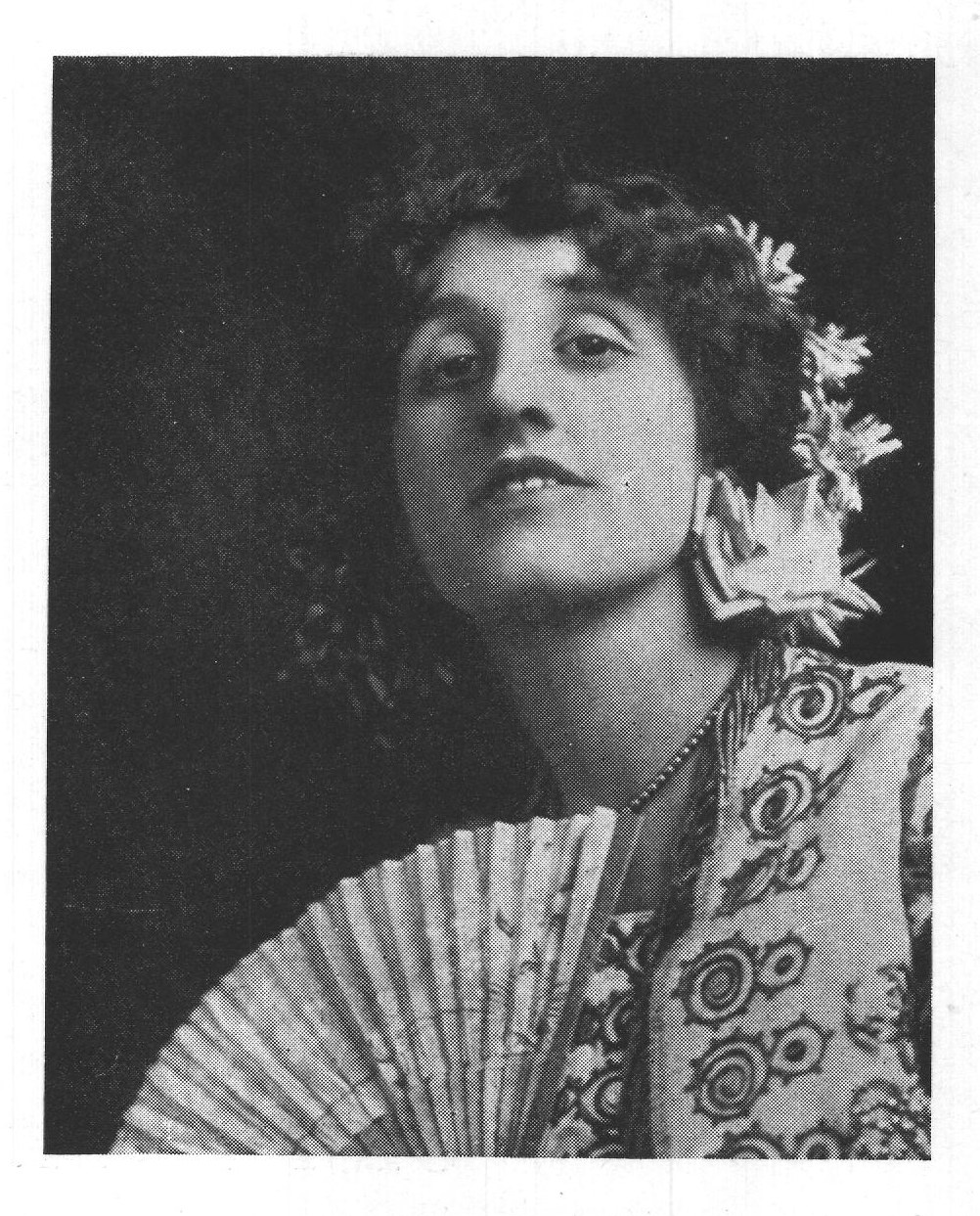
Regina Vicarino

CLAM CROQUETTES
One pint of round clams, chopped fine. One cup rolled cracker crumbs. One well-beaten egg. One tablespoon melted butter. Salt and pepper to taste.
Small quantity of liquid from clams. Mix well, form in cakes. Let stand ten minutes, then fry in butter until brown.
Cordially yours, Teguia Vicarina
OYSTERS EN BROCHETTE
String oysters on a skewer and between each put thin slices of bacon. Butter and broil over quick fire. Prepare a sauce of liquor saved from oysters when opened. Place in saucepan with butter the size of an egg, add small piece of onion and parsley chopped very fine, with dash of Worcestershire or Harvey sauce. Let simmer until onions become done, then thicken with a heavy cream sauce. Serve on hot platter with pieces of toast, placing oysters on toast. Pour sauce around and serve. Clams are equally as good served in this manner. "Forbear-eat no more"
Two straightforward shellfish dishes from a stage performer's contribution, with the period's usual vagueness about quantities and heat. Both hinge on brief cooking.
- Round clams"Round" clams are hard-shell quahogs or littlenecks, as distinct from the long soft-shell steamer. A pint means a pint of shucked meats, roughly a pound; depending on size that is somewhere around two to three dozen littlenecks, or about a pound of canned chopped clams, drained (reserve the juice for the recipe).
- Rolled cracker crumbsSoda or oyster crackers crushed with a rolling pin, not fine breadcrumbs. They absorb more liquid, which is why the clam juice is added only in "small quantity" and the cakes rest ten minutes before frying.
- The ten-minute restThis is the instruction that matters in the croquettes. The crumbs need that time to hydrate and bind; skip it and the cakes fall apart in the pan. Chilling them instead, for 20-30 minutes, holds them together better still.
- Frying in butterButter alone browns fast and burns at this heat. Medium heat, and a little neutral oil added to the pan, gives you the brown crust without scorching. Three to four minutes a side is enough; the clams are already tender and long cooking makes them rubbery.
- Butter the size of an eggA standard old measure for about 2 oz, or 4 tablespoons.
- Harvey sauceA bottled condiment of anchovy, soy, vinegar and spice, in use from the late eighteenth century and still a standard item in Victorian and Edwardian larders; it is no longer commercially available. Worcestershire, which the recipe offers as the alternative, does much the same job.
- Broiling en brochette"Quick fire" means high heat, close to the element or over hot coals. Oysters need only 3-4 minutes total, turned once, and are done when the bacon crisps and the edges of the oysters ruffle. Blanch or part-cook the bacon first, since thin bacon and oysters will not otherwise finish at the same moment.
- The sauceStrain the oyster liquor before using it; there is always grit. "Heavy cream sauce" means a thick bechamel, so have a small quantity ready rather than starting a roux while the oysters broil.
- YieldThe croquette mixture makes about 8 cakes, enough for four as a first course. The brochettes serve two to four depending on how many oysters go on each skewer.
The book collects recipes solicited from working stage performers, each signed off in the flourishing manner of a fan letter, and the sign-offs are often more revealing than the cookery: here the heading and the contributor's own signature disagree, the latter appearing as "Teguia Vicarina," and the closing "Forbear-eat no more" is a bit of mock-theatrical grandeur of the kind these pages are full of. The dishes themselves are pure American restaurant repertoire of the period. Oysters en brochette, oysters skewered with bacon and broiled, was a fixture of hotel and chophouse menus on both coasts and is still served in New Orleans; clams and oysters were cheap, abundant and shucked by the quart, which is why a home recipe could open with a casual pint of them. The bottled sauces named at the end, Worcestershire and Harvey, were the standard savoury shortcuts of the Anglo-American kitchen, and the fact that one survives and the other has vanished is a fair measure of how much of this larder has quietly disappeared.