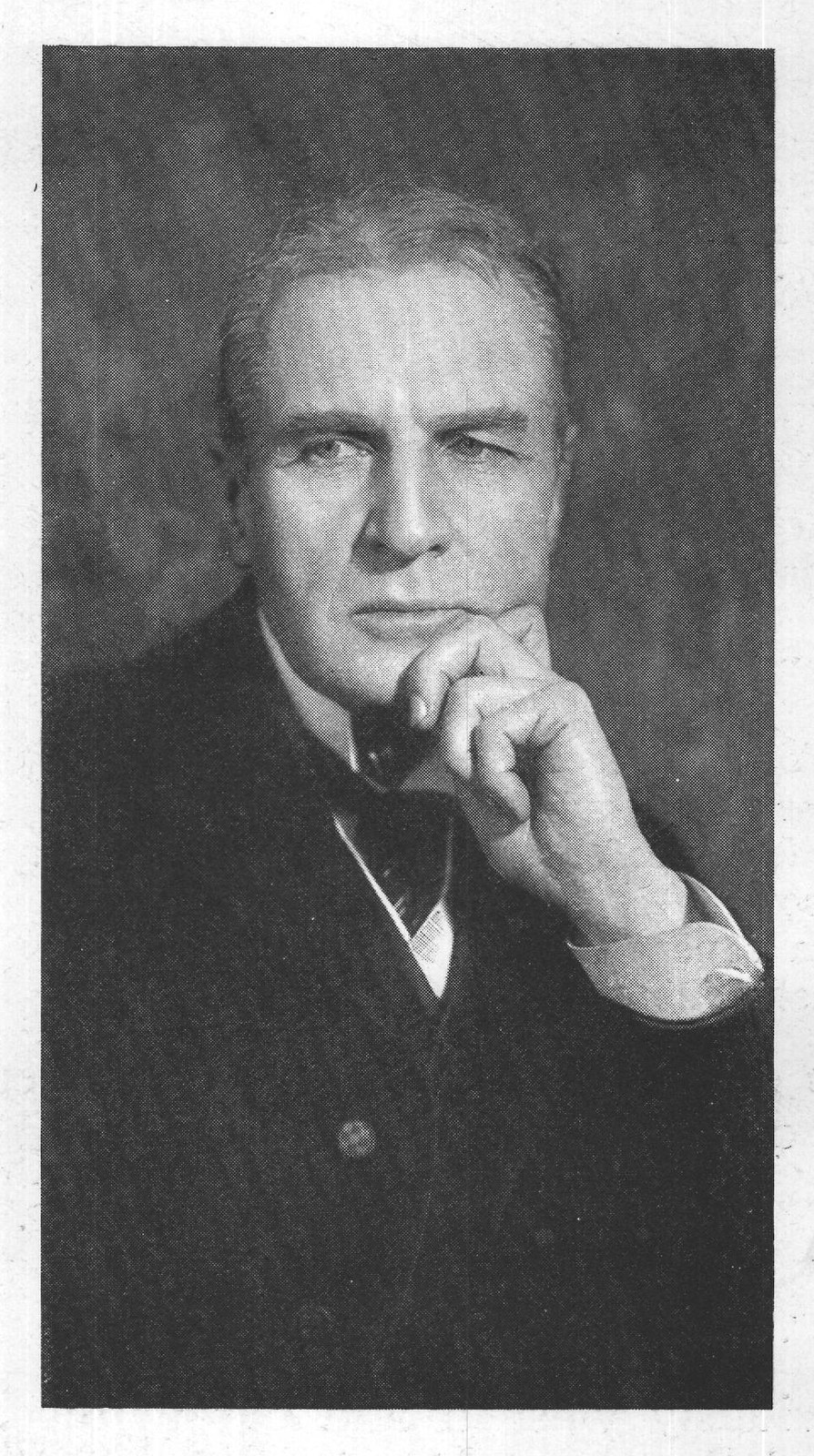
William Gillette

"But civilized man cannot live without cooks."
VANILLA WAFERS
2 eggs 1 cup sugar 1/2 cup shortening 2 teaspoons vanilla ½ teaspoon salt Flour to roll out 1 teaspoon Royal baking powder Mix sugar, yolks of eggs well beaten and shortening, melted. Add part of flour, mixed and sifted with baking powder and salt, whites of eggs beaten stiff, vanilla and flour to roll out. Roll very thin, shape with small cutter and bake.
A plain rolled sugar cookie with no oven temperature, no baking time and no flour quantity — the three things a modern cook needs. Everything else is straightforward.
- The mismatched headingThe words "Southern Sweet Potatoes" sit above a vanilla wafer recipe, most likely a stray heading belonging to an adjacent recipe in the original volume; the cause is not recorded. The wafer recipe as printed is complete in itself.
- Flour is left to you"Flour to roll out" means adding flour until the dough is stiff enough to handle, which lands around 2½ to 3 cups for this quantity of egg, sugar and fat. Add it in stages and stop as soon as the dough stops sticking; extra flour past that point makes the wafers hard rather than crisp.
- Check the salt1½ teaspoons of salt against one cup of sugar is high for a sweet wafer and is very likely a typesetting error for ½ teaspoon. Older shortenings were unsalted, but even so, ½ teaspoon is the sensible reading.
- ShorteningIn American baking of this period this means vegetable shortening or lard, melted as directed. Melted butter works, though it spreads slightly more; the dough will need a short chill before rolling.
- Royal baking powderA brand name, still sold; use 1 teaspoon of any modern baking powder. Royal was historically a cream-of-tartar formula rather than a phosphate or alum one, but no substitution or acid adjustment is needed here.
- Oven and timeThe original gives neither temperature nor time. Thin rolled wafers of this kind suit a moderately hot oven: around 375°F, 5 to 8 minutes. They go from pale to brown very quickly at the edges, so watch the first tray and time the rest by it.
- Roll very thinThis is the hinge. "Very thin" means about 1/16 inch — thick enough to lift, thin enough to snap. Rolled thicker they bake into soft sugar cookies, which is a different biscuit entirely.
- YieldWith a small cutter of about 2 inches, expect at least 5 to 6 dozen, and considerably more if the dough is rolled as thin as directed. They keep well in a tin for a week and crisp back up in a low oven if they soften.
Charity cookbooks assembled from celebrity contributions were a staple of American fundraising from the 1890s onward, and the recipes in them are usually short, domestic and unglamorous. William Gillette, who wrote and starred in the stage Sherlock Holmes and whose portrayal fixed the curved pipe in the popular image of the detective, offers a wafer whose only extravagance is two teaspoons of vanilla. The epigraph he attaches to it is a line from Owen Meredith's Lucile, widely quoted in the period as "We may live without books... but civilized man cannot live without cooks," and it was a favourite inscription in cookbooks of the day. The recipe itself belongs to a long family of rolled egg-and-sugar wafers that predate the commercial "vanilla wafer," made thin and cut small so a batch would go around a large tea table.