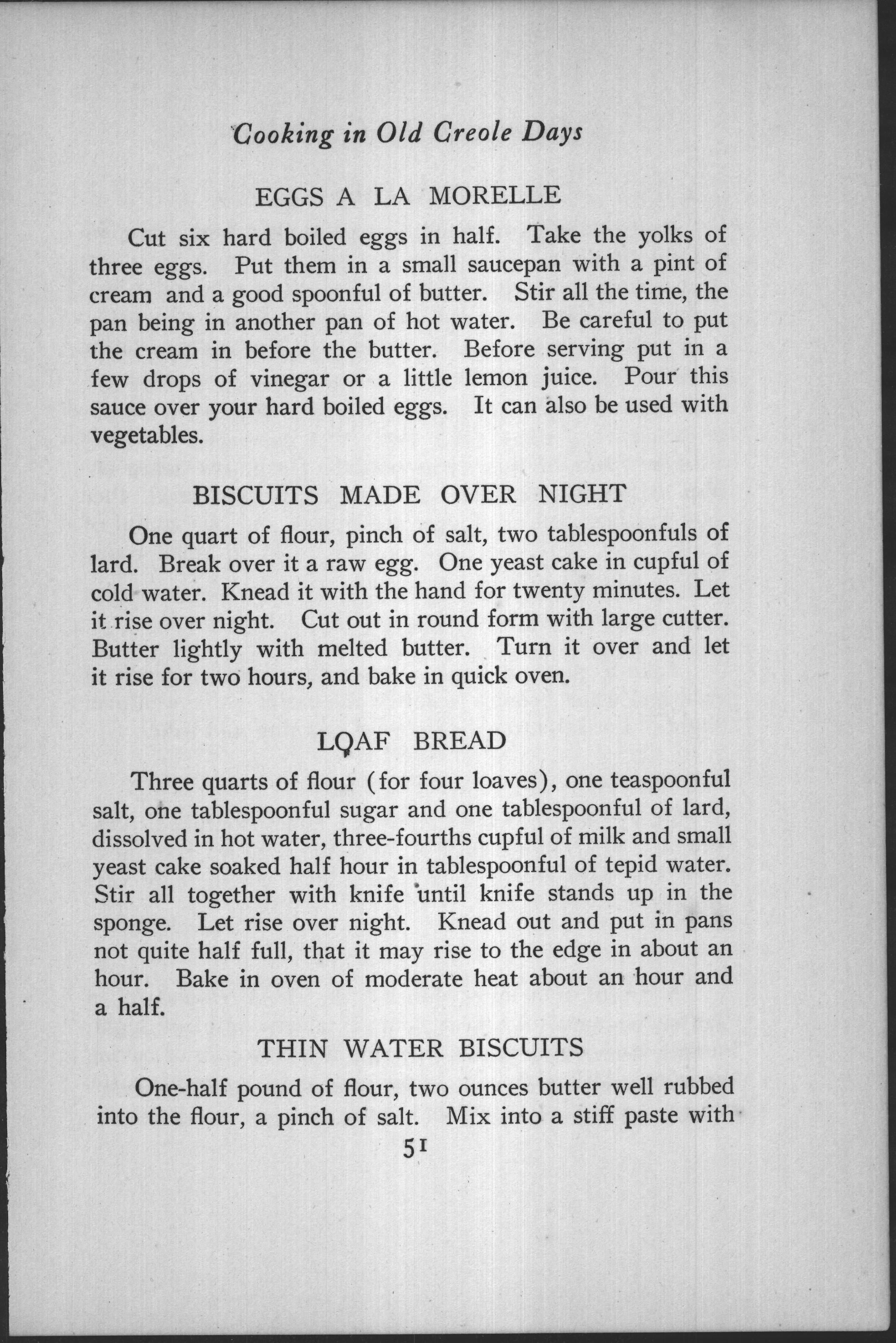
Biscuits Made Over Night
One quart of flour, pinch of salt, two tablespoonfuls of lard. Break over it a raw egg. One yeast cake in cupful of cold water. Knead it with the hand for twenty minutes. Let it rise over night. Cut out in round form with large cutter. Butter lightly with melted butter. Turn it over and let it rise for two hours, and bake in quick oven.
These are yeast-raised biscuits, not quick ones — enriched with lard and a whole egg, mixed at night and baked light the next day.
- “One quart of flour”About 4 cups.
- “One yeast cake”An old compressed-yeast cake equals roughly one modern packet, 2¼ teaspoons of active dry yeast. Dissolve it in the cup of water — lukewarm, rather than cold, works faster.
- The whole eggThe raw egg enriches the dough for a softer, richer crumb, closer to a light dinner roll than a plain biscuit.
- Two rises“Rise over night,” then a second 2-hour rise after cutting and folding — the fold of buttering and turning each round is what makes them open like a pocket.
- A quick ovenBake in a hot oven, 425–450°F, until puffed and golden, about 12–15 minutes.
“Made over night” recipes belonged to the rhythm of the yeast-baking kitchen, before instant yeast and reliable refrigeration. A cook mixed the dough after supper and let it rise slowly in the cool of the night, so fresh bread or biscuits could meet the breakfast table. The yeast cake called for here — a small brick of compressed or dried yeast — was a nineteenth-century convenience that spared cooks from tending the finicky homemade “starts” earlier generations kept alive. Folded and buttered before their second rise, biscuits like these split and flake in a way quick biscuits never manage.
From page 51 of the 1904 edition.
Original page from the book