Blanquette of Veal
Leonie Penin
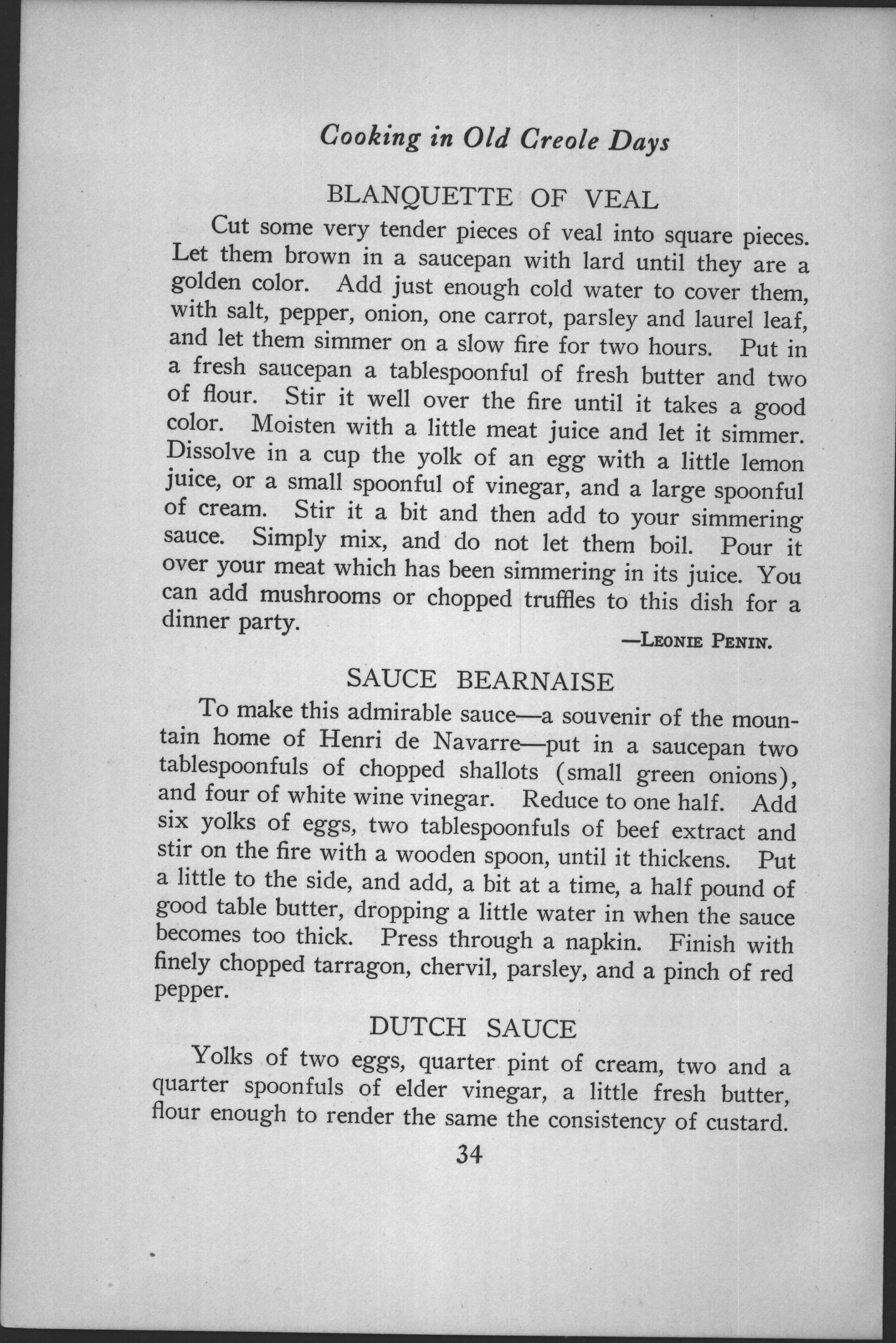
Cut some very tender pieces of veal into square pieces. Let them brown in a saucepan with lard until they are a golden color. Add just enough cold water to cover them, with salt, pepper, onion, one carrot, parsley and laurel leaf, and let them simmer on a slow fire for two hours. Put in a fresh saucepan a tablespoonful of fresh butter and two of flour. Stir it well over the fire until it takes a good color. Moisten with a little meat juice and let it simmer. Dissolve in a cup the yolk of an egg with a little lemon juice, or a small spoonful of vinegar, and a large spoonful of cream. Stir it a bit and then add to your simmering sauce. Simply mix, and do not let them boil. Pour it over your meat which has been simmering in its juice. You can add mushrooms or chopped truffles to this dish for a dinner party.
A homestyle blanquette finished with the classic French liaison of egg yolk and cream — the silky, tangy sauce that defines the dish.
- A blanquette is usually whiteClassically the veal is gently poached, not browned, to keep the stew pale — hence blanquette, from blanc. This home version browns it lightly, which is fine; just keep the color gentle.
- “Laurel leaf” = bay leafOne dried bay leaf, simmered with the carrot, onion, and parsley.
- Build a veloutéButter plus flour cooked to a light gold, then loosened with the meat’s juices, makes the base sauce.
- The liaison must not boilEgg yolk, cream, and lemon or vinegar enrich and thicken the sauce — but stir them in off the heat. Boil it and the yolk curdles.
- Dress it upMushrooms or a little chopped truffle turn a weeknight stew into a dinner-party dish, exactly as the recipe suggests.
Blanquette de veau is one of the oldest and best-loved of French home dishes, a “white stew” whose name simply means the little white one — meat kept pale by poaching rather than browning, cloaked in a creamy, lemon-bright sauce. It has long been called the Sunday dinner of the French bourgeoisie, comforting and unshowy. Its appearance in a New Orleans kitchen is no accident: Creole cooking grew directly from French roots, and dishes like this one crossed the Atlantic and stayed, adapting to local hands and tastes while keeping their French names and their elegant finishing tricks.
From page 34 of the 1904 edition.
Original page from the book