New Orleans Veal with Oysters
Josephine Nicaud
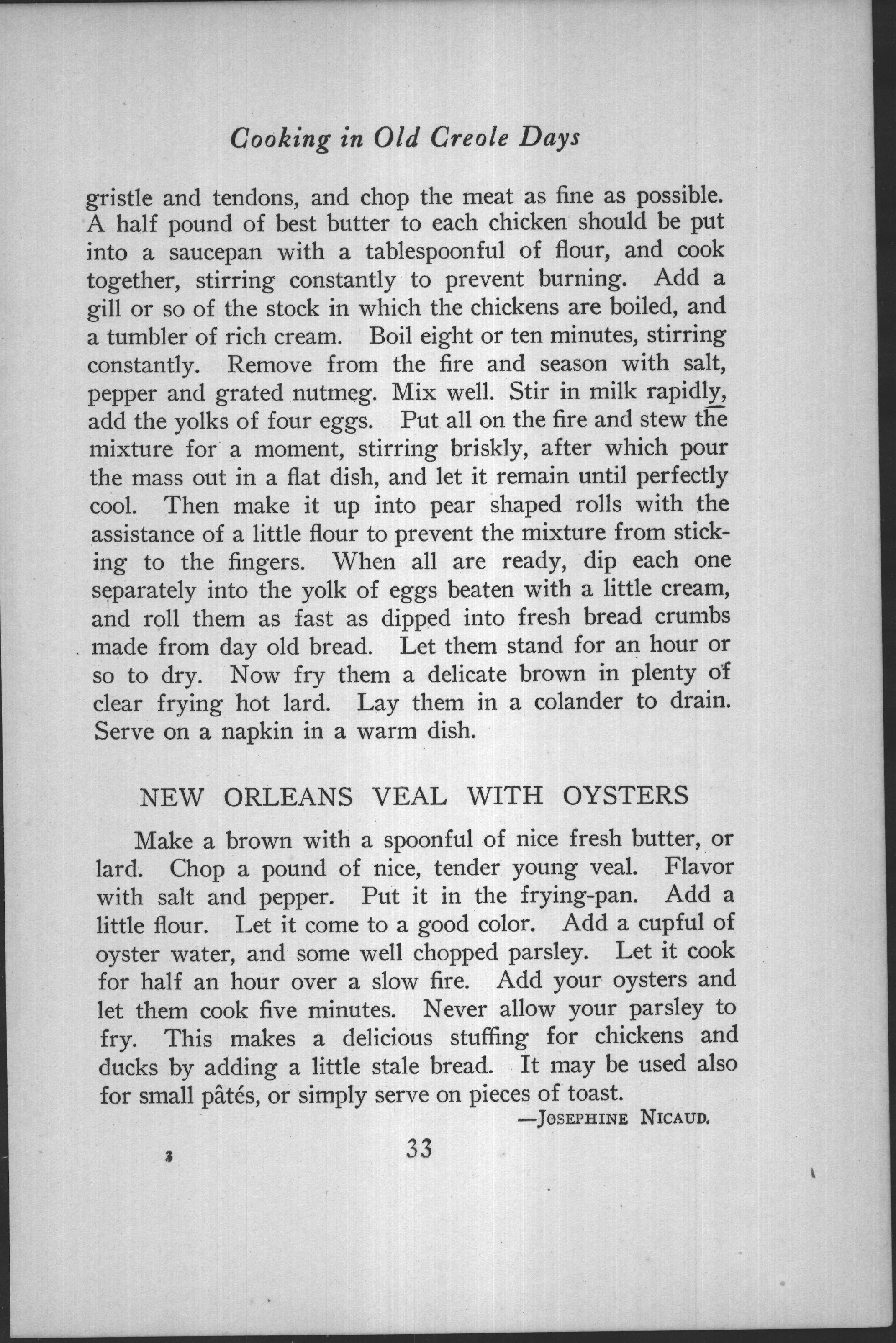
Make a brown with a spoonful of nice fresh butter, or lard. Chop a pound of nice, tender young veal. Flavor with salt and pepper. Put it in the frying-pan. Add a little flour. Let it come to a good color. Add a cupful of oyster water, and some well chopped parsley. Let it cook for half an hour over a slow fire. Add your oysters and let them cook five minutes. Never allow your parsley to fry. This makes a delicious stuffing for chickens and ducks by adding a little stale bread. It may be used also for small pâtés, or simply serve on pieces of toast.
A New Orleans classic where minced veal simmers in oyster liquor and finishes with plump oysters — equally at home on toast or as a stuffing.
- “Make a brown” = rouxCook the butter or lard with the flour until it colors — the light-brown roux is the Creole foundation of the whole dish.
- “Oyster water” = oyster liquorThe briny liquid in the shell or tub. Save every drop when you shuck; if you’re short, bottled clam juice is the closest stand-in.
- Add oysters at the very endFive minutes is plenty — oysters turn rubbery when overcooked. They’re done the moment their edges ruffle.
- Never fry the parsleyStir it in off the boil so it stays green and fresh; fried parsley goes bitter and drab.
- Three dishes in oneLoosen with stale bread for a poultry stuffing, spoon into pastry for small pâtés, or simply pile onto toast.
Oysters were the great democratic food of nineteenth-century America, and nowhere more so than in New Orleans, where Gulf beds supplied them by the barrel at pennies a dozen. Creole cooks folded them into everything — gumbos, dressings, patties, and rich little ragoûts like this one — treating a luxury of today as the everyday abundance it then was. Using the oyster liquor as the cooking liquid is pure Creole economy, wringing flavor from what most cooks would pour down the drain. The dish’s flexibility, ready to stuff a duck or crown a piece of toast, is equally characteristic of that resourceful kitchen.
From page 33 of the 1904 edition.
Original page from the book