Caramel Pudding
Leonie Penin
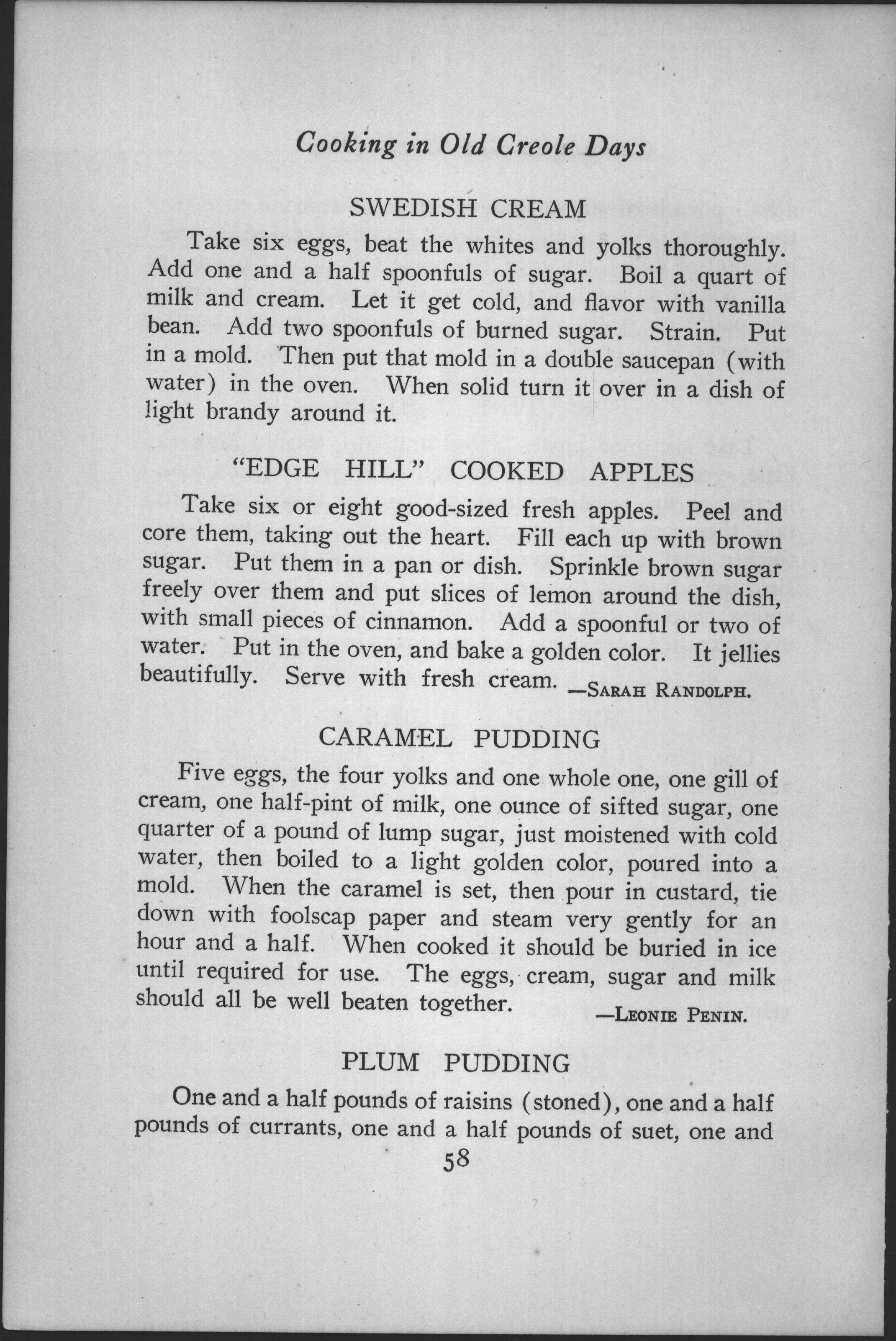
Five eggs, the four yolks and one whole one, one gill of cream, one half-pint of milk, one ounce of sifted sugar, one quarter of a pound of lump sugar, just moistened with cold water, then boiled to a light golden color, poured into a mold. When the caramel is set, then pour in custard, tie down with foolscap paper and steam very gently for an hour and a half. When cooked it should be buried in ice until required for use. The eggs, cream, sugar and milk should all be well beaten together.
A steamed caramel custard, unmolded to reveal its golden cap — close kin to crème caramel, but cooked over water rather than in the oven.
- A gill of creamOne gill is ½ cup (4 fl oz); with ½ pint (1 cup) milk it makes a small, rich custard.
- Two kinds of sugar“Sifted sugar” (1 oz, about 2 Tbsp superfine) sweetens the custard; ¼ lb lump sugar boiled to golden makes the caramel lining.
- “Foolscap paper” coverThat’s a sheet of writing paper tied over the mold to keep water out; use parchment or foil.
- Steam gently and longSet the covered mold in a pan of barely simmering water, on the stove or in a low oven, for about 1½ hours until just set.
- Chill hard before serving“Buried in ice” means thoroughly chilled; cold custard unmolds cleanly with the caramel as its sauce.
The word caramel traveled a long way to reach this pudding. It came into English in the 1700s from French, which took it from Spanish or Portuguese caramelo — and the trail grows uncertain from there, with etymologists split between a Late Latin word for a sugar-cane reed (cannamella) and a term for hardened, honey-comb sugar. What’s certain is the craft: gently heating sugar until it melts, browns, and takes on that bittersweet depth — a transformation cooks prized and relied on long before anyone agreed on what to call it.
From page 58 of the 1904 edition.
Original page from the book