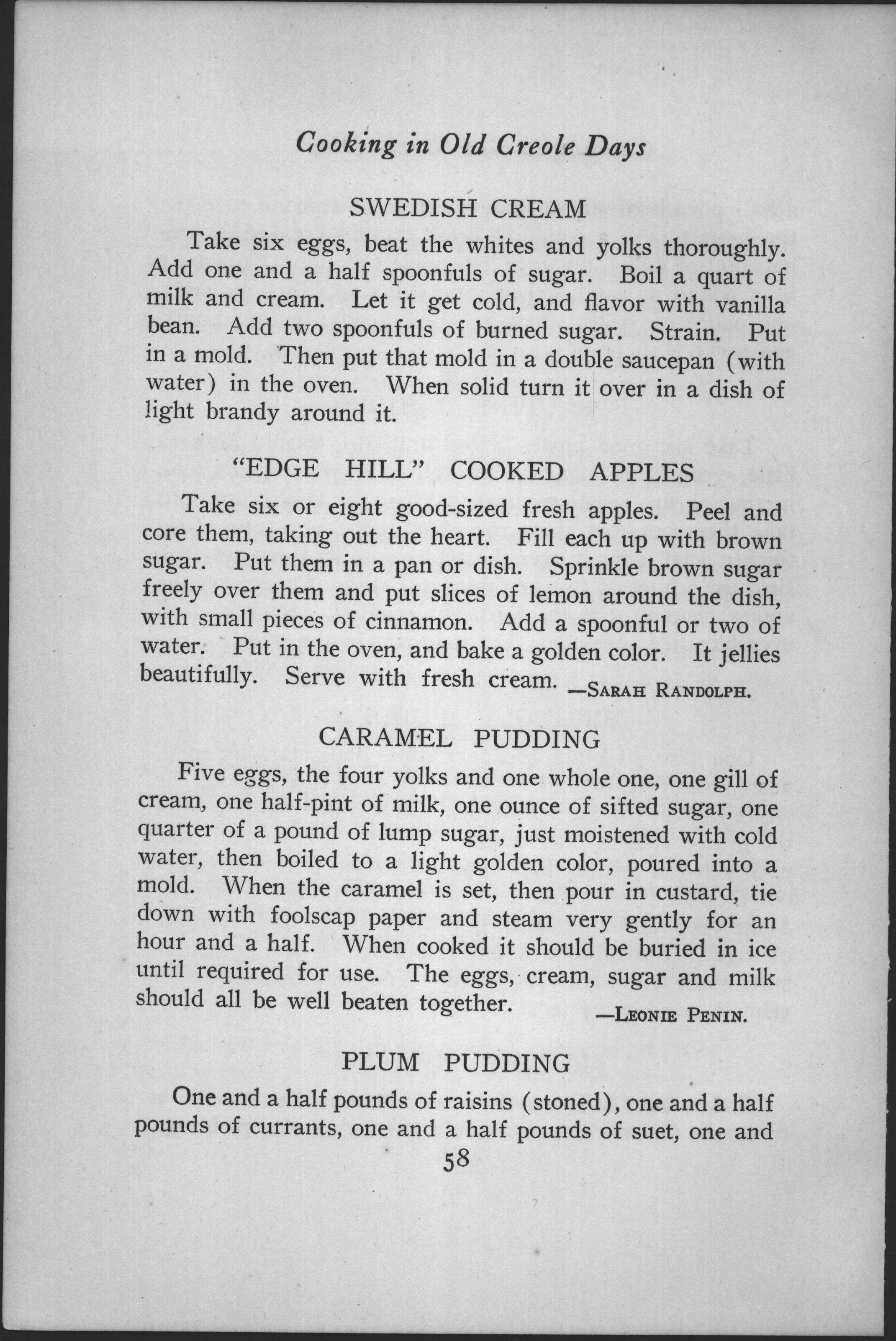
"Edge Hill" Cooked Apples
Sarah Randolph
Take six or eight good-sized fresh apples. Peel and core them, taking out the heart. Fill each up with brown sugar. Put them in a pan or dish. Sprinkle brown sugar freely over them and put slices of lemon around the dish, with small pieces of cinnamon. Add a spoonful or two of water. Put in the oven, and bake a golden color. It jellies beautifully. Serve with fresh cream.
Baked apples in the old style — cored, packed with brown sugar, and scented with lemon and cinnamon until they turn to jelly.
- Choose apples that holdUse firm baking apples (Rome, Winesap, or a tart cooking variety) that soften without collapsing.
- Oven temperatureA moderate 350°F (175°C) bakes them to a golden, syrupy tenderness in 45–60 minutes; baste once or twice.
- Why it “jellies”Apples are rich in natural pectin; with sugar and their own juice they form a glossy, jelly-like syrup as they bake.
- Just a little water“A spoonful or two” keeps the sugar from scorching before the apples release their juice — don’t flood the dish.
- Lemon and cinnamonSlices of lemon and small pieces of stick cinnamon perfume the syrup; whole spice is truer here than ground.
This recipe carries the name of Edgehill, a Randolph family estate in Albemarle County, Virginia, home to descendants of Thomas Jefferson. Its contributor, Sarah N. Randolph, belonged to that prominent Virginia line — the same family that produced Mary Randolph, whose The Virginia Housewife (1824) is a cornerstone of American cookery. Baked apples themselves are far older and humbler: a thrifty way to turn keeping-apples and a little sugar into dessert, common in English and American kitchens for centuries. The plantation name simply lent a homely dish a touch of Virginia gentility.
From page 58 of the 1904 edition.
Original page from the book