Codfish Cakes
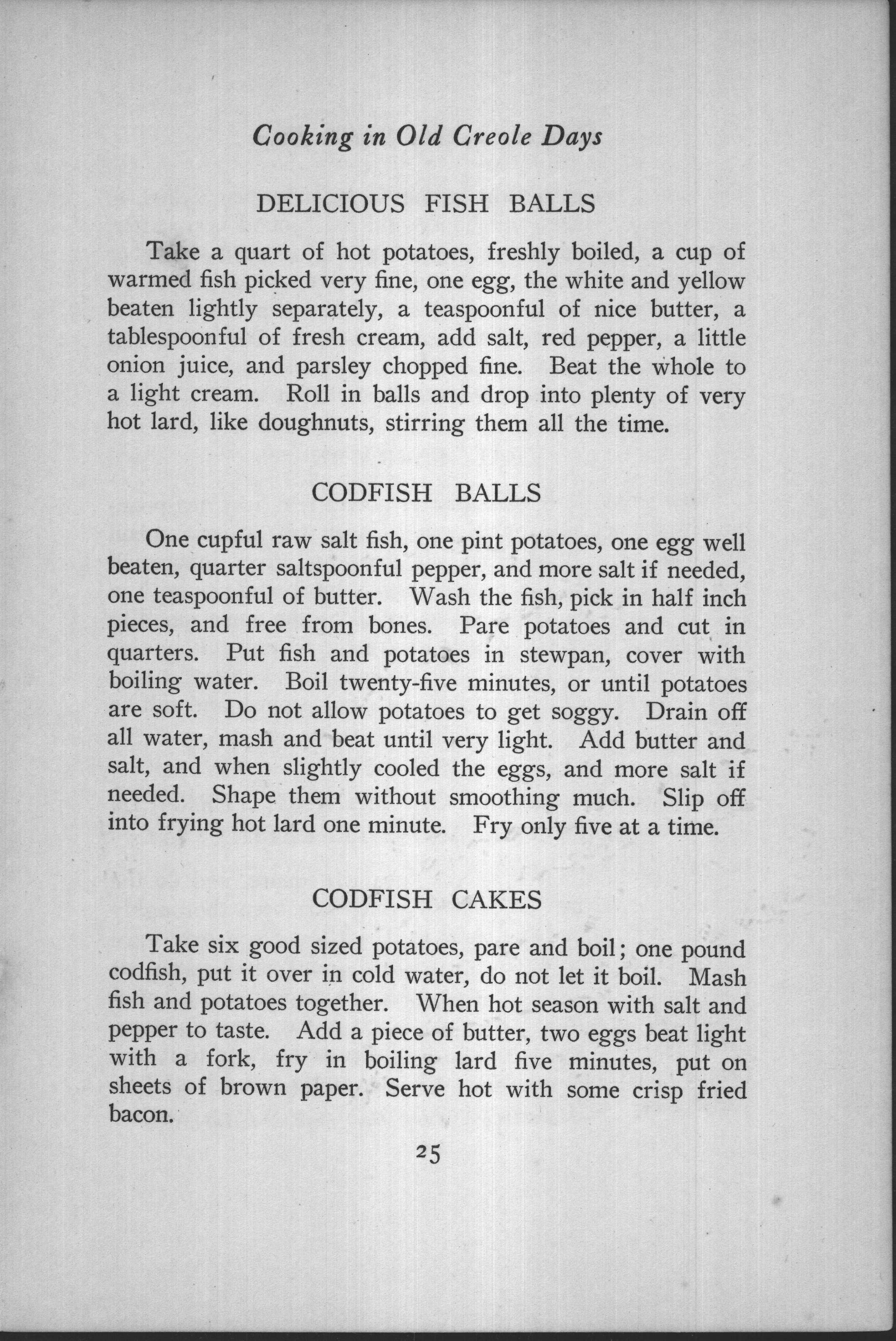
Take six good sized potatoes, pare and boil; one pound codfish, put it over in cold water, do not let it boil. Mash fish and potatoes together. When hot season with salt and pepper to taste. Add a piece of butter, two eggs beat light with a fork, fry in boiling lard five minutes, put on sheets of brown paper. Serve hot with some crisp fried bacon.
A close cousin of the codfish ball, flattened into cakes and served with crisp bacon — and hinging on one crucial instruction.
- “Do not let it boil”This is the key line: salt cod turns tough and stringy if boiled. Bring it up gently in cold water and hold it below a simmer to keep it tender.
- Soak the fish firstToday’s salt cod needs several hours’ soaking (change the water) before the pound goes into the pot; nineteenth-century fish was often milder.
- “Six good sized potatoes”Figure on roughly 2 lb, pared and boiled, mashed together with the fish while both are hot.
- Two eggs, lightly beatenBeaten just to blend with a fork, they bind the cakes; season only after tasting, as the cod carries salt.
- “Brown paper” = paper towelsDraining the fried cakes on brown paper was the old way to blot excess fat; paper towels do the same. Fry in a neutral oil rather than lard.
Behind every cake of salt cod lies the Grand Banks off Newfoundland, where for four centuries European and American fleets hauled cod in almost unimaginable numbers and split, salted, and dried them on shore. That preserved fish, not the fresh, is what these old recipes mean by “codfish,” and it built fortunes before overfishing collapsed the northern stocks in the twentieth century. Pairing the cakes with crisp bacon is pure thrift-kitchen sense: the rendered fat fried the fish, and the salty pork flattered the mild, flaky cod.
From page 25 of the 1904 edition.
Original page from the book