Cold Tea
Mrs. Phillips, of Washington, D. C.
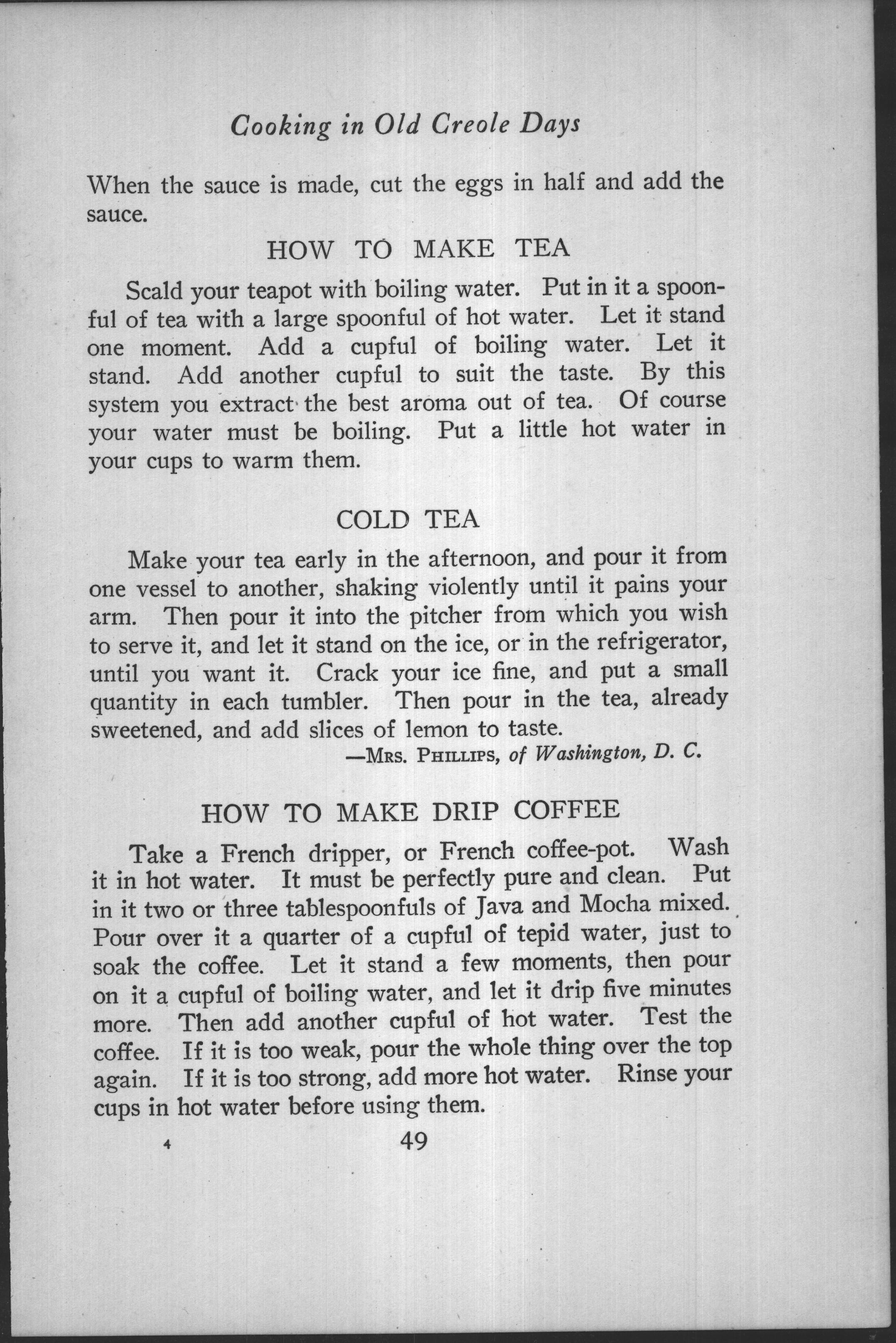
Make your tea early in the afternoon, and pour it from one vessel to another, shaking violently until it pains your arm. Then pour it into the pitcher from which you wish to serve it, and let it stand on the ice, or in the refrigerator, until you want it. Crack your ice fine, and put a small quantity in each tumbler. Then pour in the tea, already sweetened, and add slices of lemon to taste.
Iced tea from before the ice machine — and the violent shaking isn’t eccentricity, it’s aeration.
- Why shake “until it pains your arm”Pouring and shaking whips air into the tea and cools it, softening the tannic edge for a brighter, fresher taste — you can simply stir it vigorously.
- Make it earlyThe tea needs a couple of hours on ice to chill through; with no quick refrigeration, the afternoon head start was practical.
- “Crack your ice fine”Iceboxes held solid blocks chipped by hand; a few pulses in a blender, or a mallet and a lint-free towel, do the same.
- Sweeten while warmSugar dissolves far better in warm tea than in a cold glass, which is why the recipe sweetens before chilling — the smarter order.
- Lemon to tasteA slice per tumbler; for a Southern touch, a sprig of mint is at home here too.
Iced tea is often credited to the 1904 St. Louis World’s Fair, but that story is a myth: recipes for iced and “cold” tea appear in American cookbooks decades earlier, through the 1870s and 1880s, once ice became a household commodity. Sweet iced tea in particular took root in the South, where summers were long and ice — shipped down from northern lakes or made locally — turned a hot English drink into a cooling one. This Washington cook’s frothy, lemon-slicked version sits squarely in that tradition.
From page 49 of the 1904 edition.
Original page from the book