How to Make Tea
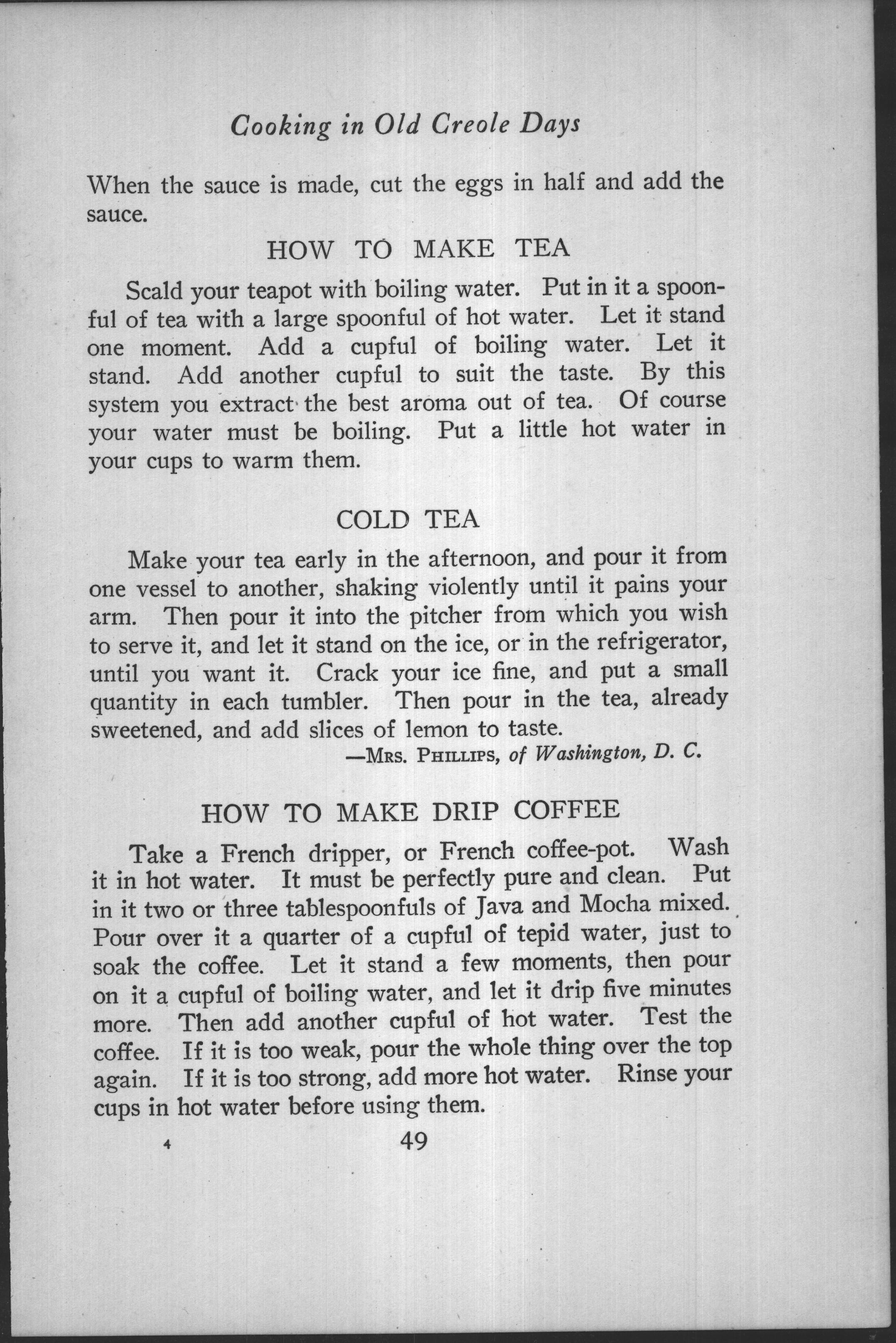
Scald your teapot with boiling water. Put in it a spoonful of tea with a large spoonful of hot water. Let it stand one moment. Add a cupful of boiling water. Let it stand. Add another cupful to suit the taste. By this system you extract the best aroma out of tea. Of course your water must be boiling. Put a little hot water in your cups to warm them.
Barely a recipe — a technique, and a good one. The whole point is heat, and not letting any of it escape.
- Scald the pot firstRinsing the empty teapot with boiling water warms the ceramic so it doesn’t steal heat from your brew — the same reason to warm the cups before pouring.
- “A spoonful of tea”Reckon about 1 tsp of loose leaf per cup, plus the traditional “one for the pot.”
- The staggered pourWetting the leaves first, then adding boiling water in stages, coaxes out aroma without scorching; modern practice is simply to steep 3–5 minutes and strain.
- Water truly boilingFor black tea use a full boil, 205–212°F; green tea is better a touch cooler, around 175°F.
- Loose leaf, not dustThis method assumes whole leaves and a strainer — a bag of fine fannings will oversteep and turn bitter fast.
The instruction to scald the pot is nearly universal in Victorian cookbooks on both sides of the Atlantic, and it rests on simple physics: cold porcelain drinks up heat, and lukewarm water draws a flat, weak infusion. British and American households treated tea-making as a small ritual with real rules — boiling water, a warmed pot, a moment’s patience — and the habit crossed into Creole New Orleans alongside the city’s better-known devotion to strong, dark, chicory-laced coffee.
From page 49 of the 1904 edition.
Original page from the book