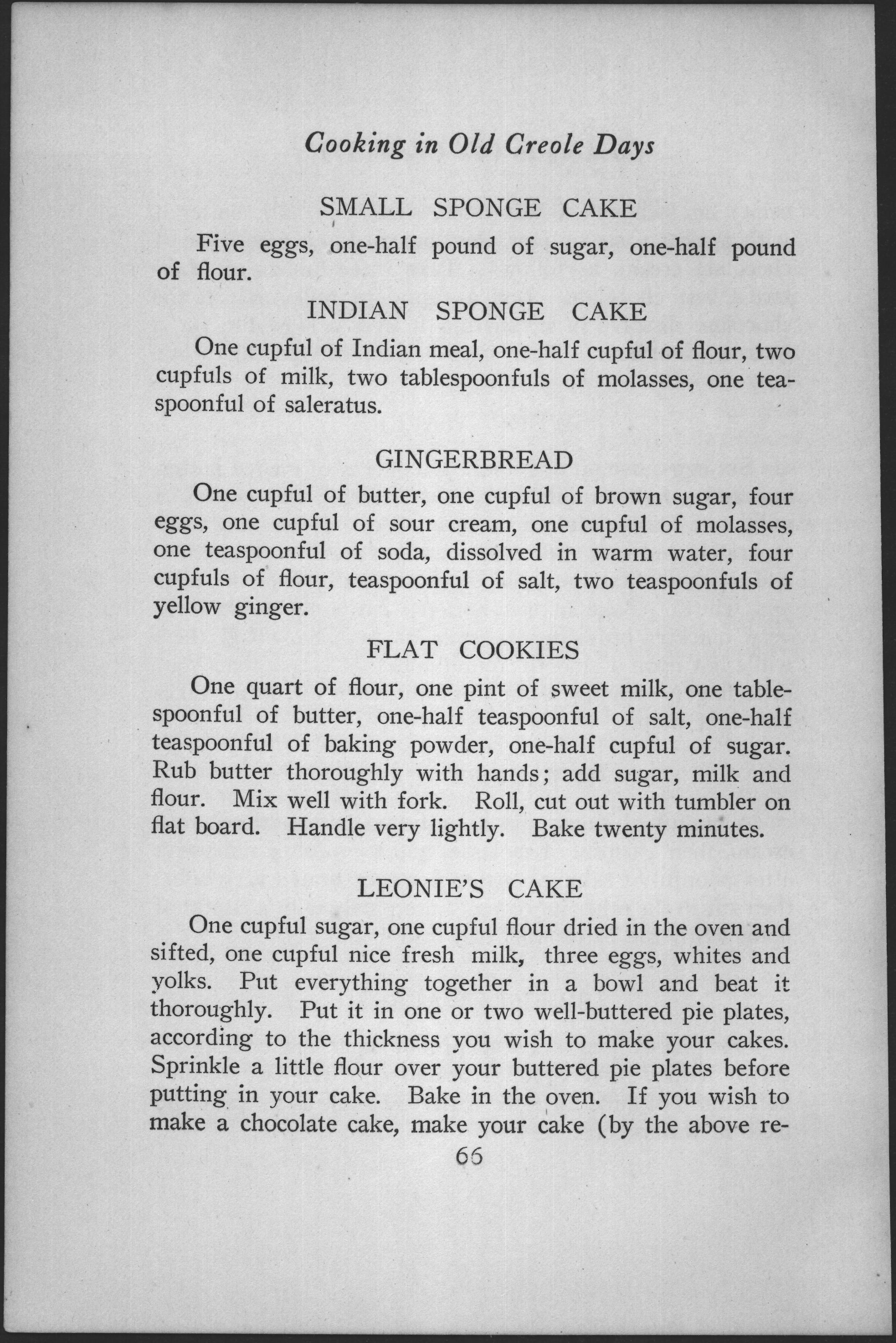
Flat Cookies
One quart of flour, one pint of sweet milk, one tablespoonful of butter, one-half teaspoonful of salt, one-half teaspoonful of baking powder, one-half cupful of sugar. Rub butter thoroughly with hands; add sugar, milk and flour. Mix well with fork. Roll, cut out with tumbler on flat board. Handle very lightly. Bake twenty minutes.
A very plain rolled-and-cut cookie — lean on butter and sugar, rich in milk — nearer to a soft tea biscuit than to a modern sweet cookie.
- Big old measuresA quart of flour is 4 cups; a pint of sweet milk is 2 cups whole milk.
- Barely sweetJust 1 tablespoon butter and ½ cup sugar to 4 cups flour — these are mild, plain cookies meant for tea, not dessert.
- More lift if you likeHalf a teaspoon of baking powder for so much flour makes a dense cookie; bump it to 1–2 teaspoons for a lighter one.
- “Cut with a tumbler”Roll the dough and stamp out rounds with the rim of a drinking glass — the old cook’s cookie cutter.
- Handle lightly, bake moderateWork the dough as little as possible and bake at 375°F for the full 20 minutes, until just set.
The word cookie is a small gift from Dutch New York. It descends from the Dutch koekje, “little cake,” carried to America by settlers of New Netherland and preserved in American English while the British kept “biscuit.” Early American cookies like these were often exactly that — little cakes, only lightly sweetened, rolled thin and cut into rounds. It took cheaper sugar and, later, richer recipes to turn the cookie into the sweet treat we know now. A plain milk-and-flour round like this is a glimpse of the cookie in its older, humbler form.
From page 66 of the 1904 edition.
Original page from the book