Kidney Stew
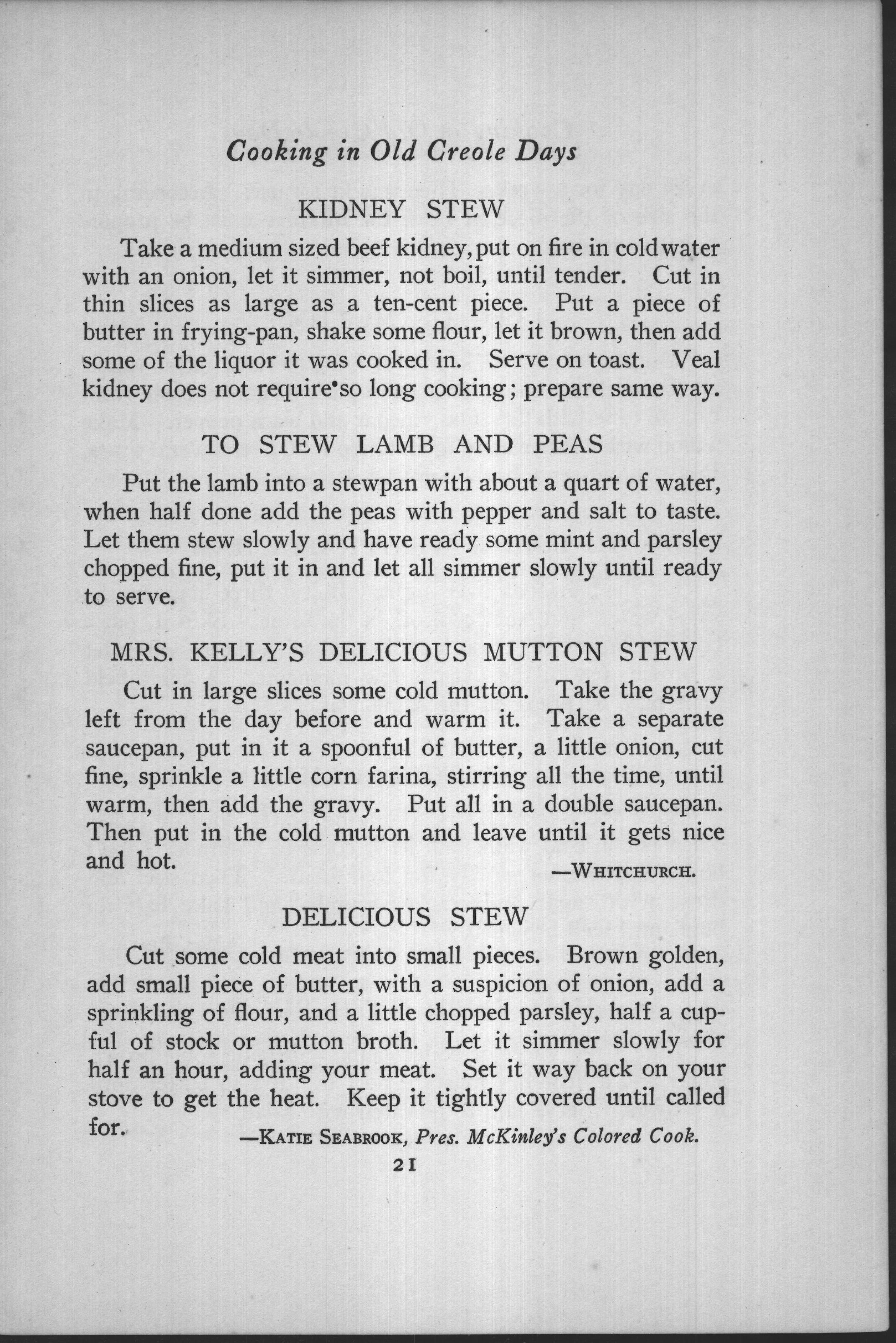
Take a medium sized beef kidney, put on fire in cold water with an onion, let it simmer, not boil, until tender. Cut in thin slices as large as a ten-cent piece. Put a piece of butter in frying-pan, shake some flour, let it brown, then add some of the liquor it was cooked in. Serve on toast. Veal kidney does not require so long cooking; prepare same way.
A tender braise of beef kidney, sliced small and bound in a quick brown gravy over toast — a classic breakfast or supper dish of the offal-thrifty kitchen.
- Soak and trim firstNot stated but worth doing: soak the kidney in cold salted water or milk and cut out the white core and membrane to mellow its strong, minerally flavor.
- “Simmer, not boil”The instruction is right — kidney turns rubbery if boiled hard. Hold it at a bare simmer in the onion water until just tender.
- “Large as a ten-cent piece”A ten-cent piece is a dime — so slice the cooked kidney into small, thin, coin-sized pieces.
- The gravy is a quick rouxButter plus a shake of flour cooked to brown, then loosened with the liquor (the cooking liquid), makes the sauce — a small pan gravy poured over toast.
- Veal kidney cooks fasterAs the recipe notes, delicate veal kidney needs far less simmering than beef kidney; treat it the same way but pull it sooner.
Organ meats like kidney were once everyday food, not a curiosity — a thrifty, nourishing use of the whole animal in an era when nothing went to waste. Kidney stew and its cousin, kidneys on toast, were staples of the hearty Victorian and Edwardian breakfast and the plain family supper. Beef kidney is strong and needs patience; the milder kidneys of veal and lamb were considered more delicate. This spare recipe — simmer, slice, sauce, serve on toast — is offal cookery at its most sensible, coaxing a satisfying dish from a cut many modern cooks have forgotten how to use.
From page 21 of the 1904 edition.
Original page from the book