Loaf of Gingerbread
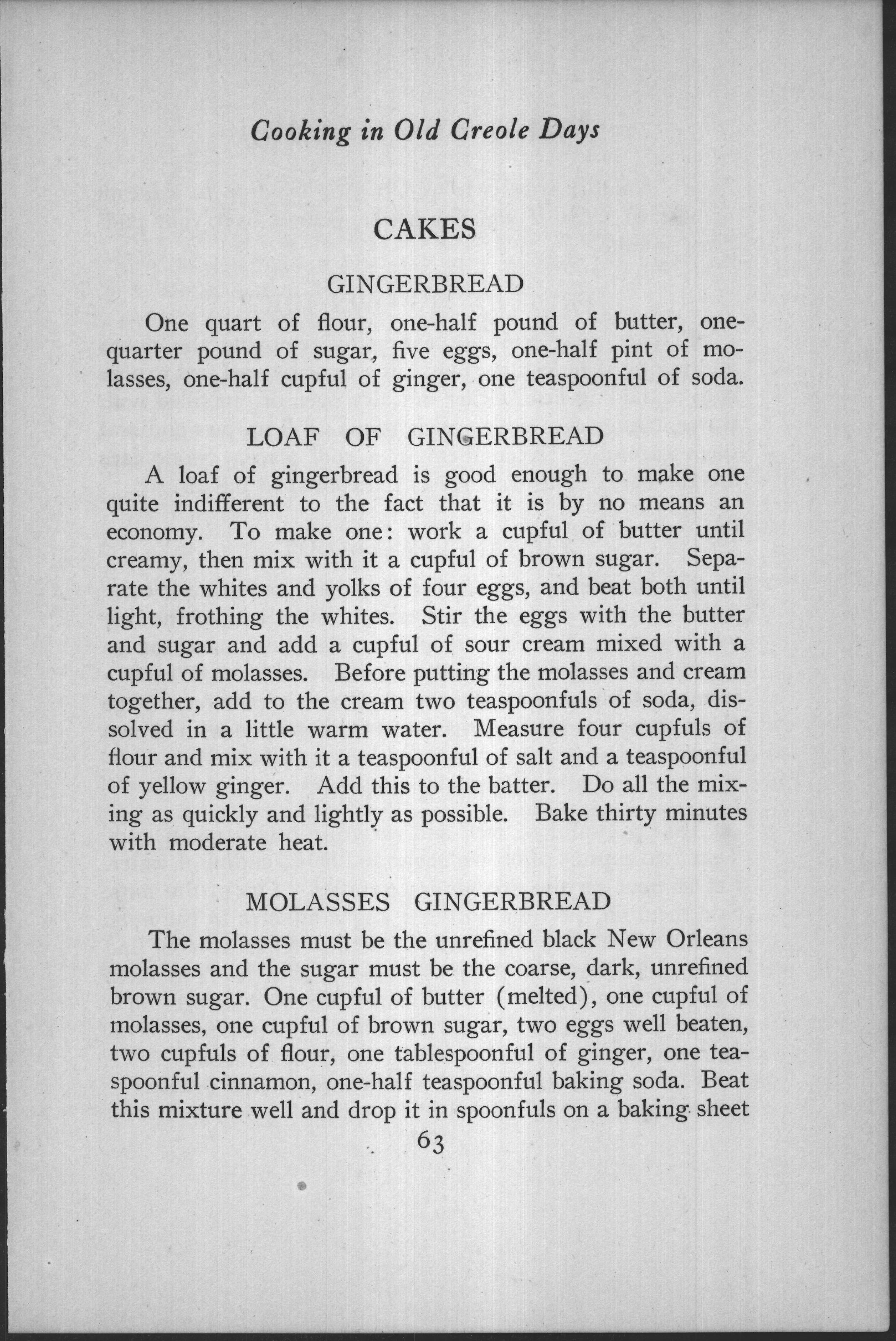
A loaf of gingerbread is good enough to make one quite indifferent to the fact that it is by no means an economy. To make one: work a cupful of butter until creamy, then mix with it a cupful of brown sugar. Separate the whites and yolks of four eggs, and beat both until light, frothing the whites. Stir the eggs with the butter and sugar and add a cupful of sour cream mixed with a cupful of molasses. Before putting the molasses and cream together, add to the cream two teaspoonfuls of soda, dissolved in a little warm water. Measure four cupfuls of flour and mix with it a teaspoonful of salt and a teaspoonful of yellow ginger. Add this to the batter. Do all the mixing as quickly and lightly as possible. Bake thirty minutes with moderate heat.
A deliberately indulgent gingerbread — the recipe cheerfully admits it’s “by no means an economy” — enriched with sour cream and a full cup of molasses.
- MeasuresA cupful each of butter, brown sugar, sour cream, and molasses, plus 4 cups flour and 4 eggs.
- Sour creamReal cultured sour cream is meant here; its acidity both tenderizes the crumb and activates the soda.
- Dissolve the sodaStirring the 2 teaspoons of soda into warm water first, as directed, spreads it evenly so the loaf rises without bitter streaks.
- “Moderate heat” = 350°FBake at 350°F; the recipe’s 30 minutes suits a shallow pan, so test with a pick and give a deep loaf longer.
- Mix lightlyAs the original urges, combine everything “quickly and lightly” — once soda hits the acidic batter, the leavening clock starts ticking.
Gingerbread lived a double life in the American kitchen. At one end were thrifty water-and-molasses versions baked for children and everyday snacking; at the other, butter-and-cream loaves like this one, rich enough to grace a tea table. Molasses was the common thread. A byproduct of refining cane sugar, it was for generations far cheaper than white sugar and poured freely into American baking, which is why so many old cakes and cookies carry its dark, faintly bitter sweetness. This loaf simply spares no expense on top of that thrifty base.
From page 63 of the 1904 edition.
Original page from the book