Molasses Gingerbread
Mrs. Bridgham
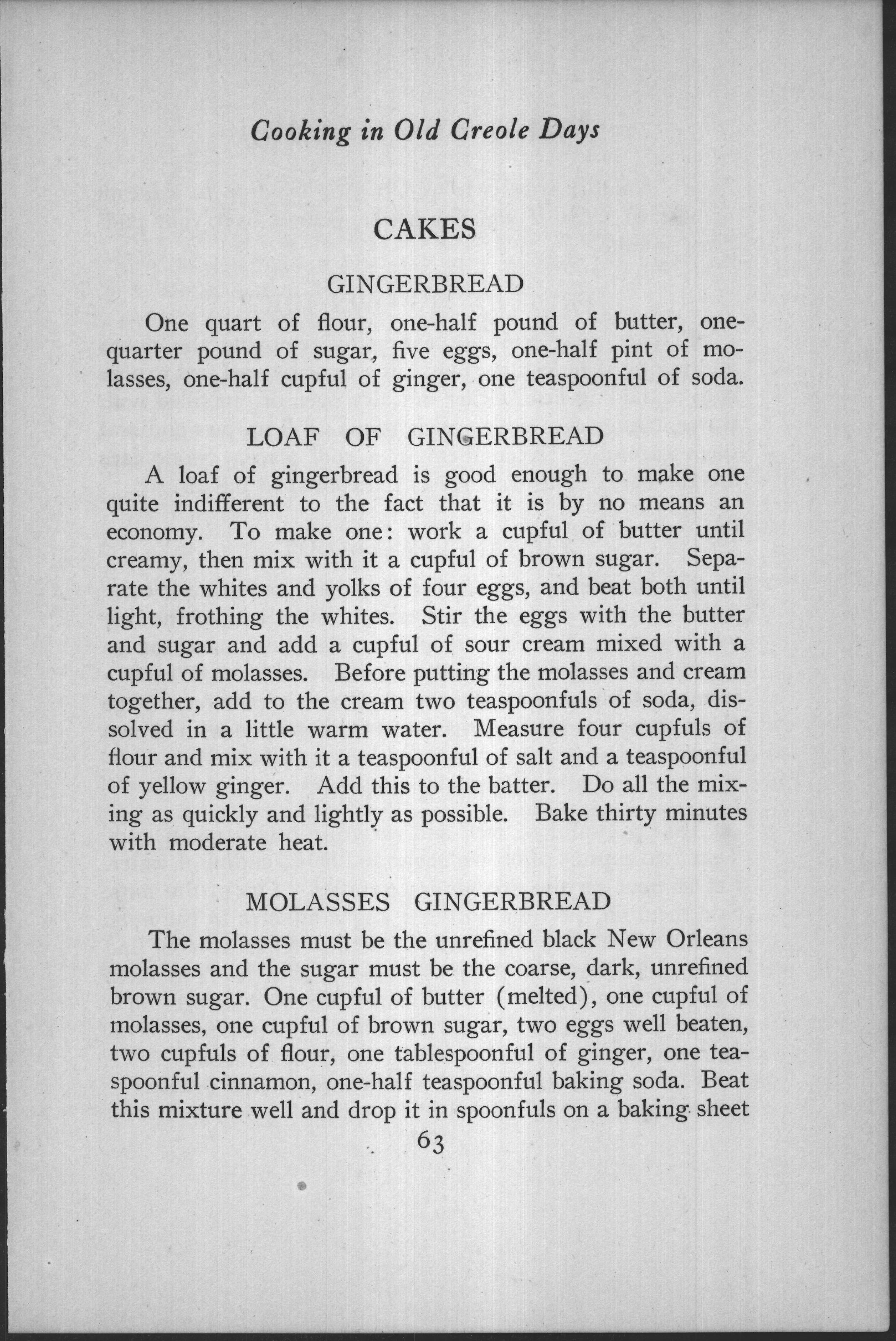
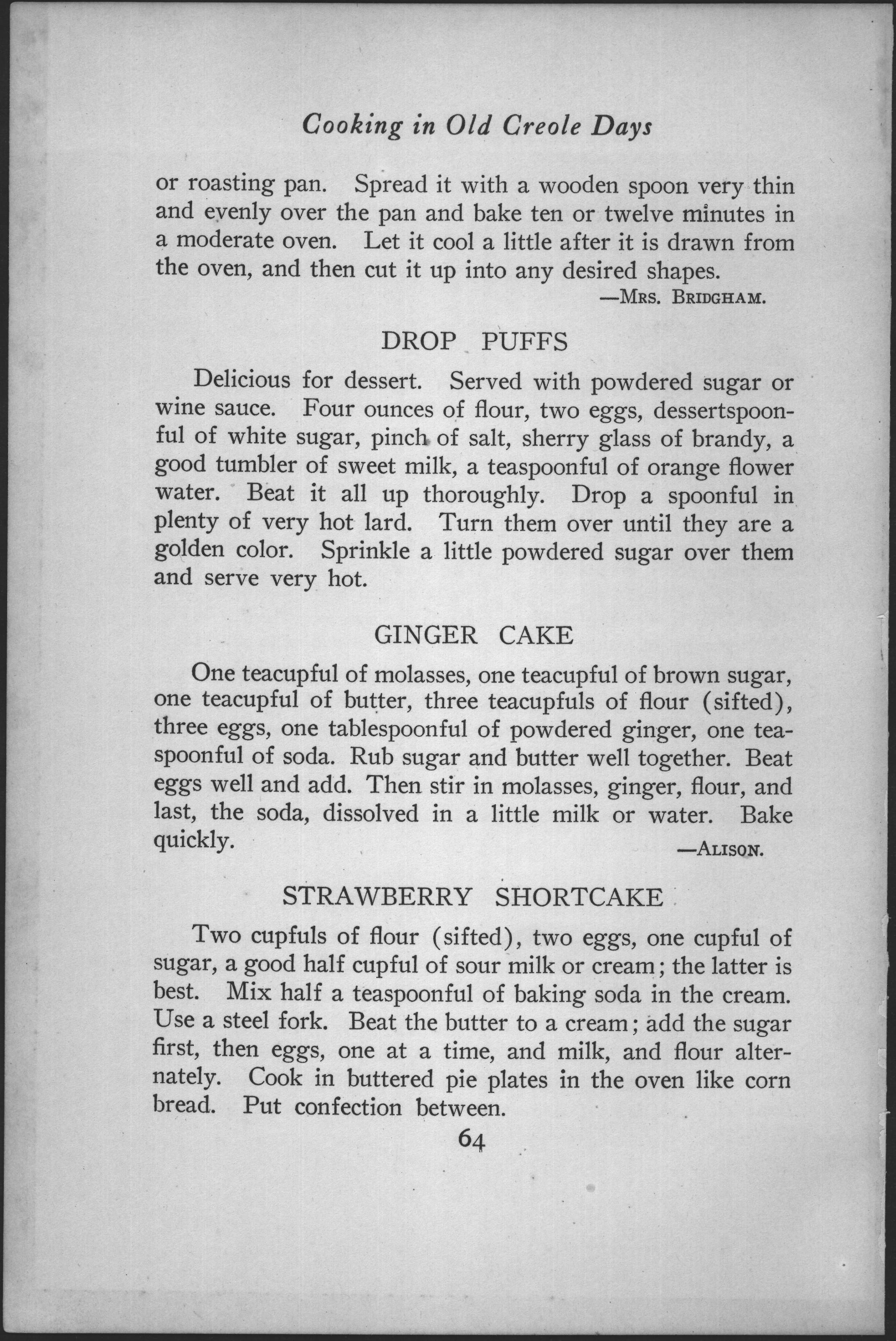
The molasses must be the unrefined black New Orleans molasses and the sugar must be the coarse, dark, unrefined brown sugar. One cupful of butter (melted), one cupful of molasses, one cupful of brown sugar, two eggs well beaten, two cupfuls of flour, one tablespoonful of ginger, one teaspoonful cinnamon, one-half teaspoonful baking soda. Beat this mixture well and drop it in spoonfuls on a baking sheet or roasting pan. Spread it with a wooden spoon very thin and evenly over the pan and bake ten or twelve minutes in a moderate oven. Let it cool a little after it is drawn from the oven, and then cut it up into any desired shapes.
A thin, crisp gingerbread — spread paper-thin, baked briefly, and cut into shapes — that leans hard on dark New Orleans molasses and coarse brown sugar.
- MeasuresA cupful each of melted butter, molasses, and brown sugar; 2 cups flour; 2 eggs; plus the ginger, cinnamon, and ½ teaspoon soda.
- “Black New Orleans molasses”This means dark, robust unsulphured molasses (not light, and not bitter blackstrap); it gives the cake its deep color and near-bitter edge.
- Spread it thinThe wet batter is spread thin across the pan with a spoon, so it bakes into a crisp sheet rather than a cake.
- Quick, moderate bake350°F for 10–12 minutes is right; thin molasses batter goes from done to burnt in moments, so watch it.
- Cut while warmLet it cool just slightly, then cut into squares or diamonds before it hardens on the pan.
Molasses was Louisiana’s own, and the recipe’s insistence on the “black New Orleans” kind is no affectation. The lower Mississippi was one of the great sugar-producing regions of the nineteenth-century United States, its plantations — worked by enslaved people — boiling cane into sugar and drawing off dark molasses as a byproduct. That molasses flowed up the river and out to the world, and in New Orleans kitchens it was simply the sweetener at hand. A gingerbread built on local molasses and unrefined brown sugar tastes of the place it was made.
From page 63 of the 1904 edition.
Original pages from the book