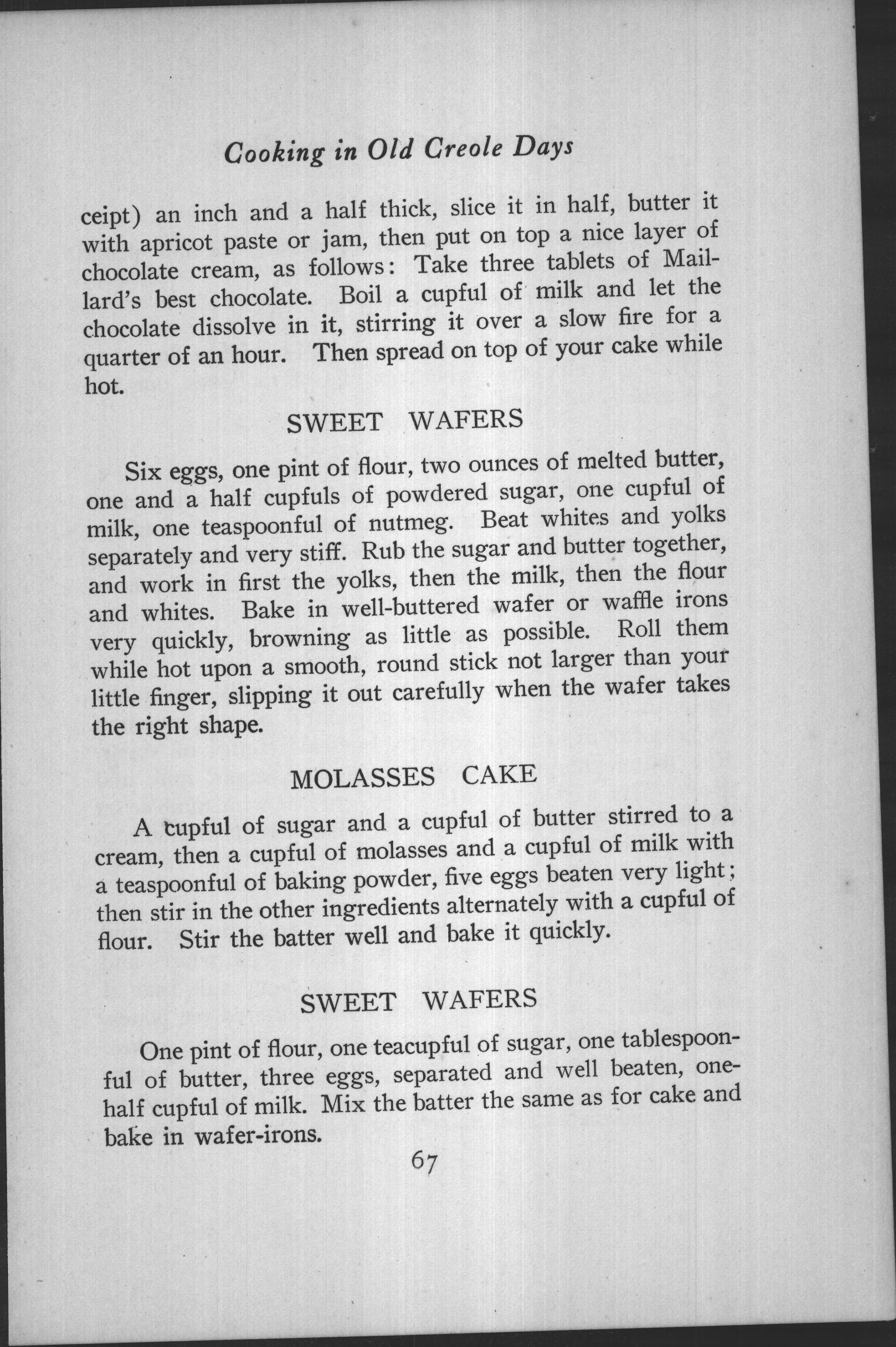
Molasses Cake
A cupful of sugar and a cupful of butter stirred to a cream, then a cupful of molasses and a cupful of milk with a teaspoonful of baking powder, five eggs beaten very light; then stir in the other ingredients alternately with a cupful of flour. Stir the batter well and bake it quickly.
A soft, exceptionally moist molasses cake — equal cups of sugar, butter, molasses, and milk, bound with a modest amount of flour.
- MeasuresA cupful each of sugar, butter, molasses, and milk, 5 eggs, and a cup of flour with 1 teaspoon baking powder.
- A very loose batterWith so much liquid to just one cup of flour, expect a thin, pudding-soft batter; for a firmer, sliceable cake, add up to another cup of flour.
- Add alternately“Stir in alternately with the flour” means to fold the wet and dry parts in by turns, which keeps the batter from separating.
- “Bake quickly” — but gentlyMolasses browns and burns fast; despite the direction to bake quickly, a moderate 350°F gives a safer, evener bake.
- Grease wellLine the pan; molasses batters are notorious for sticking.
For most of American history molasses, not white sugar, was the everyday sweetener. Refined sugar was expensive and often sold in hard cones that had to be nipped and pounded, while molasses — the dark syrup drawn off during sugar-making — poured cheaply from a jug. The very word comes, by way of Portuguese melaço, from the Latin mel, “honey.” Cakes, pies, cookies, and puddings leaned on it well into the nineteenth century, which is why old American baking has such a deep, dark, faintly bitter sweetness that pure sugar never gives.
From page 67 of the 1904 edition.
Original page from the book